What Is Self-Respect Marriage? The 100-Year-Old Tradition Kavya Maran And Anirudh Ravichander Chose For Their Greece Wedding
Anirudh Ravichander and Kavya Maran married in Greece on November 11, choosing a self-respect marriage instead of a conventional Hindu ceremony. The nearly century-old Tamil tradition does not require priests or religious rituals. Rooted in Periyar's Self-Respect Movement, it emphasises mutual consent, equality and dignity. Tamil Nadu legally recognised the practice in 1967 through Section 7-A.

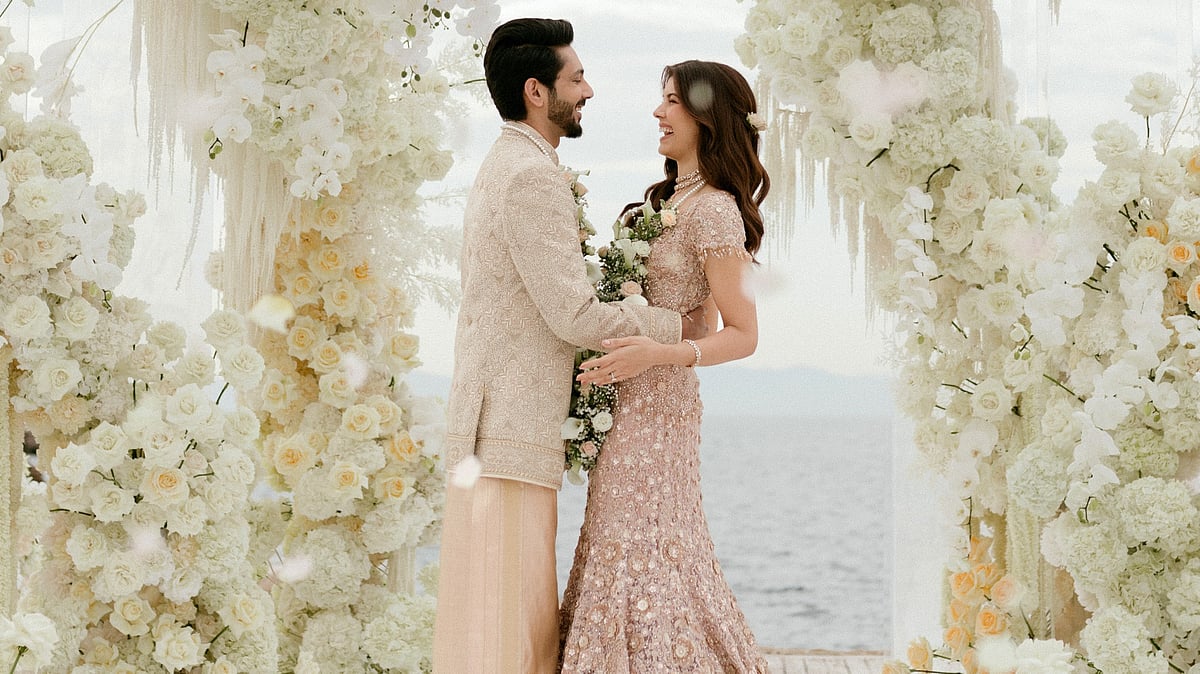
Celebrity weddings often come with grand mandaps, elaborate rituals and days of celebrations. But Kavya Maran and Anirudh Ravichander took a different route for their wedding in Greece on November 11. The Sunrisers Hyderabad co-owner and the music composer chose a "self-respect marriage", a ceremony that moves away from conventional Hindu wedding customs and places the couple's consent and equality at its heart.
Their choice soon caught attention after wedding pictures surfaced online, with many curious about the rituals behind the ceremony. DMK leader T R B Rajaa confirmed that the couple had opted for a non-Vedic, self-respect wedding, also known as Suyamariyathai Thirumanam. The tradition has a history stretching back nearly a century and is closely associated with Tamil Nadu's social reform movement.
So, what is a self-respect marriage?
A self-respect marriage, or Suyamariyathai Thirumanam, is a form of wedding that does not require a priest, Sanskrit mantras or conventional religious rituals. Instead, the focus is on two people choosing to marry each other as equals and openly declaring their commitment in front of witnesses.
Depending on the couple's choice, the ceremony may involve exchanging garlands or rings, tying a thali (a traditional wedding necklace in many South Indian Hindu communities), or making a declaration of marriage. The emphasis is not on following a fixed set of religious customs but on mutual consent, dignity and equality.
How did the tradition begin?
According to multiple reports, the roots of this practice lie in the Self-Respect Movement launched by social reformer E V Ramasamy, popularly known as Periyar, in 1925. At the time, caste divisions strongly influenced marriage practices, while ceremonies were often conducted by Brahmin priests using Sanskrit prayers that many couples did not understand.
Periyar challenged the social hierarchy and the authority of religious institutions over personal decisions. He argued that marriage should not reinforce caste boundaries or place individuals under the control of priests and traditional customs. He also questioned patriarchal expectations that treated women as subordinate to their husbands.
The movement advocated a different idea of marriage: one based on the free choice of two individuals, with neither caste nor religious authority deciding their future. It also sought to challenge practices that denied women equal status within marriage.
ALSO READ
Are self-respect marriages legally recognised?
Self-respect marriages received legal recognition in Tamil Nadu in 1967 through an amendment to the Hindu Marriage Act, introducing Section 7-A. The provision recognises marriages solemnised through forms such as the exchange of garlands or rings, or a declaration of marriage, in the presence of relatives, friends or other witnesses.
This means that a marriage does not have to follow the usual elaborate Hindu wedding ceremony or involve a priest to be legally recognised under the provision, provided its requirements are met.
RECENT STORIES
-
-
-
-
-