What Is Nirmalya? Know The Sacred Mahaprasad Offered To Lord Jagannath
The dried rice offered to Lord Jagannath is called Nirmalya (or Kaivalya when freshly blessed). It is made by sun-drying the leftover cooked Mahaprasad rice from the Puri temple. The word "Nirmalya" means that which has been offered to the deity and has become holy.

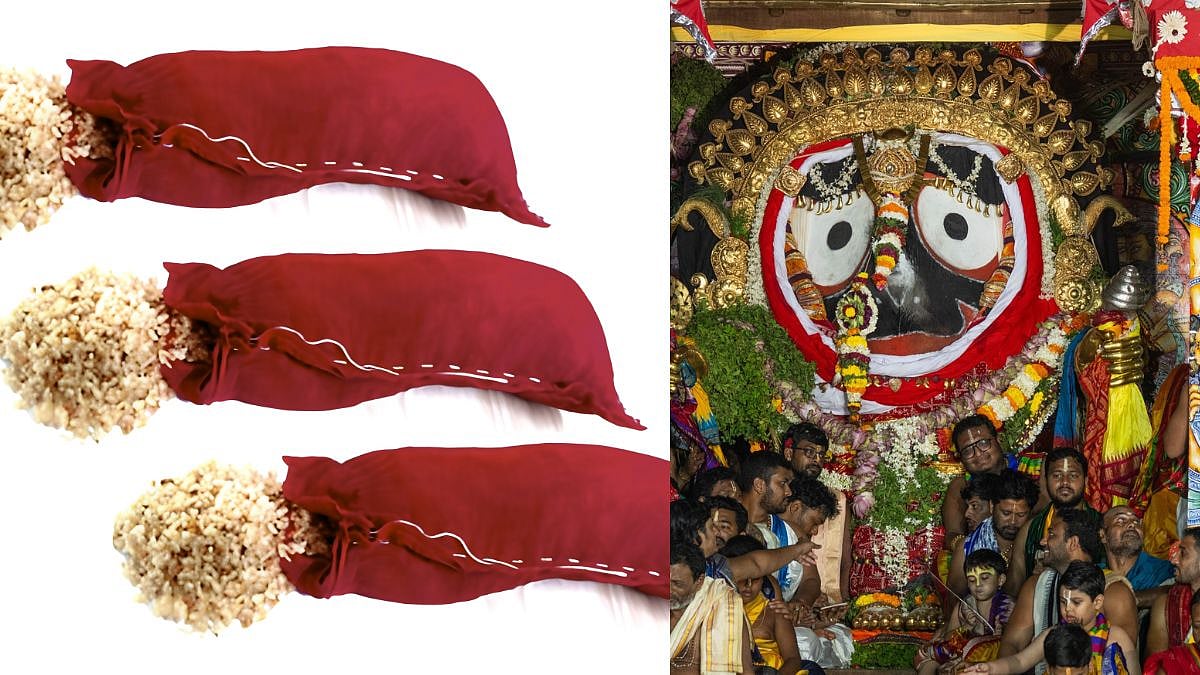
What Is Nirmalya | Jagannath Puri
Nirmalya is one of the most sacred offerings associated with Lord Jagannath at the Jagannath Temple in Puri, Odisha. Revered by devotees as a symbol of divine blessings, Nirmalya refers to the dried Mahaprasad that has first been offered to Lord Jagannath, Lord Balabhadra, Devi Subhadra and Sudarshan. Unlike freshly prepared Mahaprasad, Nirmalya is carefully dried and preserved, allowing devotees to carry it home as a sacred blessing. But why does it hold a special place in Jagannath Mahaprasad? Keep reading to know more.
What is Nirmalya?
The dried rice offered to Lord Jagannath is called Nirmalya (or Kaivalya when freshly blessed). It is made by sun-drying the leftover cooked Mahaprasad rice from the Puri temple. The word "Nirmalya" means that which has been offered to the deity and has become holy.
At the Jagannath Temple, cooked food prepared in the temple's traditional kitchen is first offered to the deities and later becomes Mahaprasad. A portion of this Mahaprasad is then dried, and this dried offering is known as Nirmalya. It is believed that consumption of it helps attain spiritual liberation (moksha).
Religious significance
Nirmalya holds immense importance in the Jagannath tradition. Devotees consider even a small quantity of it to be highly auspicious. It is believed to bring peace, prosperity and divine protection to those who consume it with faith.
Pilgrims often take Nirmalya back to their homes and distribute it among family members as a sacred blessing from Lord Jagannath.
The offering also symbolises the belief that food blessed by the Lord is beyond ordinary nourishment. It is regarded as spiritually purifying and is often consumed before beginning important events or religious ceremonies.
Mythology linked to the tradition
According to the Skanda Purana, once upon a time, the priest Vidyāpati visited the Sabra chief Viswasu in the forest of present-day Odisha. He was astonished to find divine flowers, sandal paste and other offerings inside a humble Śabara forest hut.
Unable to control his curiosity, he asked, "How did these sacred objects come into your home in the forest?" At first, Viswasu refused to answer, but he was later moved by Vidyapati's sincerity and finally revealed an extraordinary secret.
He said that every day, the devas themselves, including Indra, descended to worship Bhagawan Nīlamādhava. When their worship was complete, the devas returned to heaven, leaving behind His Nirmalya. The tribal family who lived on it were said to have been freed from disease and old age.
RECENT STORIES
-
-
-
-
-