What Is Lord Jagannath's Suna Besha? The Story Behind The Golden Attire And Its Link To Gajapati Kapilendra Deva
Suna Besha, also known as Raja Besha or the Golden Attire, is one of the most spectacular rituals associated with Lord Jagannath in Puri, Odisha. The festival is held annually on Ashadha Shukla Ekadashi, a day after the Bahuda Yatra (the return journey of the deities from the Gundicha Temple). The ritual sees Lord Jagannath, Lord Balabhadra and Devi Subhadra adorned with exquisite gold ornaments.

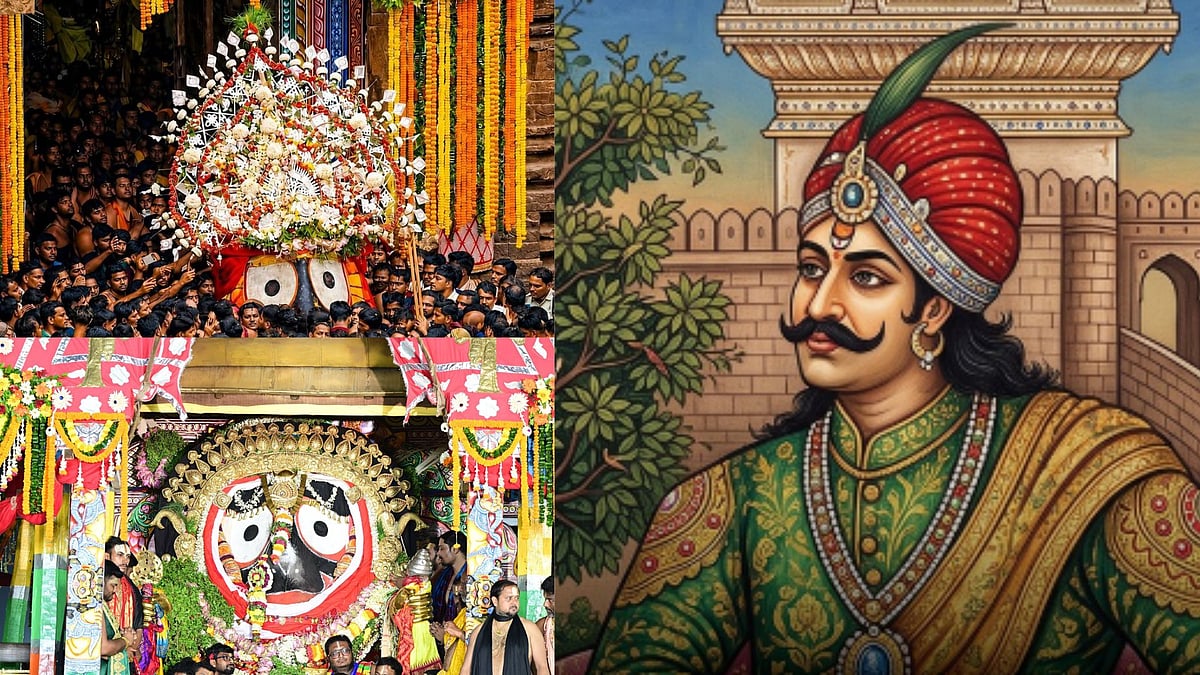
Jagannath Rath Yatra is one of the sacred observances in Hinduism, which is predominantly celebrated in the holy town of Puri, Odisha. This year, the festival began on July 16, and on Friday, July 25, Lord Jagannath, who visited Gundicha Temple with his siblings to stay at his aunt's home for nine days, finally returned to his abode with his elder brother Balabhadra and Subhadra. The ritual of Suna Besha was performed yesterday, Saturday, July 25, 2026. But do you know what the story behind it is? Keep on reading to know more.
About Suna Besha
Suna Besha, also known as Raja Besha or the Golden Attire, is one of the most spectacular rituals associated with Lord Jagannath in Puri, Odisha. The festival is held annually on Ashadha Shukla Ekadashi, a day after the Bahuda Yatra (the return journey of the deities from the Gundicha Temple). The ritual sees Lord Jagannath, Lord Balabhadra and Devi Subhadra adorned with exquisite gold ornaments while seated on their chariots outside the Jagannath Temple.
The term "Suna" means gold in Odia, and "Besha" means attire or adornment. During the ceremony, the deities are decorated with kilograms of gold ornaments preserved in the temple treasury.
Tradition linked to Gajapati King Kapilendra Deva
According to temple tradition, the practice of Suna Besha is closely associated with Gajapati King Kapilendra Deva, the powerful ruler of the Suryavamsi dynasty in the 15th century. Historical accounts suggest that after achieving significant military victories across eastern and southern India, Kapilendra Deva offered a large quantity of gold to Lord Jagannath as an expression of gratitude. The gold was later crafted into ornaments used to decorate the deities during Suna Besha, establishing the tradition that continues to this day.
Spiritual significance
The Suna Besha ceremony is considered highly auspicious, and it is believed that witnessing the deities in their golden attire brings prosperity, peace, and spiritual blessings. Since the deities remain on their chariots, lakhs of pilgrims who cannot enter the Jagannath Temple also get an opportunity to seek their darshan.
RECENT STORIES
-
-
-
-
-