Subscription Fatigue Is Real, But Are Your OTT Bills Becoming A Second Rent?
From OTT platforms and music apps to cloud storage and fitness memberships, small recurring charges are quietly reshaping how we spend, save and consume

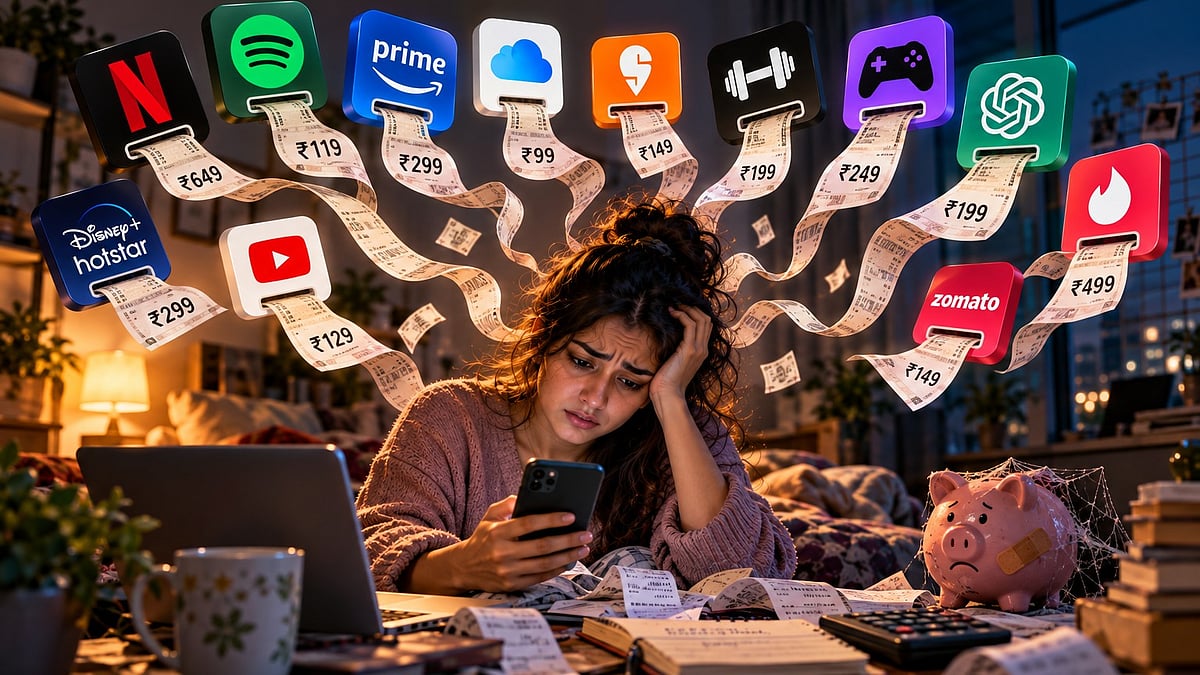
There's a special kind of dread that hits when you finally scroll through your bank statement. Netflix, Spotify, and Amazon Prime. Some cloud storage you forgot existed. A food delivery membership. A fitness app last opened during a burst of January optimism. A gaming subscription, an AI tool, and a dating app quietly charging you for a romance you're too busy to pursue, because you're busy managing subscriptions.
Each one, on its own, is harmless. A chai's worth of money, you tell yourself. Put together, they've quietly become a second rent you never signed up for, for a life you're mostly renting. Welcome to the subscription fatigue era, where we own almost nothing, pay for almost everything, and still can't find something to watch.
Death by a thousand tiny cuts
Here's the sneaky bit: that ₹149 is engineered not to hurt. Sneha C, a mental health professional at Hejje, a unit of MSR Health explains,"The human mind tends to prioritise instant comfort and perceived affordability over long term consequences. Small recurrent payments often feel psychologically easier to accept as individual expense appears insignificant and reduces the need for deeper evaluation. This cognitive tendency allows us to conserve mental effort in the moment, while potentially concealing the larger cumulative cost over time."
In simple terms, a small charge slips past the part of your brain that would normally stop and ask questions. And the reason it slips past is all about how the amount is packaged. A big bill demands a decision, a tiny one just asks to be waved through.
'I'll cancel it later' trap
So why not just axe the ones gathering dust? Because letting go stings more than paying does.
There's a quirk of the mind at work here, says Sneha. "It's our natural tendency for our brain to perceive loss of access to something we already possess as more significant than the gradual loss of money through unused payment." In plain terms: cancelling feels like giving something up, while the money quietly going out barely registers. So the payments roll on.
Dr. Neetu confesses she does it too. Every few months she reviews her list, cancels something with a small glow of triumph, feels thrifty for a week, then quietly signs up again when the fear of missing out creeps back. The whole loop resets. Underneath it hums one nagging thought: what if I need it someday? And so we pay rent on a maybe.
Neha Singh, a 25-year-old, knows the spiral well. "I once sat down and counted eleven subscriptions. Three of them were music apps. I killed two and honestly felt like I'd been given a raise,” she laughs.
Subscribe, binge, cancel, repeat
But Indian viewers are wising up, or at least getting cannier. A new ritual has taken over: subscribe for one show, devour it, and vanish before the next bill.
The numbers make it plain. India's OTT audience crossed 601 million in 2025, yet only around 148 million of them actually pay for a subscription, per the Ormax OTT Audience Report 2025. The gap shows while streaming has become mainstream, paying remains a much smaller part of the audience.
"I subscribe to the day a new season drops, finish it over a weekend, and cancel on Monday morning. Why pay for twelve months to watch twelve hours?,”says Ritika, a 24-year-old marketing executive, entirely guilt-free. The old habit of letting every app run all year has given way to a kind of streaming speed-date, show up, get what you came for, leave before anyone asks you to commit.
Do we even want to own anything anymore?
Step back, and something bigger comes into focus. This was never really about Jio Hotstar or Spotify. It's a generation quietly falling out of love with ownership itself.
We stream songs instead of stacking CDs. We keep photos in a cloud, not on a hard drive. We rent lehengas for weddings, lease cars instead of buying them, and pay monthly for software we once owned outright. Clutter and commitment feel old-fashioned now. Access has become the new having.
ALSO READ
Whether that's freedom or a gilded cage is the real question. There's a genuine lightness to owning nothing and summoning everything on demand. But there's a catch buried in it. The day the payments stop, so does everything. No shelf of records, no stack of DVDs, nothing to show for years of spending but a login that no longer works.
So maybe the subscription era isn't about entertainment or convenience at all. Maybe it's about how comfortable we've grown renting our own lives, one small, painless, auto-debited rupee at a time.
Just don't add up the yearly total. Some horror stories are better left unread.
RECENT STORIES
-
-
-
-
-