Spice Without Borders: The Global Journey Of Flavour
From Bengal to Beirut, Kyoto to Cairo, exotic spice blends prove that flavour has always travelled farther than empires and country lines!

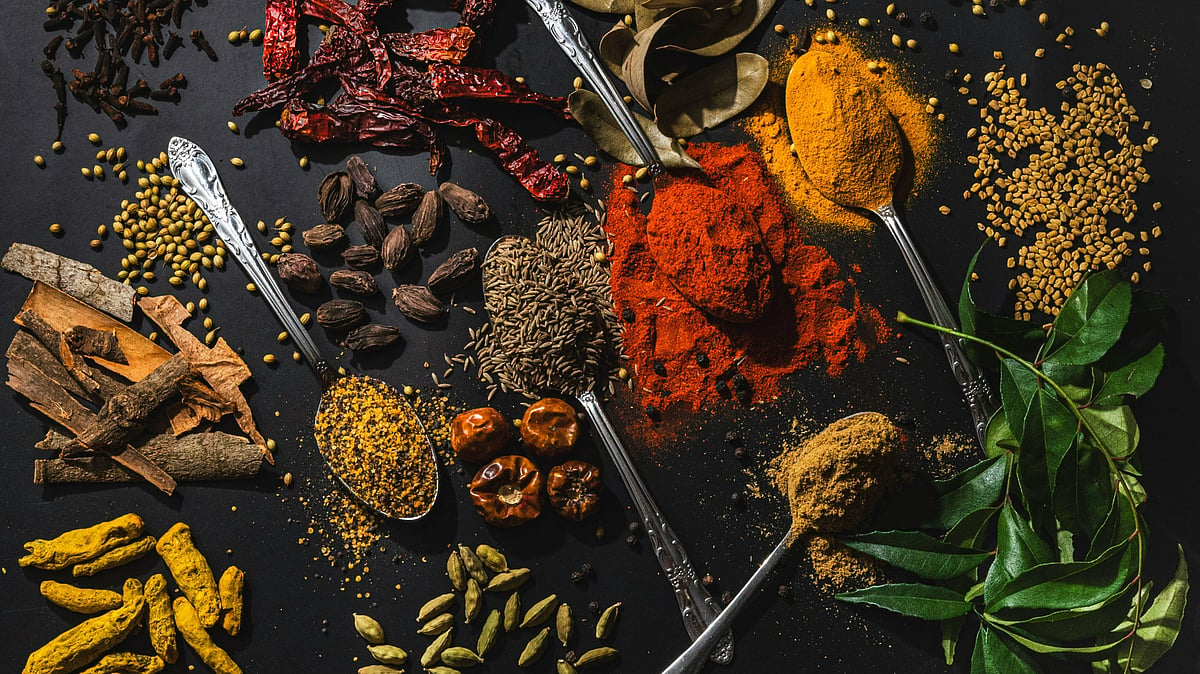
Assorted spices | Pic: Unsplash
For eons, India has seen life unfold through the prism of spice. A Punjabi kitchen opens with the perfume of garam masala blooming in ghee, while Tamil homes lean on roasted sambhar powder carrying the aroma of coriander, fenugreek and dried chillies. Bengal crackles with paanch phoron, the five-seed blend tossed into hot mustard oil before vegetables or fish arrive in the pan. The Parsis built dhansak masala from Persian roots and Gujarati influences, creating a spice blend tied to slow Sundays and ceremonial tables. In Maharashtra, ghoda masala remains darker and smokier, with coconut and sesame lending body to rustic curries from Kolhapur to Pune.
These masalas are not recipes; they are culinary maps. Every blend carries traces of migration and ancient trade routes where pepper once travelled like currency. Historians often note that Roman ships sailed to the Malabar Coast seeking black pepper long before colonial companies arrived. Yet India was never the only civilisation speaking the language of spice. Across continents, cooks built their own powdered signatures, often from ingredients arriving through both commerce and conquest in equal measure. To travel through these blends is to travel through centuries of exchange.
Across Africa and Middle East
In Morocco, ras el hanout translates loosely to “head of the shop,” referring to the finest spices a merchant could offer. No single recipe governs it. Some versions contain twenty ingredients, while older medinas in Fez still boast blends carrying dried rose petals and lavender. It perfumes couscous and lamb tagines with warmth that reflects North Africa’s position between desert caravans and Mediterranean trade.
Further east in Egypt lies dukkah, a textured mix of nuts, sesame, coriander and cumin, pounded rather than finely ground. Bread dipped into olive oil and dukkah remains a humble pleasure in Cairo cafes, though the blend has travelled widely into Australian brunch culture, where chefs scatter it over avocado toast and roasted vegetables. Za’atar, meanwhile, anchors kitchens across Lebanon, Palestine and Syria. Combining thyme, sesame and sumac, it is brushed over flatbreads with olive oil and savoured.
Baharat, meaning simply “spices” in Arabic, threads through Iraq, Turkey and the Levant. Black pepper, cinnamon, paprika and cloves lend fragrance to rice, soups and kebabs. During the Ottoman era, these flavours crossed enormous territories stretching from the Balkans to Arabia, leaving behind culinary echoes still recognisable today. Even France, often associated with butter and wine rather than spice, developed quatre épices, the understated quartet of pepper, nutmeg, cloves and ginger that seasons charcuterie and slow-cooked stews. Medieval French kitchens once relied heavily on imported spices, partly to signal wealth in aristocratic banquets.
From Asia to the Americas
In Japan, shichimi togarashi arrived during the seventeenth century through herbal medicine sellers in Edo, present-day Tokyo. The seven-spice mixture usually combines chilli, orange peel, sesame, seaweed and sansho pepper. Sprinkled over ramen, grilled meats and rice bowls, it delivers heat without overwhelming delicacy, much like Japanese cuisine itself. China’s famous five-spice powder follows another philosophy altogether, balancing sweet, sour, bitter, salty and umami elements through star anise, cinnamon, fennel, cloves and the mildly numbing Sichuan peppercorns. The blend reflects ancient Chinese ideas about harmony and balance in food.
Sri Lanka’s roasted curry powder moves in a darker direction. Coriander, cumin and curry leaves are toasted deeply before grinding, giving the island’s crab curries and lentils a smoky edge shaped by centuries of maritime trade across the Indian Ocean. Indonesia offers equally layered spice traditions. Balinese base genep combines turmeric, galangal, ginger, shrimp paste and candlenuts into a vivid paste used in ceremonial feasts, while rendang spice blends from Sumatra transformed slow-cooked meat into one of Southeast Asia’s defining dishes.
Then comes Argentina, where spice enters through chimichurri. Less a dry masala and more a herb-driven mixture of parsley, garlic, oregano and chilli flakes, it cuts through the richness of grilled meats born from the country’s cattle culture. Gauchos carried versions of it across the pampas, turning open-fire cooking into ritual.
Perhaps that is what spice blends truly represent: survival meeting imagination. They stretch expensive ingredients, preserve harvests and adapt to climates. Whether folded into a Moroccan tagine, dusted over Japanese noodles or stirred into Indian dal, these mixtures prove that flavour has always breached borders. The world’s kitchens have always borrowed from one another, one fragrant spoonful at a time.
Even today, spice markets remain among the best places to understand a city. Walk through Istanbul’s bazaars, Marrakech souks or Kochi’s trading lanes and the air changes instantly. Cinnamon, pepper and sesame still whisper tales of sailors, grandmothers, migrants and cooks across oceans.
(The writer is a food and travel columnist and editor.)
RECENT STORIES
-
-
-
-
-