Seed Cycling For Hormonal Balance: Can This Simple Kitchen Ritual Help Women With PCOS And PMS?
Discover how a simple daily ritual with seeds may support menstrual health, ease PMS symptoms and complement balanced nutrition

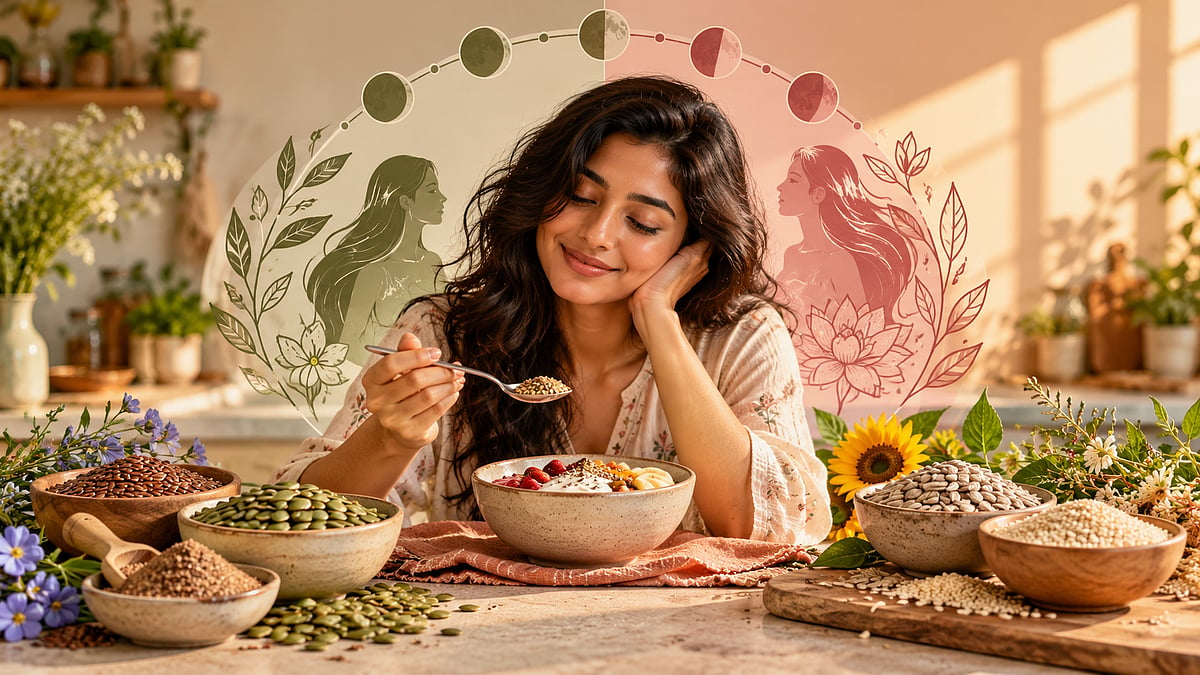
For many women in India, hormonal chaos has quietly become the new normal. Irregular cycles, PCOS, crushing PMS, breakouts, fatigue, and mood swings are brushed off as “just how it is.” But a simple, kitchen-rooted ritual – seed cycling – is quietly shifting that narrative, one tablespoon at a time. Call it a “hormonal reset,” but it’s less of a trendy hack and more of a return to something our grandmothers already knew: seeds can be medicine.
What is seed cycling?
Seed cycling is a food‑based practice layered onto your menstrual cycle. It asks you to eat two sets of seeds in two phases:
Phase 1 (Days 1–14, follicular/estrogen‑dominant phase): Ground flaxseed and pumpkin seeds.
Phase 2 (Days 15–end of cycle, luteal/progesterone‑dominant phase): Sunflower and sesame seeds.
The idea is not to inject hormones, but to support your body’s own rhythm with phytonutrients, healthy fats, lignans, and minerals that help your liver detox excess estrogen and gently nudge progesterone production. There’s no magic pill, just a consistent, daily habit that can take three months or more to show subtle shifts.
Why it’s resonating in India
In India, where ancestral diets already featured seeds in chutneys, powders, and laddoos, seed cycling feels less like a “Western wellness trend” and more like a rediscovery. Keerthi Ashish, founder of Samāh, India’s first hormone‑first seed‑cycling brand, positions it “food based support, and not a treatment for cure for PCOS”
After her own postpartum experience left her with fatigue, mood swings, and a body that “did not feel like my own,” she turned to seed cycling at home. “In a span of a few weeks, I could see my chronic symptoms fading away,” she says on the Samāh website. That kitchen experiment became a movement – first via a pop‑up stall in Chennai, where women shared stories of PCOS, missing periods, and exhaustion, and then into a formal brand that now serves over 10,000 unique consumers.
It’s a gentle bridge between clinical treatment and everyday nutrition, a space many women feel has been missing.
How it works with your body
Each seed has a role. Flax is rich in lignans and omega‑3s, which may help modulate estrogen and support its healthy clearance. She adds, “There are human studies showing flaxseed can shift estrogen metabolism markers, which is one reason it is often discussed in hormone focused nutrition.” Pumpkin seeds bring zinc and magnesium, nutrients linked with progesterone and mood‑regulating hormones.
In the luteal phase, sunflower seeds contribute vitamin E and selenium, thought to support liver processing of hormones and skin health, while sesame brings more lignans and minerals that help estrogen metabolism and overall bone and hormonal stability.
“From an Ayurvedic lens, sesame or til is considered nourishing and warming and is widely used in traditional food rituals. For Indian women, that cultural familiarity matters. It makes the habit easy to adopt and stick to, which is usually the missing piece in hormone health”
Women with PCOS, in particular, report that consistent seed cycling – paired with movement and mindful eating – can help ease painful, irregular cycles and make periods more predictable over time.
Samāh’s take on hormonal balance
Samāh packages this philosophy into labelled Phase 1 and Phase 2 blends, often with a whisper of chamomile for calm. The brand’s mission is stitched into its name - “Samāh,” meaning balance. “Seed cycling feels like a game changer because it gives women a simple way to participate in their hormone health daily,” says Keerthi.
The brand’s tone is refreshingly grounded: “Make it at home. Do it at home. We’ll give you the resources for that. But if you feel like it’s too time‑consuming, then you can always come to us,” she explains. Samāh drops blend‑style content too - “add a scoop of seed mix with greek yogurt, blend into a smoothie, stir into oats, mix into homemade laddoo mix with dates and ghee, add to a warm bowl of dal rice or khichdi after cooking” - so seed cycling doesn’t feel like another chore, but a small, delicious tweak to food you already love.
What to expect – and what not to
Most experts caution that robust clinical trials on seed cycling specifically are still limited, though the nutrients in these seeds are well‑studied. Think of it as a gentle, long‑term support system, not a quick fix.
Common reported benefits include: more regular cycles, milder PMS, clearer skin, and steadier energy and mood. But it will not replace prescribed treatment for conditions like PCOS, thyroid disorders, or hormonal infertility. If you’re on medication or have a diagnosed condition, seed cycling should be discussed with a doctor as a complementary, not core, practice.
It demands patience and consistency. “Most women are told to ignore their symptoms or they are pushed into quick fixes. Seed cycling sits in the middle. It is food based, gentle, and it builds body literacy” she adds.
ALSO READ
2-minute ritual to reclaim your body
To start, many women simply take 1–2 tablespoons of the right blend each day, sprinkled on porridge, curd, salads, or smoothies. Over a few cycles, some notice that their “period brain fog” lifts, their cramps soften, or their skin settles.
For women in Indian cities like Mumbai and Hyderabad, who juggle work, family, and social lives, seed cycling is appealing precisely because it’s low‑drama: no pills, no heavy protocols, no Instagram‑worthy detox. Just seeds, knowledge, and a simple intention—“It is about a small daily action that signals, I care about my body, I am paying attention, and I am not waiting for things to get worse”
In a wellness culture that often sells burnout‑esque regimens, seed cycling, as embodied by founders like Keerthi Ashish, feels like a softer revolution: one that sits in your kitchen, in a glass jar, and slowly reminds you that your body is not a problem to be fixed, but a rhythm to be respected.
RECENT STORIES
-
-
-
-
-