NextGen Restaurateurs Are Changing The Face Of Indian Fine Dining
A new generation of restaurateurs is rewriting the playbook: rebuilding legacy brands, launching culturally rooted concepts, and putting emotional experience first

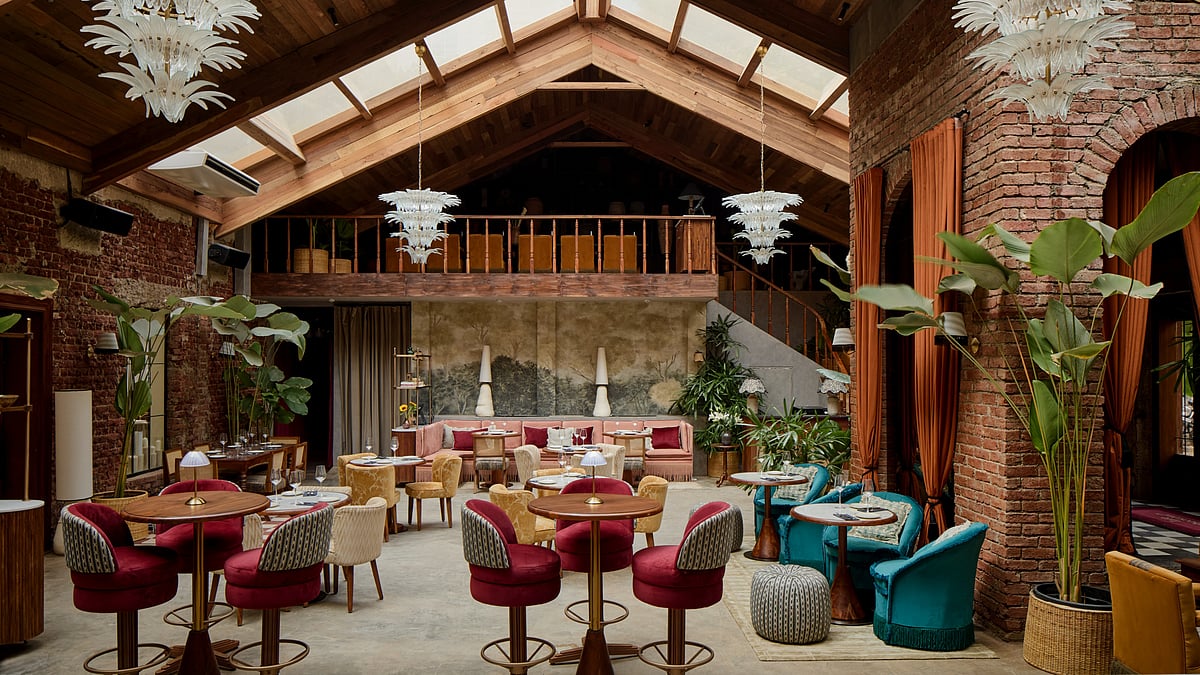
Late Checkout |
For one of the toughest businesses, India’s restaurant sector is seeing vigour and vitality. This is driven by the young blood that understands the idiosyncrasies of the modern Indian diner. The pandemic became a launchpad, and social media became the biggest outreach tool. Food remains the soul of every restaurant, but today, it is wrapped in story, emotion and culture. Buoyed by the resonance of these dining concepts, growth trajectory and expansions show similar traction. We spoke to three NextGen restaurateurs, who in the last decade alone have flipped the narrative of a successful restaurant business.
Fine Casual dining is the future: Avik Chatterjee
As the newly appointed CEO of the 30-year-old Speciality Restaurants, Avik Chatterjee was privy to the machinations of the restaurant business from a very young age. He remembers his parents at the first Mainland China outlet in Andheri, Mumbai, on their nightly rounds to count the daily revenue, in a pre-digital banking era. He joined the company in 2015 and successfully initiated new brands and then grew the business. Gong is one of his biggest successes. “We come from an Asian legacy; convincing the board to do another Asian format was a challenge. The idea was not to look like any of our current Asian restaurants. Gong was positioned for a newer audience, for a younger audience, with a little more energy,” he explains. The first Gong opened in Pune’s Balewadi area almost a decade ago—it is scheduled for an upgrade this year. The second outlet opened recently in Bandra, Mumbai, with two more Gong outlets scheduled to open in Pune and Delhi this year.
This is just the beginning; Chatterjee shares that there are at different stages of renovations, revivals and reinvention across multiple openings across various brands in the pipeline. Siciliana, the Italian café brand with Chef Saby at the helm of the kitchen, has recently opened two to three outlets in Mumbai, Kolkata and Bengaluru. QSR brand Walter’s, Chatterjee’s favourite project, is also looking at expanding. “We've done four stores now. We're doing a few more. It is our truest entry into the burger market,” he says.
Of Speciality Restaurants’ legacy brands, Mainland China and Asia Kitchen by Mainland China have been given a rebranding and a booster shot. “We redid the interiors and décor, the menu after 15 years. Mainland China never had bars; we introduced one, and just with that, we grew 30% each unit,” Chatterjee shares. Similarly, at Asia Kitchen, he moved away from authentic Chinese dishes, playing around with Japanese and Korean inclusions. It was a strategic decision for him: “Since the pandemic, I didn't focus immediately on opening new brands. I stopped myself, put on the thinking hat and understood how to correct my foundation first.” Chatterjee’s next mission is to revive Oh! Calcutta, the Bengali restaurant brand. The first outlet to be overhauled will be the one at GK2, Delhi. “The designs are almost locked. The new avatar is going to remind us of the club culture of Calcutta, but in a very contemporary setting,” he shares.
Most of these innovations are driven by how the consumer has evolved and what they demand from restaurants. “Diners are experiencing globalisation through their phones. Social media entices them, brings out the curiosity and a little bit of acceptability to try something new,” he explains. Everyone wants to be part of the big conversation whether it is food, fashion, cinema or any other realm. In the same breath, he also says that the business itself has also evolved. From a time when the gold standard in F&B were five-star chefs, to now when young professionals are changing gears in their careers, pursuing their passion, staging at Michelin star restaurants and coming back to work in India. “The availability of talent makes experimenting easier now. Recipes can easily be found, but it's the execution and standardisation that matters,” Chatterjee says.
Luxury today is comfort, attention to detail: Sahil Sambhi
With successful restaurants like Bawri, Vietnom, Latango and Japonico, Sahil Sambhi is known for his thematic spins of dining experiences. His newest venture with Chef Shri Bala at the helm in the kitchen is Nadoo in Gurgaon, serving Tamil home classics and Kannadiga street staples as an elevated experience. With all his restaurants operating successfully, he has learned that hospitality is a game of small moments, and excellence is created through hundreds of thoughtful decisions every day. “The goal is never to follow trends but to anticipate where the market is heading and create experiences that feel fresh, relevant, and timeless,” Sambhi adds.
With this intention, he has a very active launch pipeline that will start unveiling next year. Sahil Sambhi Brands will expand its portfolio with highly differentiated concepts across premium dining, bars, and luxury hospitality experiences. “There are 10 new launches planned in the next 6 months; a bespoke bar, a Korean BBQ space, amongst others,” he shares his excitement. It is a selective growth story, according to him, but the objective is to continue building brands with strong individual identities rather than scaling for the sake of it.
Sambhi’s metric for success is also measured in creating repeat customers, fostering strong communities, attracting great talent, and remaining relevant in an increasingly competitive market. “Long-term success comes from consistency and the ability to stay meaningful to guests over time.” The best fine dining restaurants are those that create emotional connections, not just impressive presentations.
Fine dining today is about intentionality: Pawan Shahri
In under 10 years, Pawan and Nikita Shahri, Founders of Chrome Hospitality, have transformed how the restaurant business was perceived, operated and measured for success. With marketing and nightlife as primary experiences, they saw a restaurant from the guest's emotional journey first and then worked backwards. “Most operators start from food and work outward. We started from culture and worked inward,” Pawan adds. They realised that fine dining today is about intentionality. High prices and polished service won't fool guests; without warmth or a genuine story behind the food, they'll notice at once.
The duo started Chrome in 2020, at the peak of the pandemic, when most people were shutting down. “Landlords were offering prime Mumbai spaces at historically low rentals because so many restaurants had closed. We saw it as a rare window,” shares Pawan. The premise was simple: if they could build and operate a restaurant during the toughest era of the industry, they could withstand any turbulent market. After setting up hotspots like Gigi and Lyla in Mumbai, they opened Late Checkout in Lower Parel. It is their first fully owned and operated concept. A key reason was that they could control all the variables of the infamously volatile business. “I've always been focused on thick bottom lines and self-sustaining stores because that's what gives you the runway to keep building. The shift to a fully owned model with Late Checkout is a deliberate reflection of that thinking,” he adds.
With a 30% year-on-year growth target, Chrome Hospitality is committed to the next phase that will take it to Bengaluru, Delhi, and select leisure markets. In a mix of management and ownership model, Pawan shares that the three-year target is a lofty 35 to 40 outlets across India.
RECENT STORIES
-
-
-
-
-