Mid-Century Modern Remains The Blueprint For Contemporary Furniture
Clean lines, organic forms and timeless craftsmanship are proving that mid-century modern isn’t a passing trend

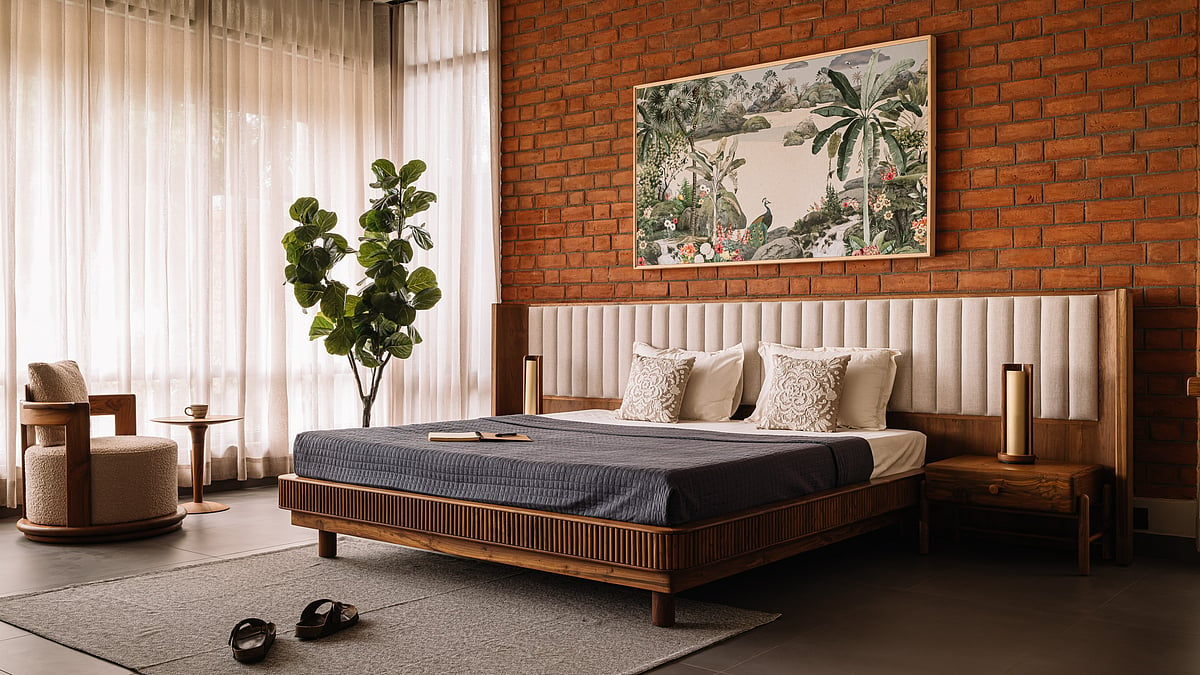
Furrow 2.0 bed by Tectona Grandis Furniture | Pic: Tectona Grandis Furniture
A quarter into the 21st century, finding inspiration from a century ago feels prophetic. We’ve already seen how Art Nouveau and Art Deco aesthetics have us in a chokehold. The natural and chronological progression leads to the mid-1900s, when the simplicity of the post-World War II era became a key feature. In the world of design, this meant clean lines, organic shapes, and functionality, which led to Mid-Century Modern design. What began as a Western design movement is now being reshaped by a new generation of Indian brands, blending global form with local materiality and craft.
Where materials met modernism
Modern homes have seen the biggest impact of this design sensibility, which allowed non-traditional materials to become mainstream, such as plywood, fibreglass, acrylic and aluminium. These, when paired with organic wood, fabrics and leather, offered an incomparable perspective to design. The biggest and most recognisable representation of this is Charles and Ray Eames’ design of a lounge chair and ottoman, simply known as the Eames Lounge Chair. The 1956 original model was made of die-cast aluminium, rosewood, Scottish leather and down filling. Makers Herman Miller (Vitra in Europe and the Middle East) continue to hold the rights to these Eames works. In 2024, the furniture manufacturer introduced bamboo-based leather upholstery as a step to reduce the carbon footprint of the chair by up to 35%.
Another Mid-Century Modern master was Gio Ponti, an Italian architect, industrial designer, and theorist who created the Dezza armchair. Designed in 1965, the seat’s modernist and squared lines are balanced by the curved armrests that outline the entire profile of the armchair down to the feet, lending it a sense of momentum and dynamism. To mark its 60th anniversary this year, Italian furniture maker, Poltrona Frau has reintroduced the style in a limited edition of just 60 numbered and certified pieces.
Reimagining the classics
In the 1950s, India also benefited from the Mid-Century Modern vision. Charles-Édouard Jeanneret, known as Le Corbusier, was commissioned to plan and design the city of Chandigarh. During his work on the city, he also designed functional furniture pieces that have become design icons. The Chandigarh Chair, co-designed by Eulie Choudhary, is one of them. Made from locally available teak and cane, its V-shaped legs are recognisable from a distance. Indian furniture brands have been finding inspiration in it continuously.
Gaurav Jain, Founder and Creative Director of Jodhpur-based Orange Tree, shares, “Mid-century classical designs are not new to the Indian audience.” He has collaborated with UK-based Swoon to introduce a collection of 30 furniture pieces that reimagine classics. Pieces such as the Rushden Wooden Sideboard, Rushden Cabinet Bar and Katana Media Unit echo the romance of mid-century Europe, re-envisioned through a contemporary lens. “Each piece in the collection has a touch of artisanal mastery, a distinctive quality that evokes bold elegance and can seamlessly blend with contemporary or traditional spaces,” he adds.
For Ahmedabad-based Tectona Grandis Furniture (TGF), pursuing Mid-Century Modern design is not the aim but rather a representation of a shared design principle. Co-Founders Dhruvkant and Jalpa Amin say that it is because they celebrate wood as an honest and expressive material. Design elements, such as rounded profiles, sculpted frames, or tapered legs, naturally evoke memories of Mid-Century Modern furniture. “These are timeless and classic design solutions that continue to offer elegance, comfort, and structural efficiency. There is also the way upholstery is combined with wood. Warm earthy tones, textured fabrics, or occasional chequered patterns can immediately remind people of interiors from the 1950s and 1960s,” they add.
TGF’s the Furrow Bed embraces these tenets in its soft curves and fluted detailing, while the Grigio Armchair’s curvaceous form, slender wooden rods, and restrained detailing naturally feel reminiscent of Mid-Century Modern furniture.
Freedom Tree’s Retro Update Furniture collection celebrates the inherent localisation of Mid-Century Modern designs, echoing what Le Corbusier ignited with his vision, which was then carried forward by Indian architects and designers. The brand’s Luna Sideboard is a mid-century blend of reclaimed teak, handwoven wicker, and fluted glass.
The 21st-century Mid-Century Modern revival is not about bringing back the past but about taking what was already exceptional and elevating it with localised inspiration and personalised functionality.
RECENT STORIES
-
-
-
-
-