Know Your Tisane: The Caffeine-Free Brew Quietly Replacing Your Daily Tea Ritual
From chamomile to lemongrass, caffeine-free herbal infusions are moving beyond home remedies to café menus and craft mocktails, driven by wellness, flavour innovation, and changing tea habits

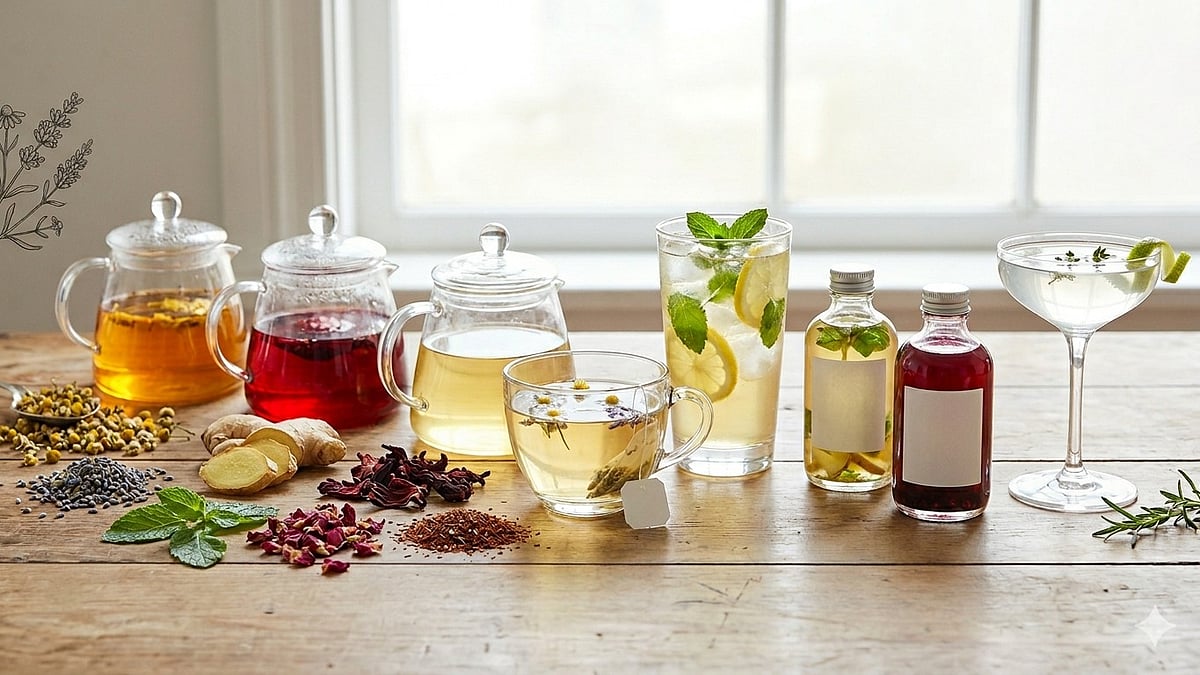
At some point of time, we would have reached beyond the regular tea for a sip of a cool glass of water infused with cucumber slices, lemon and mint. Tulsi, chamomile, mint, ginger, or lemongrass, and roots, spices, flowers, berries, herbs or any botanical part other than tea plant are steeped in hot or cold water. These brews are called herbal teas albeit they are not tea in the technical sense.
Greeks prepared a curative brew from pearl barley called ptisane which transformed to become the French tisane using fruits and herbs. It is said that early Egyptians offered chamomile-steeped drink to gods. Liang cha was the Chinese variety for herbal infusions through which they dispensed therapeutic herbs. The Khoi people of Africa developed Rooibos tea (red bush tea from a South African shrub).
Tea vs tisane
White, black, green, oolong – any and every variety of tea is derived exclusively from the camellia sinensis plant, and contains caffeine. To retain the greenness of freshly plucked tea leaves, they undergo ‘kill-green’ or ‘de-enzyming’ process, to stop oxidation. Whereas, herbal teas are dried/fresh herbal infusions or decoctions. Tisanes are devoid of caffeine besides making each concoction come alive with its distinctive taste and goodness. Many cafes now incorporate fruit-forward infusions like berry, citrus, or apple-cinnamon, and some elevate the experience with fresh ingredients like mint leaves, sliced ginger, or orange peel served in a more artisanal style.
Health properties
A lot of tisanes are very good at reducing inflammation and helping our system. They are not medicine, but it must be ensured to secure them from proper sources to avoid adulteration.
Dr. Eileen Canday, Head of Nutrition & Dietetics at Sir. H.N. Reliance Foundation Hospital, Mumbai, explains, “Lavender helps us relax, calming chamomile lessens anxiety, induces sleep, and relieves stomach problems. Peppermint tisane tackles indigestion, bloating, and helps alleviate headaches. Ginger root reduces inflammation, helps digest food. Hibiscus tisane has a lot of antioxidants which regulate blood pressure and maintain a healthy heart. Rooibos boosts immunity and strengthens bones.”
Health Coach Jayashree Lakshminarasimhan reveals, “Red raspberry leaf supports women’s health while spearmint tea can help reduce excess hormone (female androgen) levels. Elderberry and rosehip keep cold and flu at bay.”
Ideal time to imbibe tisanes
“Tisanes are most commonly consumed in the evening or post-meal, as they are caffeine-free and often associated with relaxation and digestion,” says Jayashree. Many regulars also opt for them before bedtime as part of a comforting routine. “We have noticed strong demand especially in the evenings, where customers are replacing traditional tea or coffee with calming blends like chamomile, peppermint, and lemongrass,” notes Sachin V. Pawar, Asst Food and Beverage Manager – Novotel Pune Nagar Road.
Chef Sarfaraz, Sous Chef, Lotus Eco Beach Resort Konark, states, “In some cases, they’re enjoyed during the day as a wellness drink, especially blends focused on immunity, detox, or hydration but their strongest consumption moment remains after dinner or late evening.”
Tisanes in beverage
In restaurants, tisanes are usually built around familiar, functional, and flavour-forward blends that appeal to a wide audience and are generally well received as caffeine-free immunity boosters. However, if listed too simply as “herbal tea,” they are often overlooked. “Commonly found are lemongrass and ginger blends, tulsi for an Indian wellness touch, and rose or lavender for a more floral, premium feel. Their appeal increases with thoughtful presentation, clear descriptions, finest ingredients, and a focus on wellness or flavour profiles. When positioned creatively, such as in mocktails or as part of a curated tea experience, tisanes can perform quite well and add a refined touch to the menu,” explains Chef Sarfaraz.
Who prefers tisanes
Sachin Pawar answers, “Tisanes are not being ordered just by health-conscious guests anymore—they’re gaining wider appeal among younger customers and even as part of social dining. Our iced herbal teas and herb-based mocktails have performed very well, especially during warmer months.”
Fnb teams are cleverly bridging two worlds – classic tea culture and modern mixology – to create a drink that feels both familiar and elevated. Sachin Pawar further adds, “The Lemon Tea Martini from our Tealicious menu combines the flavour of fresh lemon with the subtle depth of light herbal infusion, resulting in a refreshing drink, slightly tangy, and gently aromatic rather than overly sweet. This makes it appealing to guests who prefer more refined, less sugary cocktails.”
Regardless of whether it is a soothing flavoursome drink, an antioxidant-packed gut soother, or an invigorating stimulant-free beverage that you hanker after, tisane appeals to all with the goodness of its special ingredients!
RECENT STORIES
-
-
-
-
-