Indie-Pop Duo KhoslaRaghu On Love, Friendship And New EP: ‘Our Understanding Of Love Grows With Each Song’
The indie-pop duo opens up about ‘Bewajah’, blending Indian classical sounds with contemporary production, staying independent and balancing friendship with creative differences

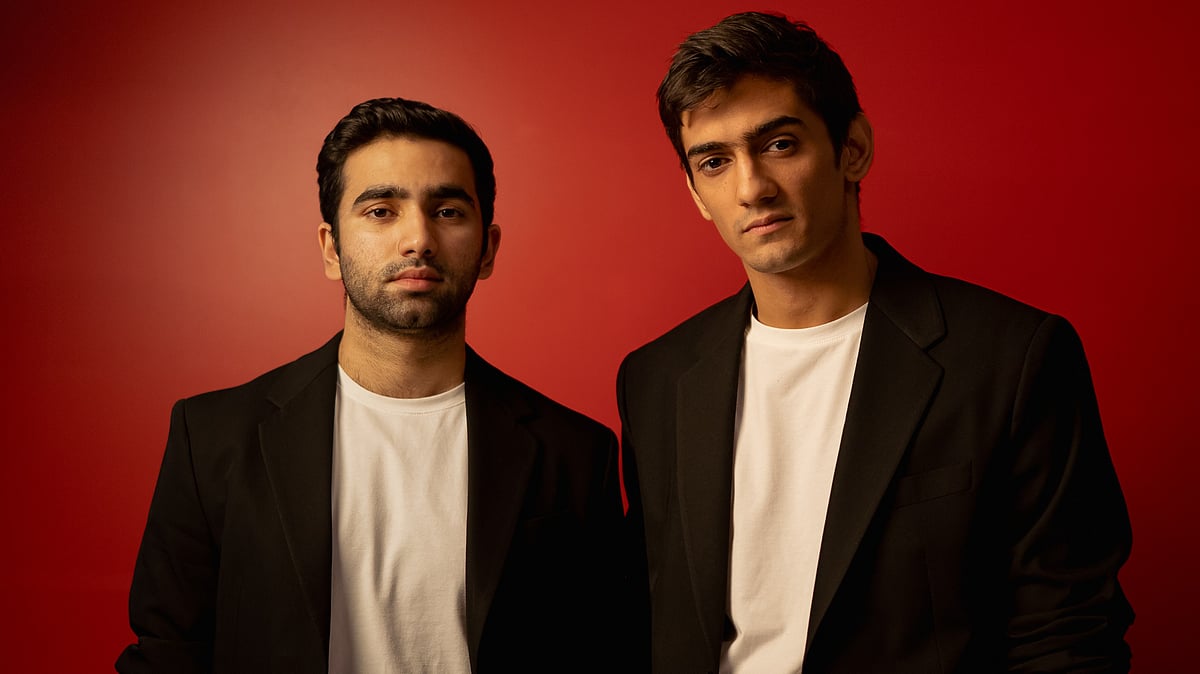
Photo: Courtesy of the artist
Mumbai-based indie-pop duo KhoslaRaghu have captivated listeners with their honest songwriting and soulful melodies. The duo are back with a five-track album ‘Aarzu’, releasing Bewajah as the first single.
Sanchit Khosla and Rishabh Raghuvanshi who make up KhoslaRaghu began their journey with one simple belief – friend’s first, music later. What started as two friends making music in a basement has organically grown into one of the most exciting independent music success stories. Drawing from Indian classical influences while embracing contemporary production, they craft songs around love.
The 26 year old duo who share the same age, have built a fiercely loyal audience with songs like Barse More Naina, Dooriyan, NaQabil and others with their music also featured in ZEE5’s ‘Faltu Engineers’, ‘Duniya Jhol’ and on Amazon Prime’s Video – ‘Do You WannaPartner’.
The duo talks about their new album that journeys through many shades of love, from longing and heartbreak to healing and hope.
Excerpts from the interview:
Bewajah begins where most love stories usually end—with complete emotional surrender. Why did you choose to start the album there?
Sanchit: We started with Bewajah as the first track to set the tone for the entire EP. Our EP is about a desire, unfulfilled love and longing. Bewajah expresses how difficult it is to be in love with someone and not have that person. So this just gives a good start to the EP.
On that note, do you think today's listeners are finally comfortable with songs that don't pretend to be emotionally strong?
Sanchit: That’s exactly what we are trying to build here. Such songs are not very common and we want listeners to accept this side of love as well. Everybody has gone through this phase and we are just trying to make people accept it.
The line in Bewajah about asking someone to stay away because you're falling deeper in love. is beautifully ironic. Do your lyrics come from lived experiences or imagined emotions?
Rishabh: This song is not because of a personal experience, but something that we have seen happening with people around us. It’s inspired by stories around us.
Tell us briefly about what the other songs on the EP are about?
Rishabh: The entire EP has a range of emotions. Bewajah highlights anger and emotional vulnerability; Mile Jo Sukoon draws inspiration from Raag Des blending Indian classical nuances with modern production and carries numbness and quiet acceptance of the cards you are dealt. Naina Saavan (feat Purusharth Jain) is about hitting back at those memories, when you want to let go, but your heart still aches for that person and it’s impossible to stop crying. Hausle is the rise of hope, so you still feel the same, but somewhere deep down there is hope that is good to happen in life. Teri Aadatein (feat Hansika Pareek), which is the bonus track, is like a quiet sunrise after an emotional storm. It’s about the time when the heart finds the courage to love again.
The sitar on Bewajah feels subtle rather than ornamental. How do you decide when an instrument should lead a song and when it should simply deepen its emotions?
Rishabh: Basically, our thought process behind creating this kind of sonic EP was to bring back the magic of creating music with emotional sensibility in this age of AI. We wanted to create music with a blend of Indian classical instruments with contemporary production. To give you an insight, Bewajah was initially planned with violin and Naina Saavan was planned with sitar, but after listening to the feel we decided to switch. So it’s all navigated by ears and emotions.
Your music feels cinematic. Do melodies come first, or do you first imagine the scenes?
Sanchit: It’s always melodies first. It feels cinematic maybe because we are inspired a lot by films and other art forms in our personal lives.
So talking about films, the animated music video of Bewajah has two characters portrayed in skeletal design. What was the concept behind it?
Sanchit: Our EP is a body of work built around desire, yearning and the emotions that stay with us long after a moment has passed. What we are trying to represent with our Artwork, and the Bewajah visualiser is that the desire for love stays even if you die and the yearning never goes away. As for the rest of the EP, you’ll have to stay tuned to discover the visual treatments we have in store.
Academically what did you study, and did you leave another career to pursue music?
Sanchit: I have done a Master's in music and media technology from Trinity College, Dublin, Ireland and Rishabh has done a Master's in Management from the University of Durham, UK. And no, we always wanted to give music a chance and that's why we came to India to work together and create more music of our own. While none of our families has been in music, we are going to be the first generation of our families to be in music.
What have been the rewards and challenges of building your career as an independent artist?
Sanchit: For our creative satisfaction and to experiment more we choose to be independent musicians and honestly, we enjoy that. But that does not mean we do not work with labels or Bollywood. Releasing independent music gives us greater creative freedom, and our end goal is to make music we like and can be proud of as artists. The challenge that comes with independent music is not with creativity, but with the promotions and marketing. Today, promotions and marketing are what make or break a song and we cannot do what big labels and big budget films can do.
KhoslaRaghu began as two friends making music in a basement. How do you protect that friendship when creative disagreements inevitably arise?
Rishabh: We trust each other’s expertise and no doubt creative differences happen but that's where the friendship comes in. We keep our egos aside and hear the other person’s perspective and try to find a middle ground which helps us bring out the best of both worlds. When it comes to music and production, I go with Sanchit’s final word and with lyrics and singing Sanchit trusts me to do what’s best. In the end, a good song is what really matters. Music or no music we are still childhood friends and that brings a lot of things in perspective.
Every successful duo eventually develops an unspoken language. What's something one of you instinctively knows about the other's creative process that outsiders never see? Rishabh: We have learnt to give each other time. We share ideas with each other and then give the time to come back to it and together find a middle ground.
Looking back at songs like Barse More Naina, Dooriyan and now Bewajah, how has your understanding of love changed as songwriters and as individuals?
Rishabh: The songs that we write and compose are based on stories either from our lives or experiences of people with us and that is what we see. Our understanding of love grows with each song and we get different perspectives as artists and individuals.
What other projects are you working on?
Sanchit: We take projects as and when we get and currently we are only focused on the EP and Tour.
RECENT STORIES
-
-
-
-
-