India's First Hydrogen Train Runs For Trial: Everything To Know About The Eco-Friendly Rail Project
Developed by Indian Railways, the hydrogen train is designed to operate using hydrogen fuel cells instead of conventional diesel engines. The fuel cells generate electricity through a chemical reaction between hydrogen and oxygen, producing only water and heat as by-products. This makes hydrogen-powered trains an environmentally friendly alternative to fossil-fuel-based rail transport.

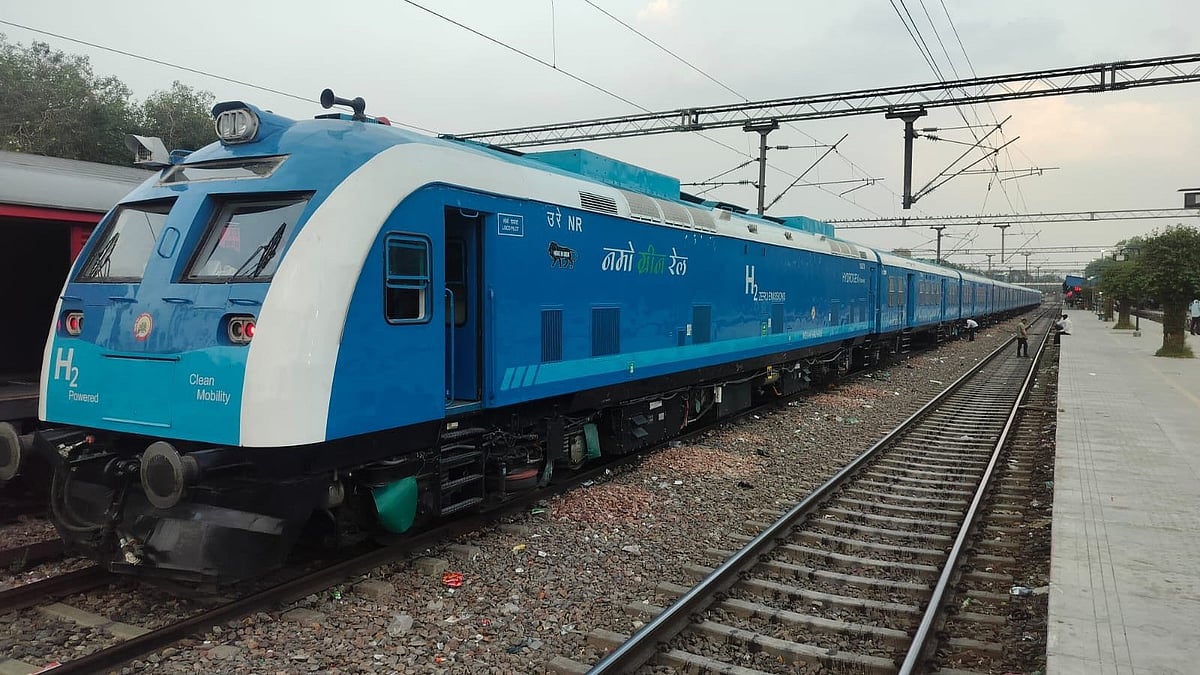
Hydrogen Train In India |
India has taken a major step towards sustainable transportation with the trial run of its first hydrogen-powered train. The project marks a significant milestone in the country's efforts to adopt cleaner energy solutions and reduce carbon emissions in the railway sector. The country's first hydrogen-powered train comprises 10 coaches and is equipped with a powerful 1,200 kW engine. It completed a successful high-speed trial run, reaching speeds of 120 kmph on the Jind–Sonipat section of Northern Railway in Haryana on Saturday, June 27, 2026.
About the hydrogen train
Developed by Indian Railways, the hydrogen train is designed to operate using hydrogen fuel cells instead of conventional diesel engines. The fuel cells generate electricity through a chemical reaction between hydrogen and oxygen, producing only water and heat as by-products. This makes hydrogen-powered trains an environmentally friendly alternative to fossil-fuel-based rail transport. Through this initiative, India aligns itself with a distinguished group of nations, including Germany, Japan, China, and the United States, that are investigating hydrogen as a means for more sustainable rail transport. Since the technology is still in its early development phase, only a few countries are presently using or trialling these systems.
Operations and management
The train operates on green hydrogen fuel cells that emit only water vapour, spearheading Indian Railways' zero-emission transportation goals. The system is remarkably fuel-efficient, which means it is capable of travelling approximately 180 km on just 360 kg of hydrogen. The Research Designs & Standards Organisation (RDSO) conducted thorough oscillation and Emergency Brake Distance (EBD) trials to ensure structural and operational stability. Dedicated spaces within the train have been set aside to house hydrogen storage cylinders, fuel cell systems, batteries, and control systems. On a single refuelling, the train can cover approximately 250 km. The train is equipped with several safety systems, including hydrogen leak detectors, flame detection equipment, and continuous monitoring technology.
ALSO READ
Reduce dependence on imported fossil fuels
Apart from lowering greenhouse gas emissions, hydrogen trains are expected to reduce noise pollution and dependence on imported fossil fuels. The technology also offers a viable option for railway operations in areas where electrification may be challenging or economically unfeasible. If adopted on a wider scale, the technology could help Indian Railways lower its carbon footprint while providing efficient and environmentally friendly transport for millions of passengers.
RECENT STORIES
-
-
-
-
-