Goa’s Secret Carnival: Meet The Masked Potekars Who Terrify The Island!
From childhood frights to Instagram-ready revelry, Divar Island’s ancient Potekar tradition lights up from February 13 to 17, blending history, costumes, and community celebration every Carnival

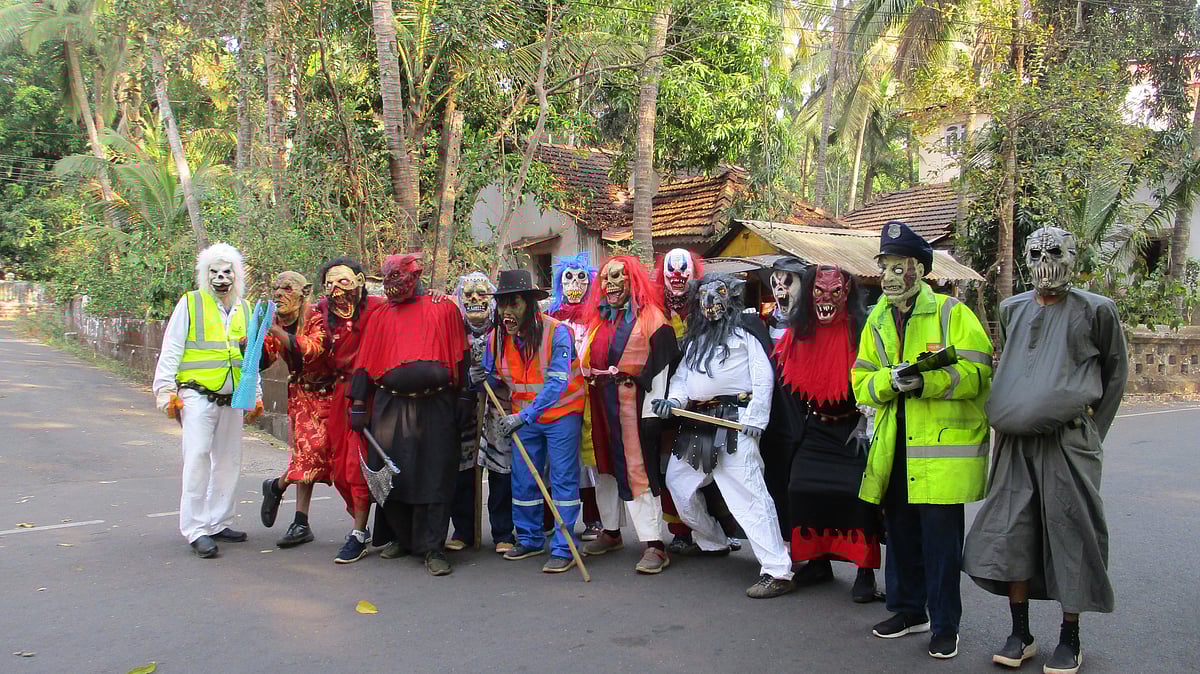
Somewhere in the quiet bylanes of Divar island, a group of men gather in a house earmarked for a meeting. In hushed tones, they hunch over tables stacked with gory masks, tufts of fake red and blue hair, and straps of cowbells. Between jokes and shared memories, each one picks the items of their choice as the group readies for the day ahead.
One man quips, "My ankles hurt from the long walk, but the doctor says it's good for my diabetes as it has improved."
With their bellies filled after a quick snack and a prayer for a good day, the masked men hit the island roads. Neighbours and friends transform into unknown, frightful figures, popularly known as Divar Island’s Potekars.
Potekar means shabbily dressed. This ancient tradition, although its origins remain unknown, continues to hold sway to date. It is held from Carnival Sunday to Tuesday and preserved by Divarkars alone.
“Only islanders participate in this tradition. As children, we were terrified of the potekars,” recalls Moses de Divar, a famed tiatrist from the island who has been donning the costume for years. “Our parents used them as a threat to discipline us. ‘If you don’t eat your food, I’ll call them,’ they would warn. That was enough to set us straight.”
Costumes were made from whatever materials were available at the time. Moses shares, “Earlier, we made moulds of flour from the faces of old, discarded statues. It took two days to dry. We’d hunt for old clothes and borrow cowbells from cattle herders.”
Now a T-shirt printing shop owner, Moses, also creates costumes for others on the island. Photographer John Lino, who participated as a child, remembers a friend once bringing a mask from abroad. “There would be six or seven of us walking around the waddo. Even though I was in costume, I was still scared of the taller seniors — the fear stayed,” he laughs, recalling the memory.
Modern twists
Over time, the fear has waned, replaced by a more celebratory spirit. Doors once shut, now open warmly, welcoming the potekars in for lavish lunches.
“We plan the entire day. We know where we’re invited and who’s cooking what,” Moses adds.
On the final day, everyone gathers at the fetorim — Divar’s main circle. The spectacle now draws tourists too, with crowds swelling for selfies and Instagram reels.
In recent years, Goa’s Festacar (Festival Man) Marius Fernandes has hosted a potekar gathering on his balcão for family and friends, keeping memories alive. “I host it in an intimate setting, from a traditional balcão (veranda), where stories of the past are shared with new audiences and younger generations,” he says. “These gatherings have become spaces of memory and transmission, connecting lived experience with present-day curiosity.”
What was once a male-dominated tradition has also opened its doors to women. Maria Goretti is among the few breaking the mould. Back in Divar from the UK, she shares, “We’re a small group of six or seven. The men didn’t know it was us since we were all masked. They were shocked,” she laughs.
“We meet at one lady’s house where the masks and costumes are stored,” Maria adds. Being in costume, she says, is empowering. “The expressions on people’s faces when you walk up to their gates—it’s incredible. There is immense respect for the potekars.”
Carnival in Goa takes place from February 13 to 17 across the state. Along with the parades and parties on the itinerary, a visit to Divar to meet the potekar performers is mandatory to witness the unique tradition.
RECENT STORIES
-
-
-
-
-