Gen Z in India Can’t Stop Worrying About Climate Change—Here’s Why It Matters
From rising temperatures to eco-guilt, young Indians are navigating fear, hope, and responsibility in a warming world

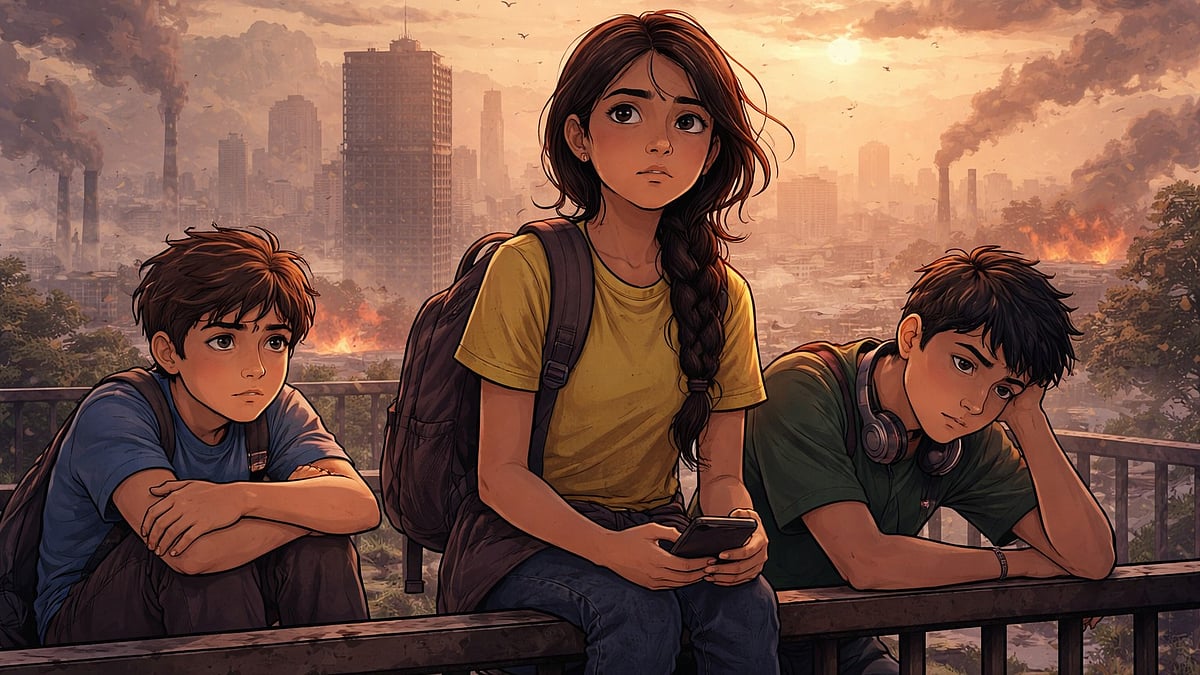
On a particularly hazy morning in Mumbai, 16-year-old Veena scrolls past yet another headline about rising temperatures and erratic rainfall. She doesn’t pause, she doesn’t react—not because she doesn’t care, but because caring has begun to feel like a weight her generation quietly drags along. Across India’s cities with choked lungs, from Bengaluru’s traffic-burdened tech hubs to Delhi’s smog-thick winter mornings, young people are experiencing a lived, daily tension and are navigating a strange emotional landscape shaped by climate uncertainty. For them, being sustainable often means going out of the way—refusing convenience that their predecessors created for humanity.
“My friends and I often joke that we can’t imagine life beyond 25 — not because we’re pessimistic, but because the future feels uncertain. Climate anxiety has become a quiet part of growing up”, said Revathi Kodalli, a 23-year-old marketing consultant from Hyderabad.
Unicef defines climate anxiety to represent real and valid feelings of fear, worry, stress, helplessness, and unease related to evolving climate crises. These should be understood as natural reactions when witnessing the impacts of climate change and not as a mental health condition. A study on the Indian youth by the Centre for Science and Environment showed a growing sense of helplessness, disrupted sleep, eco-guilt, and a persistent undercurrent of fear about the future, sharpened by lived experience. Extreme weather events are everyday news. For many urban young adults, climate change is forming a constant mental backdrop, altering how they plan careers, imagine families, and think about adulthood itself.
Jaipur’s Dhruv Sarda learnt about climate change at school in the fifth standard. “I imagine the earth becoming like a glowing fireball — no trees, no water, no electricity, no humans or animals. Just a dry, sandy planet with no life. That scares me.” The 13 year old belongs to the generation that fosters hope for the seemingly bleak future of our planet. “I think the earth is dying. There’s a real shortage of water, temperatures are rising, and the weather has become unpredictable. But our school also teaches us how to fight climate change—things like using sustainable energy, planting trees, and reducing our carbon footprint”, he told Free Press Journal.
Veena Dwaram (16) on the other hand stands at the edge of that same future with a contrasting outlook. “I think that most of my generation don't really put effort into making any changes in our lifestyle to help the planet as there has already been so much damage, it doesn't feel like anything would help no matter what we do.” She worries that with temperatures rising this fast, humans will soon run out of resources and even see cities slip underwater.
“I don’t blame older generations for leaving us with an unlivable planet, because I rely on things that harm it too — especially my air conditioner. At this point, the impact of climate change on humans feels inevitable because small fixes don’t seem enough. She thinks of eco-friendly appliances that are “somehow also not costly and are still accessible to everyone”, but also finds it hard to believe that anything will actually shift.
In a country where the median age is under 30, this simmering climate anxiety is becoming a defining emotional signature of a generation—one that grew up being told to dream big, only to learn that the world they inherit may be harsher, hotter, and more unpredictable than anything their parents imagined. Kodalli presents a dilemma her generation faces with buzzwords. “Sustainability used to mean something powerful, but the storytelling around it has gone numb. People have heard so much bad news that it barely stirs them anymore”, she says.
Dr. Caroline Hickman from the University of Bath, says “children and young people feel the impacts of climate change more sharply than adults because they are still developing and their entire future—education, careers, and sustenance— is directly at stake. They also lack the economic and political power to drive change, making them reliant on adults for action as well as for emotional support and coping skills”.
“I don’t really talk about it with my friends — especially when school keeps reminding us about climate change, even though so many things there itself contribute to global warming”, Veena admits. “We see it as something that all adults talk about, but don’t do themselves.”
Their climate anxiety isn’t a warning sign of fragility, but a warning sign to the rest of us. Hickman asserts saying “climate distress isn’t a disorder—it reflects empathy, awareness, and a genuine sense of responsibility.” What they need most is to be heard, and for adults to take their concerns seriously and act on them. “The only time we actually saw the planet heal was during COVID — when everyone stopped moving”, says Kodalli. For her, “ It’s exhausting to realise that doing good for the planet is still the harder choice”.
Eighth grader Dhruv presents a more optimistic view with some choices everyone can make, that his friends at school do consciously too. “We don’t leave the tap open while brushing, take short showers and also make sure to switch off appliances when they’re not being used, because leaving them on increases emissions.”
Listening to the anxieties of the youth is a roadmap to understanding their clarity, fear, and hopes—that could guide us toward the climate-resilient future that they deserve.
RECENT STORIES
-
-
-
-
-