Forget Identity Politics—Here’s What Gen Z Really Wants From Leaders
A new generation of voters is demanding jobs, better infrastructure and transparent governance over traditional political narratives

On a sweltering June night at New Delhi’s Jantar Mantar, Cockroach Janata Party founder Abhijeet Dipke slept on a makeshift protest stage, vowing not to leave until India’ Education minister resigned. Days earlier in Jaipur, he had been allegedly been slapped by a group of men moments before he was due to address a crowd. In the week since, his Instagram account has been hacked, and the party’s website and X handle have both been taken down by authorities as incidents have kept the satirical youth movement as much in the headlines for the controversy around it as for the cause it claims to represent.
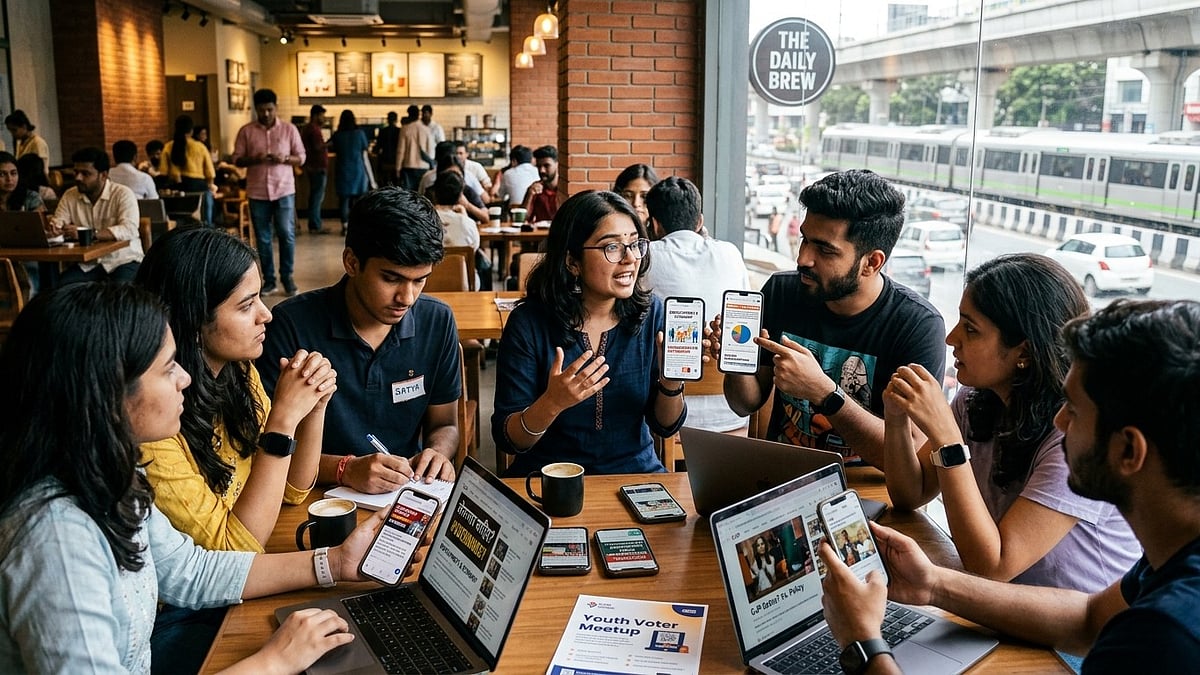
It's chaotic, very online illustration of something larger happening beneath the surface of India’s election season visible less on stages than in WhatsApp groups where twenty-somethings argue about budget allocations the way previous generations argued about cricket.
For decades, election outcomes were shaped by caste equations, family loyalties, and party allegiance passed down like an heirloom. Today, a growing number of young voters are skipping that inheritance entirely and asking a blunter set of questions instead: will there be jobs? Can my salary survive this inflation? Is anything actually getting built or just announced?
"Young working voters appear to hold greater influence is state elections today than they did a decade ago" says Raj Kumar Singh, an SSC aspirant. "Political parties are increasingly focusing campaigns around jobs, education, startups, transport, digital services and infrastructure because younger voters are highly vocal online." India's enormous youth population, fast urbanisation, and near universal internet access have made this bloc one that campaigns can no longer afford to write off as unconcerned.
That shift isn't ideological, it's economic, and it's personal. Rising rents, taxation, inflation, and an unpredictable job market have turned politics into dinner-table conversation for young professionals who, a decade ago, might have turned it out entirely.
"Many young voters from Gen Z are not very concerned about political ideologies and prefer to think of more practical aspects, employment opportunities and economic growth," says Bhoomi Kanojiya, a Trust and Safety Associate at Accenture. "Most young professionals think that if they are providing so much to the economy, the government needs to think of ways to make their lives better too."
"Some think that development-oriented politics is essential for India's future, while others think politicians resort to identity and emotional politics to divert attention from actual problems such as unemployment and lack of education," Kanojiya adds.
A phrase doing the rounds in youth discussions captures the mood: 'Which is greater, a police station or a railway station?' Actually, it's expectation. Affordable housing, safer streets, trains that run on time, jobs outside a press release, that's the real currency of this election cycle.
This frustration hasn't curdled into apathy. Many young voters now interrogate every party before deciding where their vote goes. "Many now behave more like performance evaluators, shifting support depending on governance quality, corruption and economic opportunities," Singh says.
"Politics is now consumed through memes, influencers, podcasts and short-form content rather than only television or newspapers," Singh notes. Kanojiya sees the same shift: "Instagram, X and YouTube have enabled political discussions to take place instantly. A working Gen Z voter is able to participate in debate, verify speeches and listen to different opinions within minutes."
That speed has also opened the door for smaller, digitally native outfits chasing voters who don't default to legacy parties out of habit. The Cockroach Janata Party is one example, a satirical, online-first outfit built around anti-corruption messaging aimed at voters too young to remember a pre-internet campaign trail.
Not everyone is convinced the momentum holds. "The satirical outfit is currently making huge efforts at mobilising the youth but is slowly losing its relevance due to the lack of leadership within its ranks," says Shreya Koticha, a post-graduate student.
Others question its substance rather than its staying power. "Cockroach Janata Party is currently distracted and is not properly putting the issues of the common people upfront," says Soumya Ranjan Seth, a professional dancer and choreographer. He adds, "India's democracy houses various political ideologies, but the Cockroach Janata Party was formed based on comments made by CJI but a person staying abroad won't understand the ground reality, and sprouting nonsense is not the way of creating an impact in the minds of the people."
Koticha is equally unconvinced that visibility, CJP's or anyone else's equals genuine engagement. "Even if Cockroach Janata Party does some protest, half of Gen Z are not politically informed and lack knowledge since the news these days are so depressing," she says.
What young voters who are paying attention actually want has little to do with theatre. "The youth demand transparency, digital governance, mental well-being, career development, safer cities and problem-solving rather than political rhetoric," Kanojiya says. "They demand honest communication from their leaders."
That demand is becoming harder for parties to ignore, even as smaller outfits like CJP struggle to convert attention into structure. Startup policy, digital governance, public transport, and employment generation are steadily moving from footnotes to headline issues campaign after campaign.
None of this makes Gen Z a single, predictable voting bloc: caste, religion, geography and ideology still pull in different directions, and as Koticha's scepticism shows, plenty remain disengaged rather than radicalised. What unites the politically active share is a simple shift in posture: judge the government on what it does, not on who it claims to be.
India's youth are no longer content watching politics from the sidelines. Increasingly, a vocal share is pulling up a chair to the table even if a quieter half is still deciding whether to bother showing up at all.
RECENT STORIES
-
-
-
-
-