External Affairs Minister S Jaishankar Visits Baku's Ateshgah Fire Temple; Know Its Connection To Zoroastrianism And Hinduism
On Friday, S Jaishankar visited Baku's Ateshgah Fire Temple and described the visit as "a symbol of the historical and cultural connect between our two peoples," highlighting the site's ancient ties to Indian traders and pilgrims. The site features historic Sanskrit, Punjabi and Persian inscriptions, including invocations to Hindu deities such as Lord Shiva, Lord Ganesha, Jwala and more.

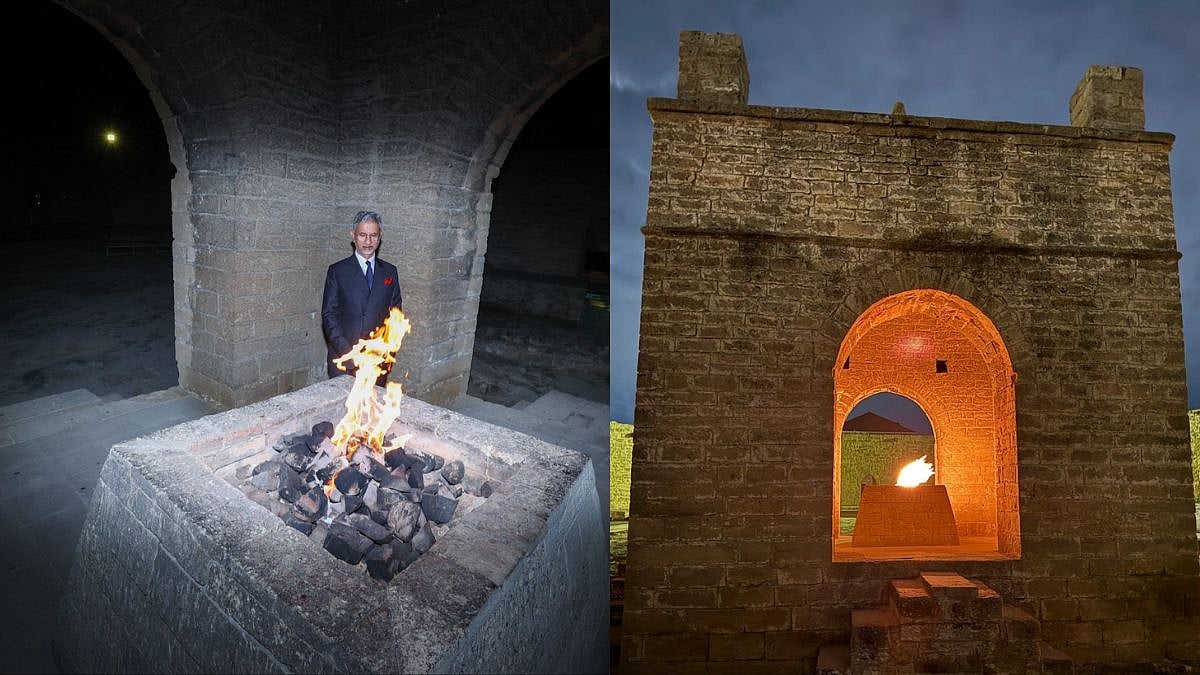
S Jaishankar Visits Baku's Ateshgah Fire Temple On October 23; Know Its Connection To Zoroastrianism | X
External Affairs Minister S Jaishankar visited the historic Ateshgah Fire Temple in Baku, Azerbaijan, on Friday, October 23, 2026. The visit brought attention to one of the region's most distinctive historical landmarks, known for its association with fire worship, Zoroastrian traditions and the cultural links between India and Azerbaijan. His visit to Azerbaijan for talks with his counterpart marked the first visit to Baku by the Indian External Affairs Minister in eight years. The last visit was made by the late Sushma Swaraj in 2018.
"Paid a visit to the historic Ateshgah fire temple in Baku. A symbol of the historical and cultural connect between our two peoples," the Indian foreign minister said in a post on X.
External Affairs Minister S Jaishankar visits Ateshgah Fire Temple
On Friday, October 23, 2026, External Affairs Minister S Jaishankar visited Baku's Ateshgah Fire Temple. Jaishankar described the visit as "a symbol of the historical and cultural connect between our two peoples," highlighting the site's ancient ties to Indian traders and pilgrims. The site features historic Sanskrit, Punjabi and Persian inscriptions, including invocations to Hindu deities such as Lord Shiva, Lord Ganesha, Jwala and more.
Located in Surakhani, on the outskirts of Baku, the Ateshgah Fire Temple is a historic religious complex that attracted visitors and worshippers from different parts of Asia. Its name is derived from Persian words associated with fire, and the site is popularly known as the Fire Temple of Baku.
What is special about Ateshgah Fire Temple?
The pentagonal stone complex was built largely in the 17th and 18th centuries by Hindu, Sikh and Zoroastrian merchants and pilgrims travelling along the trade routes.
The temple is renowned for its central altar and surrounding cells that once accommodated worshippers and pilgrims. Its history is closely linked to the natural gas reserves beneath the Absheron Peninsula, which historically produced flames emerging from the ground.
Natural flames and historical significance
These natural fires contributed to the region's reputation as a land of eternal flames and helped make the site an important destination for those drawn to fire-related religious practices.
Today, the temple is a museum and a major cultural attraction in Azerbaijan, and it offers visitors a glimpse into the area's religious and commercial history.
What is its connection to Zoroastrianism and Hinduism?
Zoroastrianism is one of the world's oldest living religions. Founded on the teachings of the ancient Iranian prophet Zoroaster, the faith places great importance on truth, purity and the symbolic significance of fire. The ancient natural site of fire worship where eternal flames erupted from underground gas vents.
In Zoroastrian tradition, fire represents purity and serves as a medium through which worshippers focus their prayers. However, Zoroastrians do not worship fire itself as a deity. Ateshgah comes from the Persian words Atash and gah, meaning place.
Historical ties with Indian pilgrims
The Ateshgah complex is associated with both Zoroastrian and Hindu traditions. Historical inscriptions and architectural features indicate that Hindu and Sikh visitors also worshipped at the site. The 17th- and 18th-century structure was built and used by Hindus and Sikhs from India who travelled along the Grand Trunk Road and Silk Road to the Caspian region.
RECENT STORIES
-
-
-
-
-