Blue Button Jelly Creatures Are Appearing On Mumbai's Coastal Regions; Here's Why You Shouldn't Touch Or Go Near Them
An unusual and striking sight has been catching the attention of beachgoers along Mumbai’s coastline. Electric-blue, button-like marine organisms, commonly spotted along Juhu Beach, have started appearing in large numbers this summer, earlier than usual.

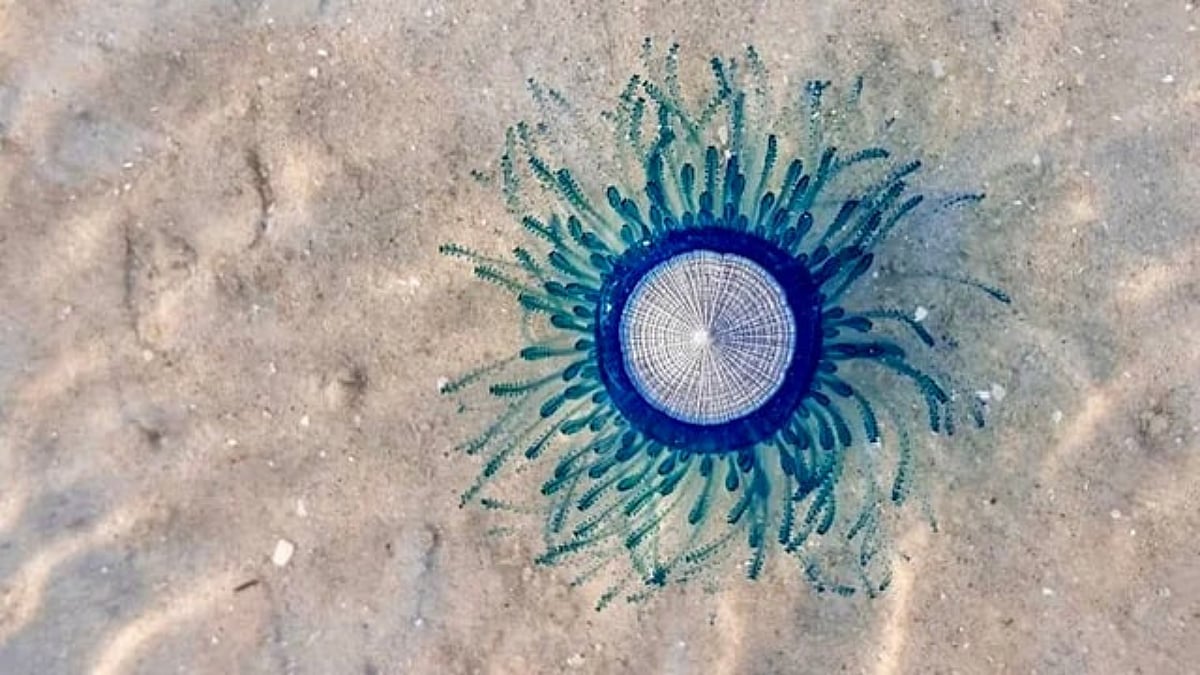
Blue Button Jelly Creatures Are Appearing On Mumbai's Coastal Regions; Here's Why You Shouldn't Touch Or Go Near Them |
An unusual and striking sight has been catching the attention of beachgoers along Mumbai’s coastline. Electric-blue, button-like marine organisms, commonly spotted along Juhu Beach, have started appearing in large numbers this summer, earlier than usual. These tiny, glowing creatures, often called blue button jellies, are turning heads for their alien-like appearance.
ALSO READ
What is this Blue Button Jelly?
Known scientifically as Porpita porpita, these organisms are not actually jellyfish. Instead, they are colonies of tiny, specialized hydroid polyps working together as one unit. Each colony includes organisms responsible for feeding, stinging, and reproduction, making them fascinating examples of marine life.
Their sudden and increasing presence along Indian coasts, including Odisha, Tamil Nadu, Andhra Pradesh and Gujarat, is not just a seasonal phenomenon. Scientists believe these strandings are indicators of larger environmental shifts.
Rising sea temperatures, changing ocean currents, coastal pollution, and cyclonic disturbances are all contributing to their movement toward shore, making them living signals of climate change impacting marine ecosystems.
ALSO READ
Look But Don't Touch:
While they may look harmless, these blue button creatures can deliver a mild sting. Contact with skin may lead to irritation, itching or rashes, especially for those with sensitive skin. Though not considered dangerous or life-threatening, it’s best to avoid touching them or going too close, particularly near the eyes or open wounds.
As Mumbai’s beaches continue to witness this rare phenomenon, these tiny blue visitors serve as both a visual spectacle and a subtle warning, highlighting the changing dynamics of our oceans and the need to protect them.
RECENT STORIES
-
-
-
-
-