‘Bhakti Is An Invitation To Zoom Out Of Our Individual Identities’: Choreographer Mayuri Upadhya On Exploring Faith, Love & Surrender
As Bhakti – A Shared Longing showcases at NCPA this week, choreographer Mayuri Upadhya speaks about faith, love, surrender and finding a shared consciousness through the poetry of saints

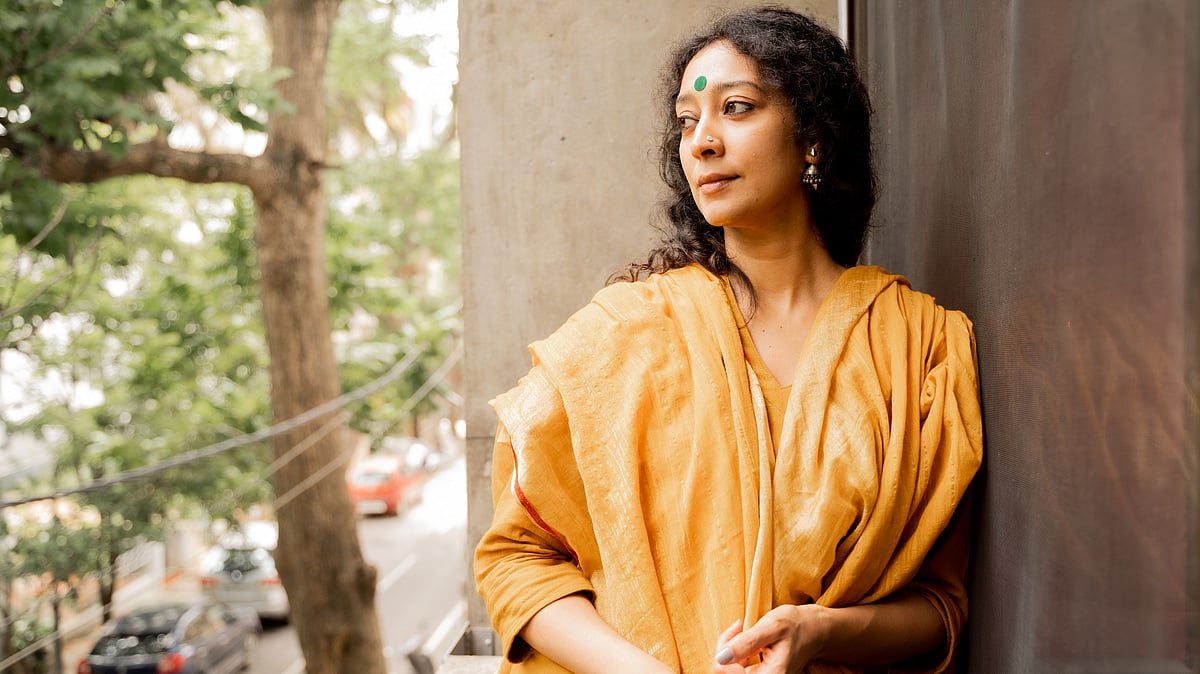
Mayuri Upadhya, choreographer with quite a few hits in her pocket, admits that power of surrender is very important while practicing any art form.
Her current work is quite different from her earlier choreography assignments. In Bhakti - A Shared Longing, that showcases at NCPA this week, she explores varied forms of poetic devotion.
Excerpts from the interview:
What does Bhakti mean to you?
'Bhakti' comes from a very personal space. In today's times, I think we are always encouraged to live in a world of binaries; right vs wrong, us vs them etc. We are always encouraged to choose between dichotomies. I believe that you can stand for what you believe in and yet remain open to different ideas. So this is a question I constantly ask myself ; whether we can hold our convictions, our beliefs deeply and still make space for someone else's truth? And this question sort of began the journey of Bhakti for me. I began reading about Bhakti poets and realized that even though they came from different regions, religions, languages, faith traditions, rituals, yet they were all pointing towards one truth, one direction, which I think is far beyond labels. I think they were trying to remind all of us that there is a deeper consciousness connecting us all. And dance for me is the way that I choose to respond to what's happening around the world. So it's sort of a coping mechanism for me. I make sense of the world through dance. Bhakti became my response to all that is happening around us. So it's sort of an invitation to zoom out of our individual identities and become part of something that's much larger than ourselves. And it is a shared longing because even though we all might come from different places, our questions might be different, but the yearning that moves us all towards love, towards truth is the same. And that is why the title 'Bhakti - A Shared Longing.'
You have used works of Meerabai to Khusrow. What is that one thing that links all those whose works you have used?
So for me, it was a very organic process. I never began with the idea of bringing together thirteen specific points. I just followed poetry which resonated with me. And bringing these voices again wasn't about actually creating a collection of poems or poets. When I read all these poets, I think they all pointed in one direction. And for me, it was about creating one conversation through many voices. The saints actually for me represent deeply evolved human beings. When I read about them, it was very inspirational to see that their art is not separate from their spiritual journey. Their life, their poetry, and their process of evolution is so inspiring, and that is what helped me create Bhakti. So their lives gave me a context, and the poetry inspired the choreography. And each of the compositions that have come alive are simply because of the struggles, the journeys, the points of awakening of each of these poets. So their stories have sort of helped weave a unique perspective into the compositions.
One of the popular lines of Bullesha equates love with bhakti and love with fire. Do you agree, why?
I think I do, actually. I think because even if it is Bhakti or love when it comes to both of them, there is a certain amount of trust, surrender, and vulnerability that comes with it. Both of them, I think, especially in love. But I think when you are in these states, there is a lot of pain. There is a lot of shedding of superficial layers. There is a bit of transformation that happens within you. It burns away your old self and helps you evolve into a new self of yourself or a better version of yourself. So there is a process of evolution in both. And I think that is exactly what the poet is talking about. For him, his guru was everything. And, I think what he's talking about is a way of dissolving the self. And I agree with it completely.
What was the most difficult aspect of choreographing the popular song Pyar Kiya To Darna Kya for stage after its screen popularity?
I think the biggest challenge was that ‘Pyar Kiya to Darna Kya’ has become a classic, and it is very hard to mess with. You have to always live up to that standard. And this was a brief given by the director, Mr. Feroz Abbas Khan also. “That there is a certain timelessness that has come with this song now, so don't mess with people's emotion.” So I had to maintain the class, the sophistication of that song, and at the same time, bring in a sense of freshness so that there is a surprise moment on stage. When I looked at the film, the song was beautifully done and interpreted, the visuals are stunning. But the beauty is that the camera can capture some intimate moments. It can capture the moment of an eye, the way Anarkali looks at Salim, Salim's reaction. The details of the mirror and the reflection of it. How do we bring this on stage? Stage is about scale. In a musical, you are talking to a thousand people, the sense of projection of a body is very different.
So first of all, I had to start with the design of it. Second, being a contemporary woman, I could completely relate to what Anarkali was doing there. She was challenging Akbar, because she had that strong conviction. And I think being a dancer I feel half the time we are swimming against the tight. And because I could relate to her, I had to sort of make her voice much more amplified. And for that, I first asked the director to extend the song timeline. I was given a five minute song, and I said I want more. And eventually, he agreed, and it became seven and a half minutes long. It's the longest piece in the entire music. And followed by that, I had to talk about the strength of Anarkali, I had to also bring in a contrast. So I made sure that I bring forth upper emotions also. So half the song is about pride, arrogance, one man saying you can't and hence black, and the rest of it is, why not, by Anarkali, who is in all her shades of the costume. So all the dancers are extensions of the hope, the spirit, and the faith that Anarkali has in her love.
And plus, I was wondering how I can talk about, how she is subdued, how she is bullied, how she is made spineless, helpless, voiceless. And when I hit upon voiceless, I came upon voice and hence the sound of gurus. This is the small section where all the dancers are doing the ‘tatkaar’ or footwork of kathak. That is that exercise that happens in every kathak class. It is literally the warm up, but I felt like because of the context of the song, this could fit in. And clearly, I think that is one of the favorite moments of anyone who has seen the musical.
What parameters did you use while selecting the works of varied legends of different languages and selecting these 13 personalities?
Honestly, I followed the poetry that resonated with me, and the poetry led me to the poet, and one poet led me to another poet. So the selection of the poet was not a curated decision. The choice of song however was extremely intentional. I was very sure that I wanted to pick a song which had literally become a regional anthem. It had to be accessible to many people. It had to resonate with them. So that was a very conscious choice. And, musically also one thing had to lead to the other. If a Brahma Mukhote has high energy, a Chaap Tilak has a very Qawaali, dervish energy. Oppari has hard hitting emotional energy, and Milan Hobe has a very playful energy. So each song had to bring in a different emotion. A different subject had to be opened as they were leading towards one direction, which is the consciousness.
Which dance form do you think identifies the best with the poetry with Bhakti Rasa and why?
I don't think there is one dance form that can identify with Bhakti Rasa. These are all human emotions, and I think poetry, music, and dance are all mediums which address our instinct to communicate. Poetry leaves room for interpretation. It is very open, any dance form can pick up this connection from the poetry, pick up this conversation and interpret the poetry, the images, the metaphors, the ideas that are rested in poetry. Whether it is classical, folk, or film dance, if the intent is right in the performer and the choreographer's approach is correct, then I think the bhava will come and hence, the Rasa will come.
In Karnataka, we have a form called Kamsale, which is traditionally performed during religious festivals, temple fairs or special rituals. Similarly, during the Ganesha Festival in Mumbai, dance with the dhol, are we saying there is no Bhava there? There is. Of course, there is. Because the intention is there, towards one direction of whoever your divine is. Right? So are we saying that classical dance is all about bhakti? No. There are other things also. Even classical dance can bring in other subjects other than bhakti. So I would say it's not in the dance form. It's in the intent of the performer and the creator.
Which of the poets/saints was the most difficult to choreograph in your current production and why?
In all honesty, I didn't struggle with a single point. But what I struggled with was, collectively, the enormity of what they were asking us to do. They are all asking us to go beyond our identities of I, me, you. They are asking us to go beyond the labels and look at the bigger picture in life. So I think following that, one is to understand what they're saying, but to practice that is the hardest thing. Each scene for me got something very beautiful, I think, choreographing the innocence of Vaks, which is Lal Ded from Kashmir; bringing the polarity of Purandara Das being the rich man and at the same time becoming wealthy in the musical knowledge Or Emi Setura, which is by Sadashiva Brahmendra, was so poetically beautiful and perfect that I felt that it has a lot of silence in it, therefore, I would not be doing justice to it if I put dance in it. So hence that entire song is just voice and words, and there is no movement on stage. So yes, each song basically had a very different challenge.
RECENT STORIES
-
-
-
-
-