Are We Overcomplicating ‘Eating Right’?
From seasonal produce to traditional food habits, discover why eating well need not involve complicated rules or fleeting trends

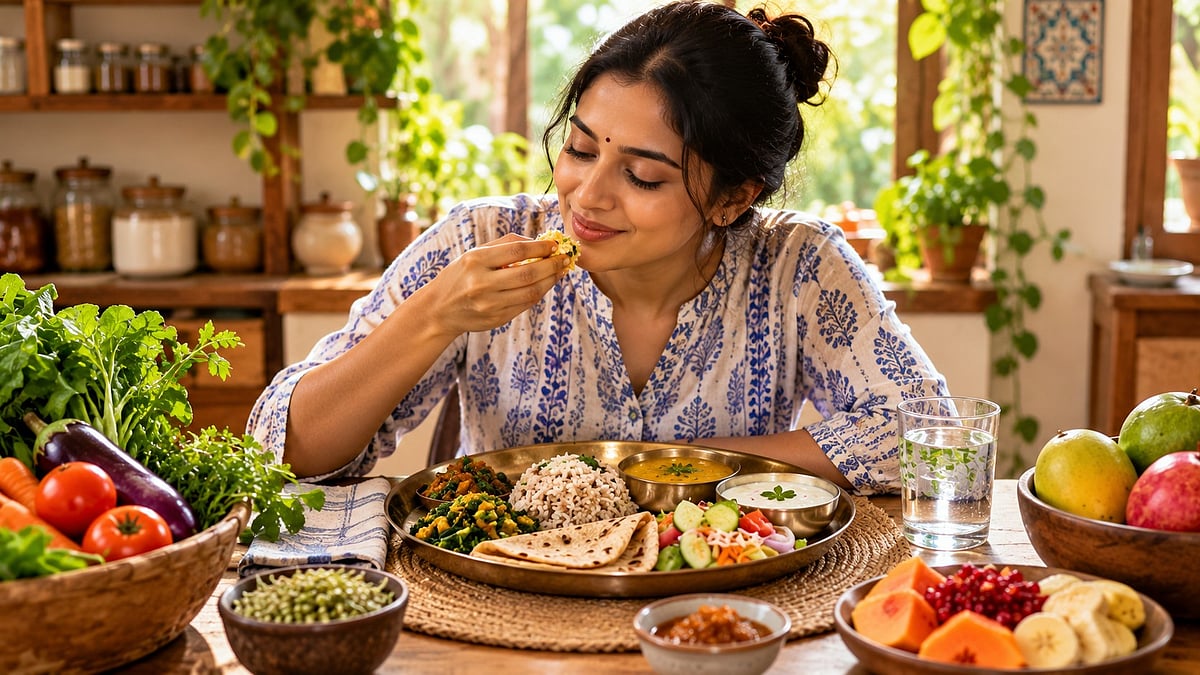
For many people, health eating has turned into a mission. We study labels, count calories, compare ingredients and track the latest diet fads. There is information on what we should eat before exercise, what we should eat in the evening and what we shouldn't eat at all. It is no wonder that we think that eating right must be planned to the last detail.
However, eating well doesn’t always have to be this difficult.
Ultimately, the key concept behind healthy eating is the consumption of an adequate combination of foods. The human body requires carbohydrates as the source of energy; protein for repair and development; healthy fats; vitamins; minerals; fiber and sufficient water. There is no need to spend lots of money on exotic products to meet the nutritional requirements.
It is here that the traditional ways of consuming our food teach us a lesson. Traditionally, meals in India have always had a variety of foods served together on one plate. An instance of a typical Indian meal would be one containing dal, either roti or rice, vegetables, curd, and a seasonal fruit – all of which would serve as good sources of different types of nutrients.
Variety is important since no one food has everything that we require for our body’s needs. This is also the reason why the concept of a ‘superfood’ can be a little confusing at times. The food item may have one nutrient in abundance, but it cannot take the place of all other food items. Having a variety of grains, legumes, vegetables, fruits, nuts and seeds will help achieve that.
This is true even with grains. People in India consume rice and wheat, but there are many other types available too. Traditional grains such as millets have been consumed in India by Indians for many years now. It might make sense to include some variation in our diet by including various grains every now and then. This does not mean that we replace one food item with another; it simply means diversification.
A very important point here is the separation of unprocessed or minimally processed foods from highly processed foods. It is true that processing of foods may not always be bad. In fact, many foods have been processed in one form or the other by the time they reach our kitchen. The worry, however, comes from an excessive dependence on those foods which have large amounts of added sugars, salts, or harmful fats and have been designed for frequent consumption.
The other area that should have more focus is fibre. Pulses, whole grains, vegetables, fruits, nuts, and seeds are some examples of foods that provide dietary fibre. However, diets in modern times tend to be heavily reliant on processed grains and packaged foods. Therefore, introducing these foods into daily diets could be an easy way to increase dietary diversity.
Seasonal eating not only has an environmental benefit but also a practical one. By using fruits and vegetables that naturally occur during a specific season, you will be adding variety to your kitchen. You will not always eat the same items, and will use different seasonal fruits and vegetables. It will keep your food rooted in local farming tradition and culture.
It is also important how food is cooked. Simple methods of cooking foods like steaming, boiling, roasting, even stir frying ensures that the food is simply prepared. The traditional process of preparing food also highlights that taste does not always need complicated preparation methods. Healthy and tasty food is made from a combination of herbs, spices, grains, beans, and vegetables.
On the other hand, proper nutrition should not become yet another area for feelings of guilt. The concept of proper nutrition does not necessarily involve perfection in every single meal. There will always be special occasions, meals at restaurants, festive food and days when one simply cannot afford the time to prepare a proper meal. What really matters is the consistency.
Perhaps, this is an area where current knowledge about nutrition might learn from the experience of previous generations. Instead of pursuing the latest food fad all the time, one could focus on the tried-and-true basics of eating a variety of foods, whole foods, unprocessed or minimally processed foods, vegetable and fruit, pulses and grains.
But there’s also the bigger issue of the source of our food. Knowing more about how foods are farmed, the seasonal foods, and traditional foods will allow us to be more conscious about the food choices we make. It helps us remember that food is not just an item that suddenly shows up at a grocery store.
It is possible that healthy eating does not require another complex manual. What is required is to know a bit more about the fundamentals. There is no need to adhere to all the latest diets or try to find a single magic ingredient. We can simply start from the food that is available and change our approach to it.
We are not striving for perfection with each and every meal. The aim is to make our everyday diet more diverse, healthier, and sustainable. But sometimes, the best path forward lies in revisiting our traditional dietary practices, which we might have disregarded along the way.
(Pallavi Sinha, Managing Director, Adya Organics)
RECENT STORIES
-
-
-
-
-