₹3 Lakh Phone: Need, Want, Or Status? Why We Splurge On Luxury
From status and social media influence to personal reward and financial comfort, experts and consumers explain what really drives India’s growing appetite for luxury

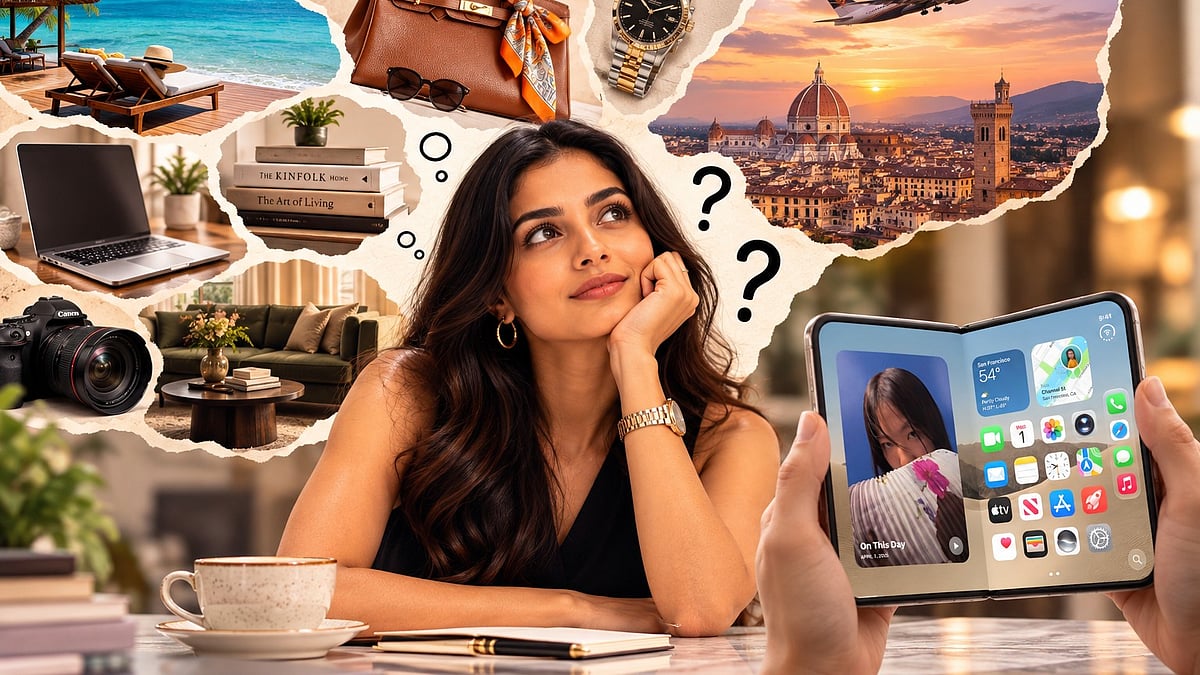
Let's be honest: most of us don't need a ₹3 lakh phone. But then, luxury has never really been about need. We buy expensive watches, bags, cars and holidays because we want them. The more interesting question is why we want expensive things in the first place, and what owning them says about us.
India’s changing luxury appetite
The conversation comes at a time when India's luxury market is evolving. Euromonitor notes that luxury goods in India saw dynamic retail value growth in 2025, driven by increasing disposable incomes, an expanding aspirational middle class and a growing number of high-net-worth individuals. Younger consumers, including Millennials and Gen Z, are also influencing luxury consumption, with greater emphasis on lifestyle alignment, sustainability and authenticity.
Visa's 2025–26 study of affluent India points to another shift: affluent consumers are making more intentional purchases, choosing products and experiences that feel meaningful, visible and connected to personal identity.
When luxury becomes personal
Fashion designer Manish Tripathi believes that luxury should have a reason behind it. “For me, it would have to offer something genuinely exceptional—not simply a higher specification on paper. It could be extraordinary craftsmanship, materials, longevity, privacy, security, productivity, or a truly differentiated experience. Luxury, to me, should have a reason behind it,” he says.
Tripathi says he would choose something that creates lasting value. “I would probably invest it in something that creates lasting value—perhaps a piece of exceptional Indian textile, a handcrafted garment, an experience, or something that supports an artisan and preserves a piece of our cultural heritage. A phone becomes outdated. Good craftsmanship can become heritage,” he adds.
According to Clinical psychologist Mehezabin Dordi at the Department of Rehabilitation & Sports Medicine, HN Reliance Foundation Hospital in Mumbai, our attraction to expensive products is not necessarily about the product itself. “Luxury can satisfy psychological needs such as status, identity, belonging and self-expression,” she explains. “An expensive phone, for instance, can represent success, achievement or the person we aspire to become.”
ALSO READ
The status equation
“Humans naturally compare themselves with relevant social groups, and luxury products can become signals of wealth, success or social position,” says Dordi. “Peer groups and social media can amplify this because we are repeatedly exposed to what others own and what appears desirable or prestigious.”
Manish Tripathi sees the meaning of an expensive phone differently for different consumers. “It can mean different things to different people. For one person, it may be personal taste. For another, professional necessity or financial success. And for someone else, it may simply be the desire to belong to a particular social circle.”
For him, the more interesting question is not “Can I afford it?” but “Why do I want it?”. “FOMO can make a want feel like a need,” says Tripathi. “When everyone around us appears to have the latest device, not having it can strangely feel like falling behind.”
Sonal S also believes social media plays a major role in fuelling consumerism. “Social media is a huge player in this regard. I mean the concept of consumerism is promoted heavily out here.. and that is what is pushing our fear of missing out.”
Luxury spending isn't always driven by social pressure. Sometimes, the purchase can feel like a personal reward. “Because the purchase can become psychologically linked to effort and accomplishment,” explains Dordi. “After working hard, overcoming difficulties or reaching a milestone, buying something expensive can create a sense of ‘I earned this’. It can provide immediate positive emotion and reinforce a person's sense of achievement or self-worth.”
ALSO READ
But who actually buys it?
The answer is not necessarily someone who sees the phone as an investment or even a necessity. For an actual buyer, the attraction can be much simpler: they want the experience and are willing to pay for it.
Apple loyalist Pooja RM echoes similar sentiments. “I absolutely have no qualms about spending a certain amount for a premium product. Whether I can afford it or not is another matter. As an Apple loyalist, I have waited for the foldable iPhone for a long time, so I don’t mind spending on it. Though luxury, I don’t think every purchase needs a justification or be categorised as a necessity. I like the experience and feeling of owning something nice. It is a necessity, no. But then a lot of luxury products aren’t about necessity. It’s ‘want’ that plays a major role in luxury spending,” says Pooja RM.
A financial decision
For Founder of Money Mantra Viral Bhatt, spending ₹3 lakh on a phone is not inherently wrong. “Personal finance is not about telling people what they should or should not buy. It is about understanding whether a purchase fits comfortably into their financial life.”
His approach is to ask three questions: Can I afford it? Do I genuinely need it? And will I still be comfortable with this decision six months from now? “The buyer should first consider emergency savings, insurance protection, existing liabilities and ongoing investments. If buying the phone means stopping SIPs, dipping into emergency savings or postponing an important financial goal, the purchase deserves a second thought,” he shares.
Luxury purchases have also become easier to access through EMIs. Bhatt points out that a ₹3 lakh phone can suddenly appear manageable when the price is broken down into a monthly payment. “This makes premium products more accessible, but accessibility and affordability are not the same thing. There is a psychological trap here: ‘If I can afford the EMI, I can afford the product.’ That is not necessarily true,” he explains.
The alternative
But luxury is ultimately personal. What one consumer considers an extravagant purchase, another may see as money better spent elsewhere.
For Sonal S, the answer is clear: the money could be better spent elsewhere. “A phone is all about the work it does for you. Even if my work warrants a huge amount of work on the phone, this cost seems excessive. I would prefer spending it on a good quality laptop that would definitely last for me because I tend to use it well or on a good TV for the family,” she adds. “If it is splurging, a good quality vinyl player, DSLR camera, quality appliances for kitchen like a good food processor or even bed works for me. If I have to go crazy, books are my poison. Some first editions sound good. Home products are worth it. Personal comfort is my priority.”
The new luxury: choice
Perhaps the most interesting part of the ₹3 lakh debate is that there is no universal definition of a worthwhile luxury. For one person, it may be a phone. For another, it may be a holiday, a handcrafted garment, a first-edition book or an investment.
Social media, Tripathi says, has changed the meaning of luxury because “we don’t just buy things anymore, we buy things that can be seen”. “Do I want this because I value it—or because I want others to value me?,” he asks.
Ultimately, the ₹3 lakh phone is less interesting as a piece of technology than as a reflection of our relationship with luxury. It asks us to examine why we spend, what we value and what we want our purchases to say about us.
As Bhatt puts it, “Luxury is not merely about what you can buy; it is also about what you can comfortably afford to walk away from.”
RECENT STORIES
-
-
-
-
-