PIL in Delhi High Court challenges constitutional validity of Waqf Act
The plea further sought the issuance of direction that the dispute relating to religious properties shall be decided by the Civil Court only under Section 9 of the Civil Procedure Code 1908, and not by the Waqf Tribunal

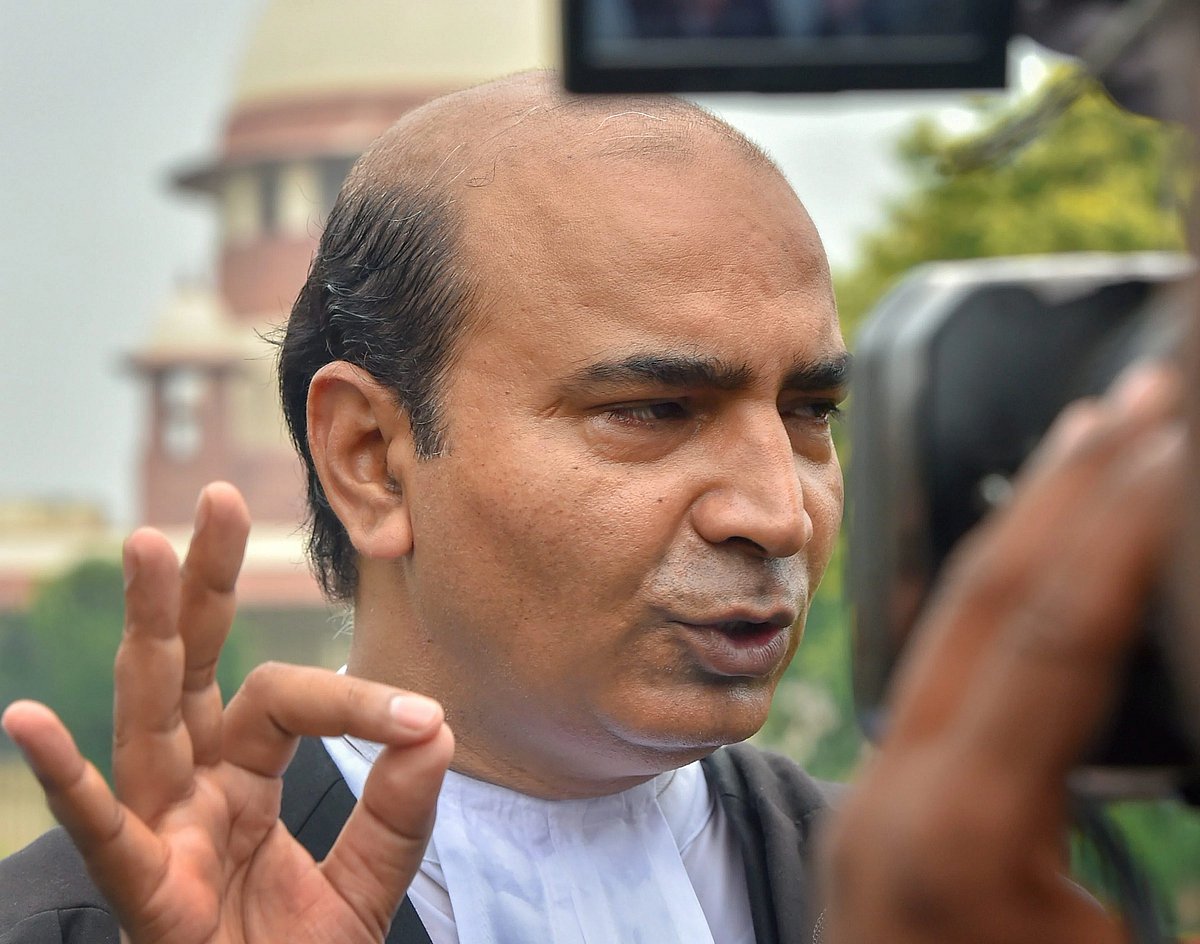
Ashwini Kumar Upadhyay, practicing lawyer and BJP leader | PTI
New Delhi: A Public Interest Litigation has been moved in the Delhi High Court on Saturday challenging the constitutional validity of several sections of the Waqf Act 1995, which states that these provisions grant special status to Waqf properties denying equal status to Trust, Mutts, Akharas, Societies and confer unbridled powers to Waqf Boards to register any property as Waqf property.
The plea stated that there is no safeguard for Hindus, Jains, Buddhists, Sikhs, and other communities to save their properties from inclusion in the list of Waqf issued by Waqf Boards. Therefore, Hindus, Jains, Buddhists, Sikhs, Bahais, Christians, and Zoroastrians are discriminated. It offends Articles 14-15.
Plea seeking appropriate direction/ declaration that the State can enact only Uniform Law for Trust- Trustees, Charities-Charitable Institutions and Religious Endowments-Institutions as enumerated in Item 10 and 28 of List-III, Seventh Schedule in consonance with Articles 14-15, and cant make separate law for Waqf and Waqf properties.
The petitioner Ashwini Kumar Upadhyay, practicing lawyer and BJP leader through this PIL states that the several provisions of the Waqf Act 1995, are made under the garb of managing waqf properties but there are no similar laws for followers of Hinduism, Buddhism, Jainism, Sikhism, Judaism, Bahaism, Zoroastrianism & Christianity. Hence, it is against the secularism, unity, and integrity of the nation. The Waqf is not mentioned anywhere in the Constitution.
The Waqf Act has given uncontrolled powers to Waqf Boards and Waqf properties have been placed over and above other charitable religious institutions. No other enactments referred to above have conferred such wide powers and status to Hindu and other non-Islamic religious institutions said the plea.
The plea further sought the issuance of direction that the dispute relating to religious properties shall be decided by the Civil Court only under Section 9 of the Civil Procedure Code 1908, and not by the Waqf Tribunal. It also sought direction to the Centre or Law Commission of India to draft a 'Uniform Code for Trust-Trustees and Charities-Charitable Institutions' in the spirit of Articles 14-15 and publish it for public debate and feedback.
RECENT STORIES
-
-
-
-
-