With US Exit, Questions Rise Over WHO’s Global Relevance — Will India Reconsider Its Stance
Following the US withdrawal from the World Health Organization, experts say India must reassess how global frameworks shape domestic health policy. The debate has spotlighted India’s 2019 e-cigarette ban under the Prohibition of Electronic Cigarettes Act, with critics arguing it lacked local research and ignored harm-reduction evidence.

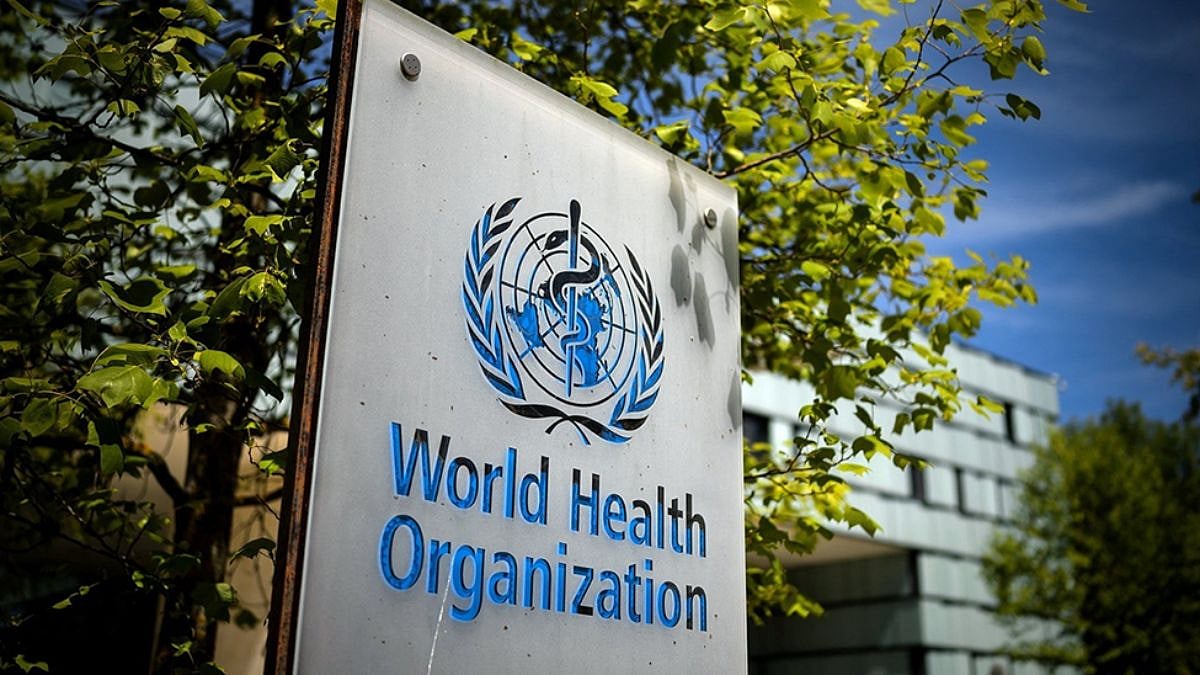
World Health Organization (WHO) |
New Delhi [India], February 27: Recently the U.S. Department of Health and Human Services & the U.S. Department of State announced the United States’ completion of its withdrawal from the World Health Organization (WHO) due to the organization's inability to demonstrate independence from the inappropriate political influence of WHO member states. This prompted countries worldwide to reassess how international health frameworks influence domestic public‑health decision‑making.
The global health system often overlooks national contexts, struggles with flexible policymaking, and prioritizes ideology over results. This moment of recalibration provides an important opportunity for India to refl ect on its long‑standing tradition of public‑health self‑reliance. India has historically demonstrated strong public‑health leadership when it has taken decisions rooted in local evidence. From scaling HIV/AIDS treatment with locally produced, affordable generics, to deploying digital platforms like CoWIN for one of the world’s largest vaccination drives, India succeeded in creating blueprints for health sovereignty.
Tobacco control is a prime example of how global policy can be shaped by donor priorities. President Trump on January 20, 2025, announced the U.S. plan to leave the WHO. During this yearlong process, WHO stopped receiving funding from its largest donor creating an opportunity for philanthropic entities like Bloomberg Philanthropies and the Bill & Melinda Gates Foundation to step in and support specific health agendas. The concentration of influence has reignited discussions on whether global frameworks sufficiently represent the diverse needs of the Global South.
India’s tobacco policy landscape reflects how these global imbalances are playing out in real time. With over 267 million users—many of whom rely on smokeless or informal products—India has one of the world’s largest and most diverse tobacco-using populations. Over the past decade, India has adopted policies on tobacco control within WHO’s framework which one can debate to be more externally aligned than local evidence based.
As a part of this WHO compliance, India banned alternatives to smoking under the Prohibition of Electronic Cigarettes Act (PECA) in 2019 without any independent domestic research to assess comparative risks, and without reviewing the growing body of international scientific evidence differentiating these products. As a result, adult smokers in India have no access to regulated, scientifically evaluated alternatives—depriving them of genuine products with harm reduction benefits and restricting their freedom of choice. This vacuum also fuels illicit markets and holds back the public‑health gains.
Dr. Lancelot Mark Pinto, Pulmonologist and Epidemiologist Consultant at P. D. Hinduja Hospital & Medical Research Centre stated, “Health policy needs to be data-driven, with local preferences, cost-effectiveness and social norms taken into account. Something as simple as ORS, with no pharma-lobbying or vested stakeholders possibly saved more lives than many drugs combined and is a great example of how local solutions need to be prioritized. A blanket ban deprived current smokers of safer harm reducing alternatives and was not science driven. While the loss of funds and know-how from the WHO will be missed, this is an opportunity for us to ramp up local research and have the results of the research drive policy.”
Prof Dr Konstantinos Farsalinos, Cardiologist and most-cited harm reduction researcher in Greece stated, “Today we still have 1.2 billion smokers in the world and that big countries like India and Brazil are deprived of the opportunity to engage in a risk reduction strategy and deprive smokers of their right to less harmful alternatives is a serious issue. It has nothing to do with science, because science is quite clear. And that raises a lot of ethical questions about why smokers are not given what they need and what they deserve.”
As the broader international environment evolves, India has an opportunity to reaffirm a model of health sovereignty that is shaped by scientific evaluation, population‑specific local realities, and the right of adults to access less harmful choices. Strengthening domestic research, modernising regulation, and enabling structured stakeholder engagement will be key to building a public‑health pathway that reflects India’s needs.
(No Free press journal Journalists are involved in creation of this article.)
Published on: Friday, February 27, 2026, 05:06 PM ISTRECENT STORIES
-
-
-
-
-