Why The Future Of Clean Energy Depends On Semiconductor Manufacturing Expertise
The work of Ganesh Babu Chandrasekaran can serve as an interesting example of the role of in-depth manufacturing knowledge in technological advancement. A veteran of over 20 years in engineering semiconductor and display-equipment, his career has been characterized by the ability to convert the sophisticated research and development work in plasma-chambers to commercial systems that work at scale.

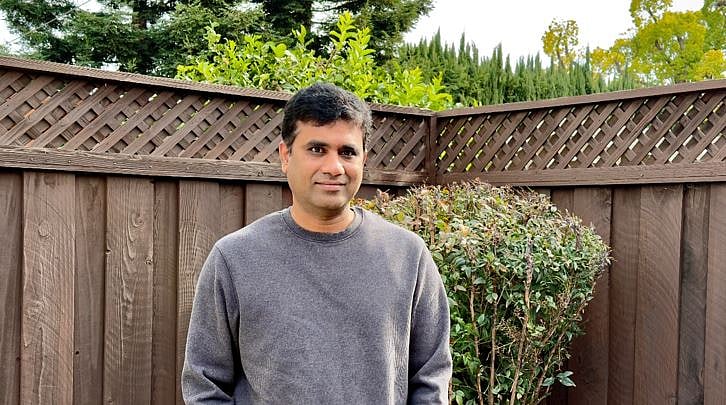
The work of Ganesh Babu Chandrasekaran can serve as an interesting example of the role of in-depth manufacturing knowledge in technological advancement. |
As the global push toward clean energy accelerates, an often-overlooked reality is coming into sharper focus: the success of renewable technologies depends not only on breakthroughs in materials or policy support, but on the sophistication of the manufacturing systems that bring these technologies to scale. From solar panels and advanced batteries to power electronics and hydrogen systems, clean energy devices increasingly demand the same levels of precision, uniformity, and contamination control that have long defined semiconductor manufacturing. In this context, semiconductor-grade engineering is no longer adjacent to clean energy; it is foundational to its future.
The work of Ganesh Babu Chandrasekaran can serve as an interesting example of the role of in-depth manufacturing knowledge in technological advancement. A veteran of over 20 years in engineering semiconductor and display-equipment, his career has been characterized by the ability to convert the sophisticated research and development work in plasma-chambers to commercial systems that work at scale. His work has continually spanned the boundary between sophisticated hardware design and mass manufacturability, and has made technologies that form the basis of the everyday electronics of smartphones and laptops to massive OLED displays.
Over the years, his contributions have spanned multiple generations of chemical vapor deposition and plasma-enhanced chemical vapor deposition systems, scaling from early platforms to ultra-large formats capable of handling some of the biggest substrates in the industry. These systems demanded solutions to challenges that grow exponentially with size: maintaining thermal stability across large areas, ensuring uniform plasma distribution, and preserving mechanical integrity under extreme conditions. His engineering efforts in areas such as gas delivery architecture, substrate heating, alignment mechanisms, and thermal management directly improved production yield and reduced defectivity in high-volume manufacturing environments.
What makes this work especially relevant to clean energy is the clear overlap between semiconductor fabrication requirements and the needs of next-generation energy technologies. Many clean energy processes, thin-film solar cells, advanced battery electrodes, power-device epitaxy, and protective coatings rely on plasma-based deposition and etching techniques similar to those used in semiconductor fabs. The same principles that ensure uniform transistor layers across a display panel are now critical for achieving consistent performance in solar modules or reliable coatings in hydrogen systems. Expertise developed in managing plasma behavior, gas flow, and heat transfer at scale becomes directly transferable to clean energy manufacturing.
The impact of this kind of engineering work is measurable and significant. Innovations in diffuser design have enabled finer gas-flow control and more uniform plasma density, reducing center-to-edge variation across large substrates. Advances in alignment mechanisms have significantly improved positional accuracy while eliminating recurring mechanical damage, enhancing both reliability and throughput. Improvements in thermal design have enabled stable processing of substrates far larger than previous generations, a capability essential for scaling production while keeping energy consumption and defect rates under control. Collectively, these gains translate into higher yields, lower waste, and more efficient use of power outcomes that align closely with the goals of sustainable manufacturing.
Beyond individual design improvements, there is a broader lesson in how semiconductor manufacturing expertise influences clean energy’s trajectory. As energy technologies scale up, manufacturing environments are beginning to resemble semiconductor fabs, complete with vacuum systems, plasma tools, and ultra-clean process control. At the same time, emerging practices such as AI-driven simulation and digital twins are reshaping how complex equipment is designed and optimized, shortening development cycles and reducing the need for costly physical prototypes. Professionals who understand both the physics of advanced manufacturing and the realities of high-volume production are increasingly central to this transformation.
In conclusion, the future of clean energy will be determined as much by how technologies are manufactured as by what those technologies are. Semiconductor manufacturing expertise rooted in precision, scalability, and process control provides a proven blueprint for meeting the demanding requirements of modern energy systems. As the boundaries between electronics manufacturing and clean energy production continue to blur, the skills and insights honed in semiconductor engineering will play a decisive role in making renewable technologies reliable, affordable, and truly scalable.
Published on: Monday, February 02, 2026, 05:55 PM ISTRECENT STORIES
-
-
-
-
-