When Law Becomes Lifeline: Shreya Chaudhary's Constitutional Advocacy For Life, Dignity & Justice
The Transplantation of Human Organs and Tissues Act (THOTA), 1994, grants medical authorization committees broad discretion to reject transplant requests where donor and recipient are not blood relatives—a provision designed to combat organ trafficking but one that produces devastating consequences for families whose only willing donors fall outside blood relationships.

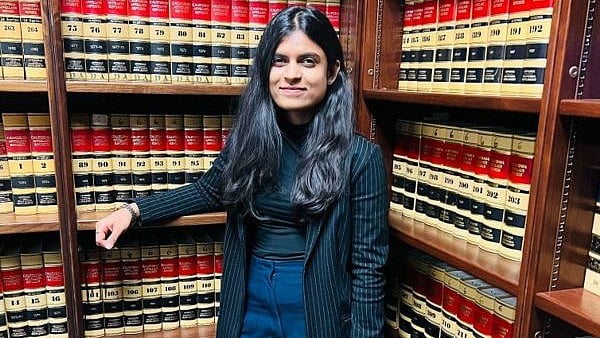
When Law Becomes Lifeline: Shreya Chaudhary's Constitutional Advocacy for Life, Dignity, and Justice |
In the space where constitutional principle meets human survival, where statutory interpretation can mean the difference between life and death, Shreya Chaudhary has built a practice defined by transformational litigation. Licensed in both India and California, her work demonstrates how strategic constitutional advocacy can save lives, protect the vulnerable, and create systemic reform. Three cases from her practice in India illustrate the profound impact of using law as an instrument of justice.
Saving Lives: Challenging Bureaucratic Barriers to Organ Transplants
The Transplantation of Human Organs and Tissues Act (THOTA), 1994, grants medical authorization committees broad discretion to reject transplant requests where donor and recipient are not blood relatives—a provision designed to combat organ trafficking but one that produces devastating consequences for families whose only willing donors fall outside blood relationships.
In one of Shreya's most significant cases, her client's daughter-in-law sought to donate part of her liver to save his life. Despite her voluntary and well-informed consent, the authorization committee rejected the request solely because they lacked a blood relationship. The decision, though procedurally valid under the committee's interpretation, amounted to a death sentence.
Recognizing the constitutional dimensions at stake, Shreya filed a writ petition under Article 226 before the High Court. She drafted the pleadings and developed constitutional arguments asserting the patient's fundamental right to life and dignity under the Constitution of India. Her advocacy centered on demonstrating that the committee's decision was arbitrary, discriminatory, and contrary to both constitutional rights and the purpose of the law itself.
The High Court granted the writ of certiorari, quashed the government's order, and allowed the transplant to proceed. The surgery was successful and life-saving. Beyond this individual victory, the judgment contributed to a broader shift in how similar petitions were evaluated across the jurisdiction, improving transplant access for countless individuals whose only donors were non-blood relatives.
Shreya represented multiple petitioners in similar cases, each demonstrating her ability to balance statutory interpretation with human stakes while using litigation to correct systemic injustices embedded in well-intentioned laws.
Opening Doors: Fighting Systemic Discrimination in Government Employment
When the government of Uttar Pradesh announced recruitment for nearly 69,000 public sector positions—among the few meaningful employment opportunities available to underprivileged communities—the Rights of Persons with Disabilities Act, 2016 mandated a 4% reservation to ensure equal access. Yet the State released a selection list that virtually excluded candidates with disabilities.
Recognizing the broader public interest at stake, Shreya filed a writ petition before the High Court on behalf of affected candidates. She drafted the pleadings, framed the constitutional issues, and argued that denying reservations violated not only the statute but also the constitutional vision of equal opportunity for historically marginalized groups.
After several hearings, the Court directed that the recruitment process could not move forward unless the mandated reservations were fully implemented. In response, the State issued a revised selection list that finally included eligible persons with disabilities, allowing individuals who had long struggled for fair access—many with mobility impairments and other physical challenges—to secure stable government employment.
This litigation demonstrated how constitutional advocacy could open doors for entire communities the system often overlooks, transforming the law's promise of equal opportunity into tangible reality for thousands of individuals.
Protecting the Vulnerable: Defending a Widowed Worker from Abuse of Authority
A Class IV government hospital employee—a widowed cleaning staff member—was being exploited by her reporting officer. She was forced to work as his personal domestic help, and when she refused, he retaliated by issuing an out-of-district transfer order that would have separated her from her only son and caused severe financial hardship.
Shreya filed a writ of certiorari before the High Court challenging the transfer as a misuse of authority issued in malice-in-fact and malice-in-law. She argued that the order violated Articles 14 and 21 of the Constitution by depriving a vulnerable worker of her right to equality, livelihood, and dignity.
After requesting a written reply from the state government, the Court quashed the transfer and reaffirmed that low-income Class IV employees cannot be arbitrarily moved at the whims of superiors. The judgment continues to hold precedential value in Uttar Pradesh, protecting similarly placed workers from abusive transfers.
This case exemplified Shreya's commitment to using constitutional law to defend the rights of the most marginalized—those who often lack the resources or knowledge to challenge systemic abuse.
The Through-Line: Constitutional Principles in Service of Human Dignity
These cases share a common thread: Shreya's ability to identify constitutional dimensions in situations where bureaucratic procedure or discriminatory practice threatened fundamental rights. Whether challenging organ transplant denials, fighting systemic exclusion of persons with disabilities, or defending a vulnerable worker from abuse of authority, her approach consistently demonstrated sophisticated constitutional analysis combined with deep empathy for those whose dignity and survival hung in the balance.
Each case also illustrates her strategic understanding of litigation's dual purpose: securing immediate relief for individual clients while establishing precedents that protect broader communities. Her successful constitutional challenges created systemic reforms that continue to benefit vulnerable populations long after the original judgments.
A Multi-Jurisdictional Practice Rooted in Access to Justice
Shreya's journey into law began observing her father's practice, where clients arrived with little more than seasonal harvests as payment yet left with visible relief and restored dignity. This formative experience planted the understanding that law could be more than theory—it could be a lifeline. It shaped her fundamental approach: advocacy grounded in empathy, powered by intellectual rigor, and driven by tangible impact.
Her comprehensive education positions her at the intersection of constitutional litigation, environmental advocacy, and commercial practice. With a B.B.A., LL.B. (Honors) from the University of Petroleum and Energy Studies and an LL.M. with specialization in Energy and Environmental Laws from UC Berkeley School of Law, she brings both technical expertise and strategic vision to complex legal challenges.
Now licensed to practice in both California and India, Shreya has expanded her practice across jurisdictions. Her current work encompasses high-stakes commercial disputes, regulatory investigations, white-collar crime defense, corporate counsel, and constitutional rights advocacy. Her legal excellence earned recognition in 2025 when she received the prestigious "BW 30 under 30" award in the legal field—a testament to her impact within India's legal community.
Understanding that sustainable legal reform requires institutional frameworks, Shreya founded and serves as president of the Oudh Bar Socio-Academic Organization, advancing public interest causes while fostering the next generation of legal advocates. Her leadership philosophy centers on strengthening access to justice for vulnerable communities while maintaining professional excellence.
Her vision for the future: building a multi-jurisdictional litigation career that advances environmental and public health protections while strengthening access to justice for marginalized communities. Her commitment to continuous learning—through regular engagement with SCOTUSblog, LiveLaw, and specialized environmental law podcasts—ensures she remains at the forefront of legal developments across both American and Indian jurisprudence.
She maintains balance through meditation, yoga, and hiking, bringing renewed perspective to the demanding work of advocating for those who often have nowhere else to turn. Her career illustrates how principled advocacy and commitment to justice create compounding impact across jurisdictions—one litigation at a time, one systemic reform at a time, one life saved at a time.
Published on: Tuesday, February 03, 2026, 04:29 PM ISTRECENT STORIES
-
-
-
-
-