MP News: Tiger Census Kicks Off In Indore As All India Tiger Estimation 2026 Begins; State Leads India’s Biggest Wildlife Survey
The All India Tiger Estimation (AITE) 2026 has begun in Indore, marking India’s largest wildlife survey. From December 18–24, forest teams will conduct camera trapping and field surveys to assess tiger numbers, prey density, and forest health. Madhya Pradesh, home to 785 tigers, plays a key role in shaping national conservation strategies.

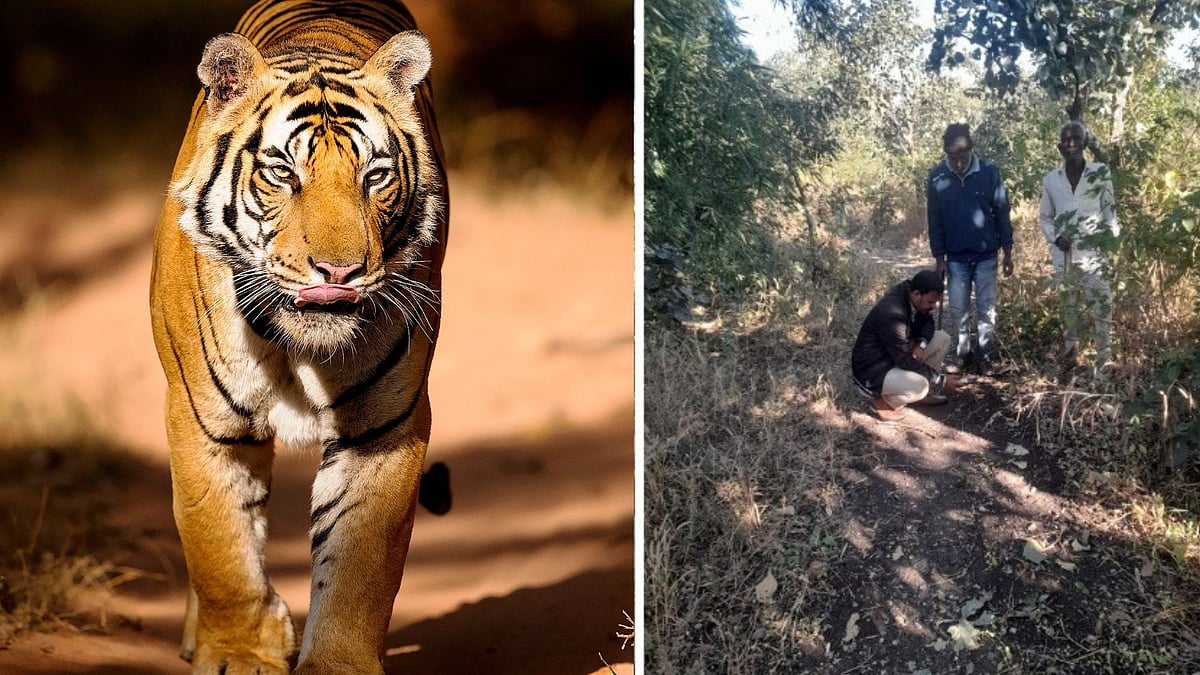
Indore (Madhya Pradesh): The long-awaited All India Tiger Estimation (AITE) 2026 officially began in Indore on Thursday, marking the start of the country’s largest wildlife survey.
From December 18–24, teams across the Indore Forest Division will engage in rigorous fieldwork, aiming to estimate tiger populations, prey density, and forest health in this vital region of Madhya Pradesh, known for its growing tiger population.
Madhya Pradesh recorded 785 tigers in 2022, a significant rise from 526 in 2018, reflecting a growth of 259 tigers in just four years. This increase is a testament to successful conservation efforts, though it also underscores the need for ongoing monitoring beyond official reserves. Notably, 237 of the tigers were found outside protected areas, reinforcing the importance of safeguarding tiger habitats throughout the broader landscape.
India’s overall tiger population rose from 2,967 in 2018 to around 3,167 in 2022, underscoring the success of national conservation strategies. The AITE, coordinated by the National Tiger Conservation Authority (NTCA) and the Wildlife Institute of India (WII), is a vital tool for collecting the data that shapes India’s tiger protection policies and strategies.
Camera Traps and Field Surveys Take Center Stage
The Indore Forest Division has prepared meticulously for the census, selecting nearly 200 square kilometres of forest for camera trapping across a total area of 700 square kilometres. These areas have been divided into 2-square-kilometre grids to ensure comprehensive coverage. Each camera trap will capture images of tigers and other wildlife, providing the opportunity to identify individual tigers based on their unique stripe patterns.
“We are following national scientific protocols, and the team from the Wildlife Conservation Trust (WCT), led by wildlife biologist Shri Vivek Tumsare, is overseeing the operation,” said Pradeep Mishra, DFO Indore. “This is crucial for ensuring the integrity and accuracy of our data collection.”
Today’s kick-off marks the beginning of a process that combines camera trapping, field surveys for tiger signs such as pugmarks, scat, and scrapes, and the use of satellite technology to assess the overall health of the forest ecosystem. The rigorous data collection will be paired with statistical analysis to provide precise estimates of tiger numbers, prey density, and forest condition.
Training and Preparedness Highlighted
Ahead of the census, extensive training sessions were conducted for field staff, focusing on identifying and recording key carnivore signs and employing advanced camera trap methods. Participants were also trained in DNA sampling from scat and using software to create 3D models to extract tiger stripe patterns, enhancing the accuracy of individual identification.
“Precision and consistency are key,” said SDO Yohan Katara. “The training and standardised protocols will ensure that we maintain high-quality, error-free data throughout the survey.”
In addition to the technical training, the Indore Forest Division conducted a pre-AITE mock exercise earlier this month, which provided field teams with an opportunity to rehearse species identification, camera placement, and habitat assessment.
The Road Ahead
Once the fieldwork concludes in early 2026, Indore’s data will be integrated into the national database, with final results expected by July 2026. These results will guide future conservation strategies, help preserve wildlife corridors, and improve human–tiger coexistence across the country.
As the AITE 2026 kicks off in Indore today, it marks a significant moment in India’s ongoing efforts to monitor and protect its tiger populations, reinforcing the country’s role as a global leader in wildlife conservation. Through meticulous planning, cutting-edge technology, and international collaboration, the Indore Forest Division is poised to contribute valuable data that will shape the future of tiger conservation for years to come.
RECENT STORIES
-
-
-
-
-