Indore's Sacred Hills: Mysterious Rocks, 500-Year-Old Temples And Fascinating Tales Of Goddess Worship
The Vindhya hills around Indore are home to ancient shrines steeped in faith, folklore and tradition. From the mysterious swaying stones of Dugdugti Maa in Kalakund to Aman-Chaman Mata in Betma, Maa Ashapurna Temple in Manpur and Goddess Parvati’s shrine near Jam Gate, these sacred sites preserve centuries-old legends, unique rituals and Malwa’s rich cultural and religious heritage.

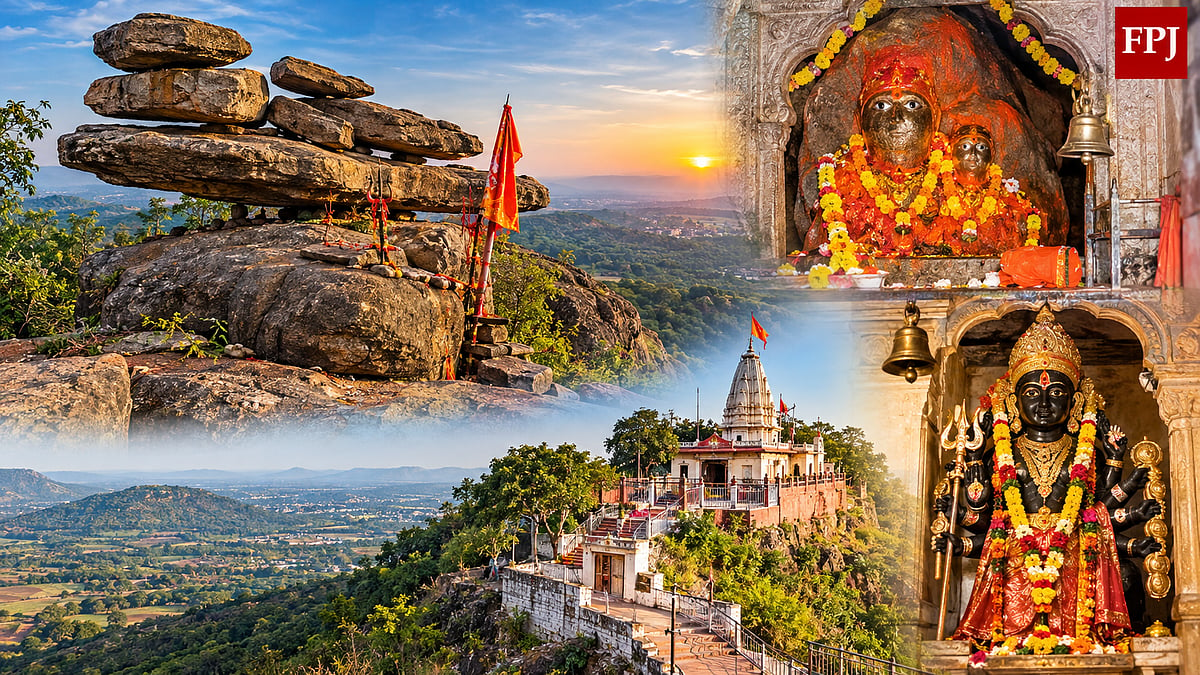
Indore's Sacred Hills: Mysterious Rocks, 500-Year-Old Temples And Fascinating Tales Of Goddess Worship | AI Generated Image
Indore (Madhya Pradesh): Mountains have long held a special place in the worship of the Divine Mother. Across the Vindhya hills surrounding Indore, several ancient shrines stand as enduring symbols of faith, where nature, local legends and centuries-old traditions come together.
Among them is a mysterious shrine in the forests of Kalakund, where stones appear to sway in the wind but have remained firmly in place for generations. Known as “Dugdugti Maa”, the temple is one of several fascinating hilltop destinations that attract devotees throughout the year.
From unusual rock formations believed to possess divine powers to ancient idols associated with local rulers, these shrines offer a glimpse into the religious and cultural heritage of the Malwa region.
‘Dugdugti Maa’: Stones That Even The British Could Not Move
Deep in the Vindhya hills, between Bhanwardi and Uteriya villages along the Kalakund road, stands a shrine unlike any conventional temple. There is no elaborate structure, no roof and no ornate sanctum. Instead, several large and small stone slabs are balanced on a rounded rock at the edge of a steep hillside.
Arranged almost like the stacked stones used in the traditional game of Sitoliya, the slabs appear to move in the wind. Their unusual appearance has earned the shrine its distinctive name, Dugdugti Maa.
Despite appearing precariously balanced, the stones have reportedly remained in place through years of strong winds, storms and heavy rain.
Kalakund sarpanch Shiv Dubey recounts a local story dating back to British rule. When the British were laying a railway line below the hill, they were reportedly concerned that the stones might tumble down and damage the tracks.
They attempted to remove the slabs using an old crane, securing them with chains. According to the account passed down through generations of local residents, the crane overturned on the tracks, while the stones remained unmoved.
The railway line was eventually laid below the hillside without removing the stones.
Today, devotees climb the steep path to seek the blessings of Dugdugti Maa and make wishes at the open-air shrine. For visitors, the site offers a striking encounter with both the rugged landscape and a legend that has endured across generations.
Aman-Chaman Mata: A Shrine Of Two Sisters And Shared Heritage
At Betma, a town on Dhar Road known locally for its samosas, another distinctive shrine honours Aman-Chaman Mata.
The goddess is represented by two figures, one larger and one smaller, carved into a single stone. Locals regard them as two sisters, giving the shrine its affectionate name.
One of the temple's unusual features is the belief that the goddess appears in different forms in the morning, afternoon and evening.
Since much of the idol's body lies buried underground, devotees traditionally see the goddess's back. In recent years, a face has also been carved on the stone's rear surface.
However, the shrine's significance extends beyond religious worship.
Former Nagar Panchayat president Babbi Darbar says the area has a long-standing tradition of celebrating Dussehra. According to local accounts, the festivities once included equestrian displays involving two mares, followed by a contest in which participants aimed at earthen pots with guns.
Over time, the gathering evolved into a broader community festival. Today, people from Hindu, Muslim and other communities participate, making the celebration a symbol of Betma's shared cultural heritage.
Maa Ashapurna Temple: 400 Years Of Faith, 500 Feet Above The Ground
Around 22–25 km from Mhow, in Manpur, the Maa Ashapurna Temple stands approximately 500 feet above the surrounding landscape on a Vindhya hill.
Believed to be around 400 years old, the shrine is an important pilgrimage destination for devotees from Mhow, Dhar, Pithampur and nearby areas.
The temple is particularly known for a distinctive ritual associated with the fulfilment of wishes.
Devotees seeking the goddess's blessings draw an inverted swastika on a temple wall. When their wishes are fulfilled, they return to draw an upright one.
The shrine attracts a substantial number of devotees, particularly during religious festivals and special occasions. While regular days generally feature morning and evening aartis, three daily aartis are performed during major celebrations.
Visitors can reach the temple by climbing approximately 130 steps or by taking a road route of around 800 feet.
A local tradition links the temple's restoration to King Mansingh, who is said to have undertaken the work after a wish connected with his campaign towards Maheshwar was fulfilled.
The surrounding hills are also known for occasional leopard sightings, adding to the wild character of the landscape.
Jam Gate: The Self-Manifested Shrine Of Goddess Parvati
About 50 km from Indore, on the Indore–Mandleshwar road and a short distance before Jam Gate, lies a roughly 500-year-old temple dedicated to Goddess Parvati.
The shrine is revered for its swayambhu idol, a deity believed by devotees to have manifested naturally rather than having been installed by human hands.
The approximately seven-foot-tall idol depicts the eight-armed goddess.
As at other regional shrines, devotees believe the goddess reveals three different forms over the course of a day.
Local tradition also holds that Ahilya Bai Holkar would stop to worship at the temple while travelling through the area.
Set amid the hills, the shrine remains an important destination for devotees seeking blessings and a connection with the region's religious heritage.
Where Faith Meets The Mountains
From the seemingly swaying stones of Dugdugti Maa to the centuries-old shrines of Manpur and Jam Gate, the hills around Indore preserve a remarkable collection of local traditions and sacred landscapes.
Each shrine has its own story: a mysterious arrangement of rocks, two sisters represented in stone, a ritual of inverted and upright swastikas, or an idol believed to have emerged on its own.
These places of worship continue to attract devotees and visitors interested in the region's spiritual traditions, history and natural beauty.
The stories surrounding them have been passed down through generations, connecting communities with their religious beliefs and the landscapes they inhabit.
In the Vindhya hills, the presence of the Mother Goddess is celebrated not only through temples and rituals but also through the legends, customs and traditions that have endured for centuries.
ALSO READ
RECENT STORIES
-
-
-
-
-