Indore Schools To Lead Water Conservation Drive; Defunct Borewells To Be Converted Into Recharge Pits
He said that if every school becomes a model for water conservation, the initiative could have a transformative impact on the city. IMC technical experts also gave detailed presentations on the design, construction and benefits of rainwater harvesting systems, recharge shafts and recharge pits while providing guidance for their early implementation in schools.

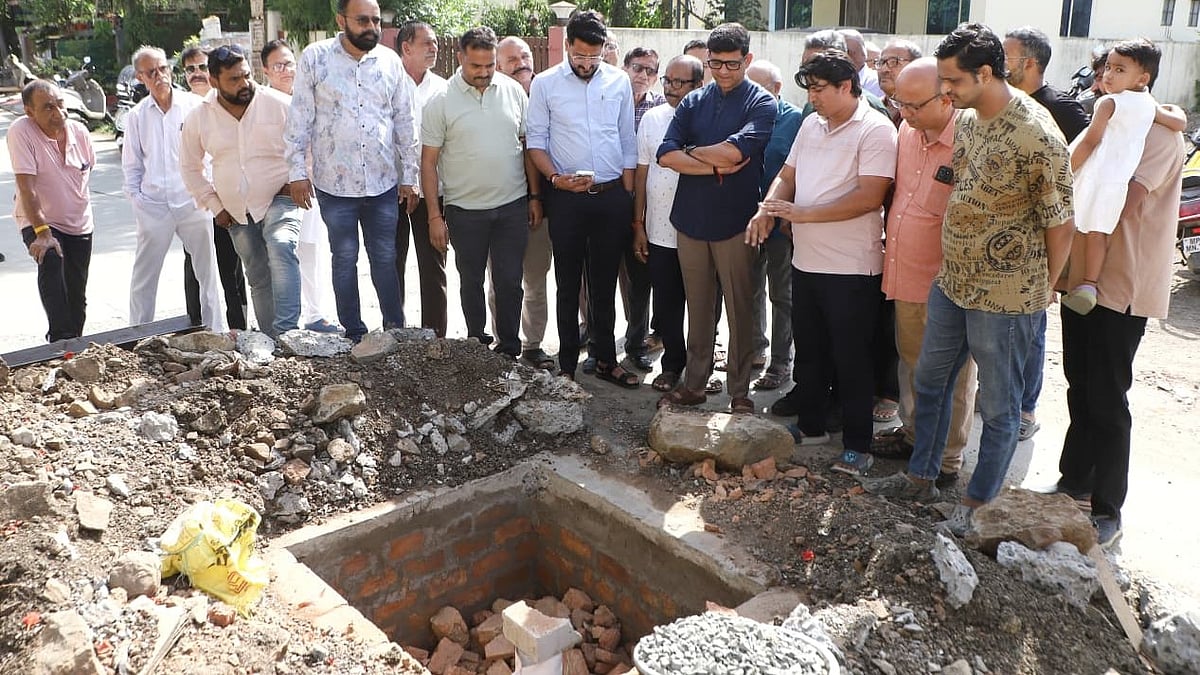
Indore Schools To Lead Water Conservation Drive; Defunct Borewells To Be Converted Into Recharge Pits | FP photo
Indore (Madhya Pradesh): As part of the state-wide Jal Ganga Sanvardhan Abhiyan, the Indore Municipal Corporation (IMC) has announced plans to convert unused and defunct borewells in schools into recharge pits and launch a city-wide water conservation awareness campaign through students.
Municipal Commissioner Kshitij Singhal convened a meeting of principals from government and private schools at the City Bus Office to discuss measures aimed at enhancing rainwater harvesting and improving groundwater levels across the city.
The meeting was attended by District Education Officer Dr Shanta Swami Bhargava, Assistant Engineer Ashwin Janwade, Deputy Engineers Rakshita Nagayach and Rohit Boyat, Principal Sunaina Sharma, and representatives of various educational institutions.
Addressing the gathering, Singhal said water conservation has become one of the most pressing needs of the present time and safeguarding water resources for future generations is a collective responsibility.
He said schools are not only centres of learning but also effective platforms for creating public awareness and driving social change.
The commissioner urged schools to develop rainwater harvesting systems, recharge shafts and recharge pits to collect and conserve rainwater effectively.
He stressed the need to scientifically channel rainwater collected from school rooftops for groundwater recharge, helping improve groundwater levels and reducing the risk of future water shortages.
He also suggested that schools with large playgrounds prone to waterlogging during the monsoon identify suitable locations for recharge shafts.
These structures would enable rainwater to percolate into the ground and support long-term water sustainability.
Discussions were also held on the optimal use of resources available within school campuses.
Singhal directed that schools undertaking new construction projects should use treated water for construction activities to avoid unnecessary consumption of potable water.
A key proposal discussed during the meeting was the conversion of abandoned or non-functional borewells into recharge pits.
The measure would allow rainwater to directly replenish underground aquifers and significantly enhance groundwater recharge capacity across the city.
The commissioner appealed to principals to involve students in water conservation awareness campaigns and ensure the construction and maintenance of rainwater harvesting infrastructure on school campuses.
He said that if every school becomes a model for water conservation, the initiative could have a transformative impact on the city.
IMC technical experts also gave detailed presentations on the design, construction and benefits of rainwater harvesting systems, recharge shafts and recharge pits, while providing guidance for their early implementation in schools.
The initiative is part of the broader Jal Ganga Sanvardhan Abhiyan launched across Madhya Pradesh at the call of the Chief Minister to conserve water resources and improve groundwater availability through community participation.
RECENT STORIES
-
-
-
-
-