Who Is Pranjal Patil? India's First Visually Impaired Woman IAS Officer Whose Transfer To Arunachal Pradesh Was Quashed By CAT
The Central Administrative Tribunal (CAT) has quashed the transfer of Pranjal Patil, India's first visually impaired woman IAS officer, from Delhi to Arunachal Pradesh. The Tribunal held that the government must consider the medical needs and reasonable accommodation requirements of officers with disabilities before making transfer decisions.

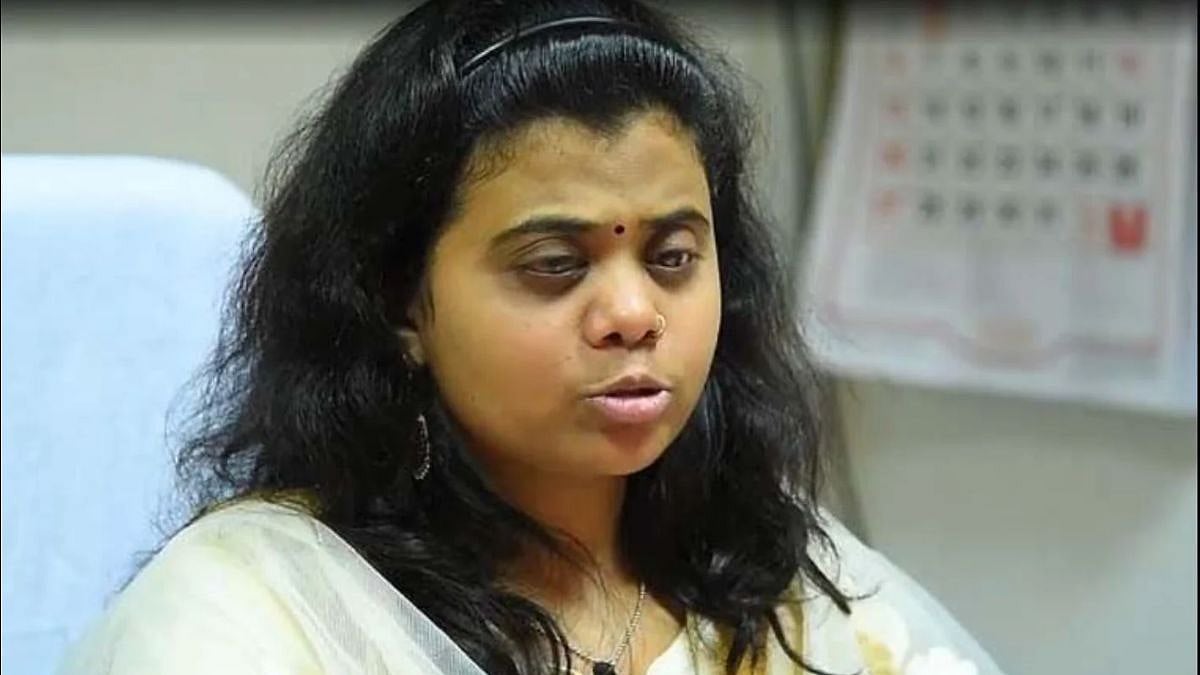
The Central Administrative Tribunal (CAT), Principal Bench, has overturned the transfer of Pranjal Patil, India's first visually impaired woman IAS officer, from Delhi to Arunachal Pradesh. In its order dated November 4, 2026, the Tribunal observed that routine transfer policies cannot be imposed indiscriminately on officers with benchmark disabilities without first examining their individual medical needs and support requirements.
The ruling was delivered by Judicial Member Rajveer Singh Verma in Patil Pranjal Lahensingh vs Union of India (O.A. No. 4634/2024).
The Tribunal emphasised that the government's responsibility to provide reasonable accommodation under the Rights of Persons with Disabilities (RPwD) Act, 2016, must form part of decisions concerning the posting of employees with disabilities.
It consequently quashed the Ministry of Home Affairs' (MHA) transfer order issued on September 12, 2024, the relieving order that followed on October 17, 2024, and the November 6, 2024, decision dismissing Patil's representation against the transfer.
ALSO READ
Who Is Pranjal Patil? A Look At Her Education And UPSC Journey
A 2017-batch IAS officer belonging to the AGMUT cadre, Pranjal Patil came into the spotlight for becoming the first visually impaired woman to join the Indian Administrative Service.
Patil has had no perception of light since childhood. Despite her visual impairment, she pursued higher education and went on to clear the highly competitive UPSC Civil Services Examination.
She attended the Kamla Mehta School for the Blind in Mumbai before graduating in Political Science from St. Xavier's College, Mumbai. She later obtained a postgraduate degree in International Relations from Jawaharlal Nehru University (JNU), New Delhi.
During her academic journey and UPSC preparation, she relied on assistive tools, including screen-reading software, to access study material.
Patil first appeared for the Civil Services Examination in 2016 and secured All India Rank (AIR) 773. She improved her performance in her subsequent attempt, obtaining AIR 124 in 2017 and securing a place in the IAS.
ALSO READ
Pranjal Patil's Administrative Career
Before the dispute over her transfer to Arunachal Pradesh, Patil had served in Kerala and Delhi in various administrative roles.
Her assignments included:
1. Assistant Collector, Ernakulam: She began her field-level administrative training in Kerala in 2018.
2. Sub-Collector, Thiruvananthapuram: She assumed charge in October 2019, becoming the first visually impaired woman IAS officer to hold the post.
3. Administrative assignments in Delhi: Following her move to the AGMUT cadre, she served in several administrative and education-related capacities, including as Sub-Divisional Magistrate and Deputy Commissioner (Revenue).
4. Directorate of Education, Delhi: She also served as Additional Director in the Education Department and State Project Director of Samagra Shiksha.
Why Was Pranjal Patil Transferred To Arunachal Pradesh?
Patil was initially allotted the Kerala cadre upon entering the IAS. However, in 2018, her request to move to the AGMUT cadre was approved under the provisions governing inter-cadre transfers for officers with disabilities.
She formally joined the AGMUT cadre on January 13, 2020, following which the Ministry of Home Affairs assigned her to Delhi.
The Delhi posting was intended to ensure that she could access specialised medical treatment and the support arrangements required because of her visual impairment.
The situation changed when the MHA issued an order on September 12, 2024, transferring her to Arunachal Pradesh. A relieving order was subsequently issued on October 17, 2024.
Patil contested the decision, maintaining that the authorities had failed to adequately consider her medical requirements and had disregarded the safeguards provided under the RPwD Act.
ALSO READ
She informed the Tribunal that she needed ongoing specialised ophthalmic treatment at the Sitaram Bhartia Institute and ICARE Eye Hospital in Noida, along with regular consultations at the All India Institute of Medical Sciences (AIIMS).
Another significant factor highlighted in her case was the death of her grandmother, who had been her sole caregiver. She passed away on September 10, 2024, just two days before the transfer order was issued.
What Did The Government Argue Before The Tribunal?
The Tribunal examined whether the MHA had properly assessed Patil's disability-related needs and whether there were genuine administrative grounds for assigning her to Arunachal Pradesh.
Defending the transfer, the government submitted that IAS officers belonging to the AGMUT cadre were required to serve across different segments, including remote and challenging locations.
It also referred to the cadre's transfer guidelines, which required senior-scale IAS officers to complete a minimum tenure in Category B segments.
According to the government, Patil had remained posted in Delhi without serving the prescribed tenure in a Category B segment. It further contended that Arunachal Pradesh was facing a shortage of senior-scale officers, necessitating her deployment there.
Why Did CAT Reject The Government's Arguments?
The Tribunal did not find the government's submissions sufficient to justify the transfer.
It held that the requirement for officers to serve in difficult or remote locations could not, by itself, be considered an administrative necessity strong enough to override the statutory protections available to employees with disabilities.
The Bench also noted that the government had not furnished specific details to substantiate its claim of an administrative shortage in Arunachal Pradesh.
ALSO READ
Among the information that remained unprovided were:
1. The sanctioned and actual working strength of senior-scale IAS officers in Arunachal Pradesh.
2. The number of vacant posts in the state's administrative segment.
3. Details of other officers who could potentially have been considered for the assignment.
4. Whether facilities offering comparable specialised medical treatment and support arrangements were available at the proposed place of posting.
The Tribunal observed that merely citing a general shortage of officers, without producing supporting details, was not enough to demonstrate a genuine administrative constraint warranting Patil's transfer.
RECENT STORIES
-
-
-
-
-