'When Did This New Science Come?': Arvind Kejriwal Hits Out At Rekha Gupta Over Her 'AQI Is Temperature' Remark
Arvind Kejriwal said that Rekha Gupta’s comments amounted to an admission that water was being sprayed near AQI monitoring stations to suppress actual pollution levels. “The Chief Minister has at least accepted that wherever AQI monitors are installed, water spraying is being done there so that the truth about pollution doesn't reach the people of Delhi,” Kejriwal wrote.

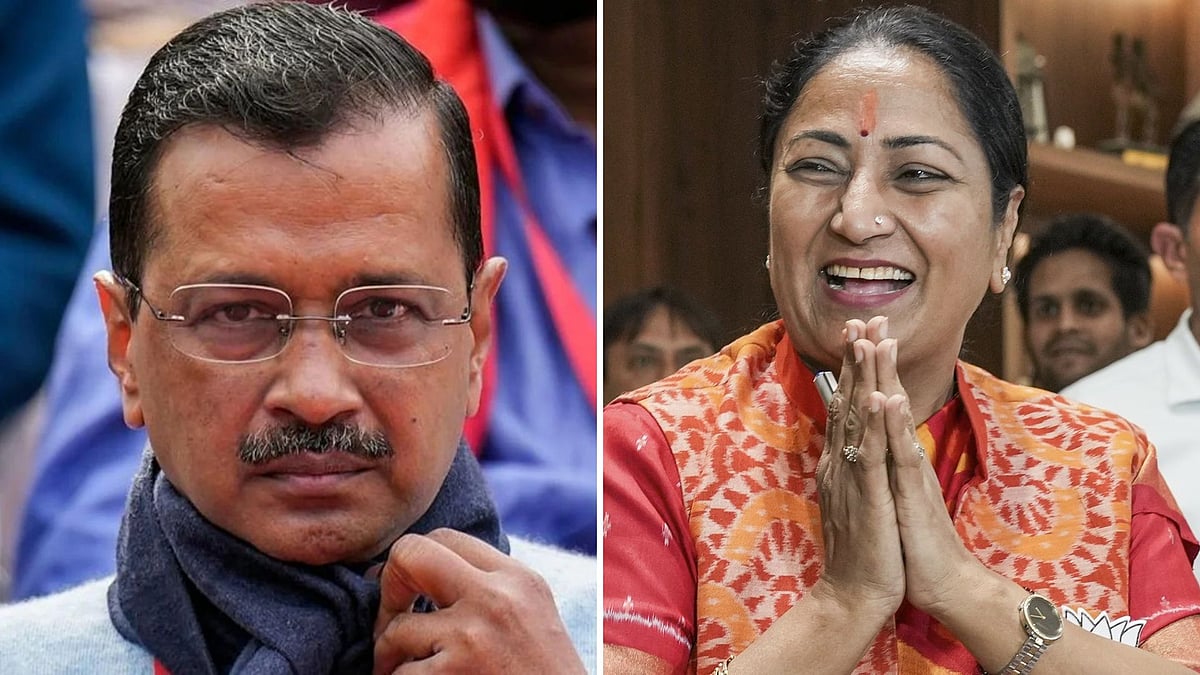
'When Did This New Science Come?': Arvind Kejriwal Hits Out At Rekha Gupta Over Her 'AQI Is Temperature' Remark | X
New Delhi: A political row has erupted in Delhi between Aam Aadmi Party (AAP) National Convenor Arvind Kejriwal and Chief Minister Rekha Gupta. This comes after the Bharatiya Janata Party (BJP) leader drew similarity between the Air Quality Index (AQI) and temperature.
Taking to X on Monday, December 8, Kejriwal questioned the scientific basis of her statement and accusing the BJP-led government of masking the city’s pollution data.
The former Delhi CM claimed that Gupta’s comments amounted to an admission that water was being sprayed near AQI monitoring stations to suppress actual pollution levels. “The Chief Minister has at least accepted that wherever AQI monitors are installed, water spraying is being done there so that the truth about pollution doesn't reach the people of Delhi,” Kejriwal wrote.
He also alleged that the practice was intended to project an image of cleaner air rather than address the underlying causes of pollution. Kejriwal also questioned the logic behind Gupta’s comparison of AQI readings with temperature, asking, “When did this new science come about that AQI has now become temperature?”
The BJP government has faced criticism after several videos circulated on social media purportedly showing water being sprayed around air quality monitoring stations in pollution hotspots.
What Rekha Gupta said on AQI and hotspots
Gupta made the comments while speaking at the Hindustan Times Leadership Summit 2025 on Saturday, responding to opposition allegations of data manipulation. She said pollution hotspots were areas with the highest concentration of pollutants and required immediate intervention.
“Tell me, what is a hotspot? A hotspot is an area with the highest pollution levels,” she said, adding that spraying water and working on the soil were part of efforts to address the issue. Gupta compared AQI readings to temperature measurements, stating that monitors only indicate levels and that watering affected areas was the solution.
“AQI is like a temperature which you can know from any instrument, so watering it is the only solution which we are also doing,” she said.
Meanwhile, Delhi’s air quality remained in the ‘very poor’ category on Tuesday, with the AQI staying above 300. According to data from the Central Pollution Control Board, the 24-hour average AQI stood at 314 at 4:00, compared to 308 at the same time on Monday. Forecasts indicate that pollution levels could worsen further in the coming days.
RECENT STORIES
-
-
-
-
-