Suvendu Adhikari PA Death: Chandranath Rath Assassination, A Blood-Stained Warning To Fix Policing In Bengal
The brutal assassination of Chandranath Rath serves as a grim ultimatum for the incoming government in West Bengal, highlighting a broken law enforcement system that must urgently transition from political partisanship to professional neutrality

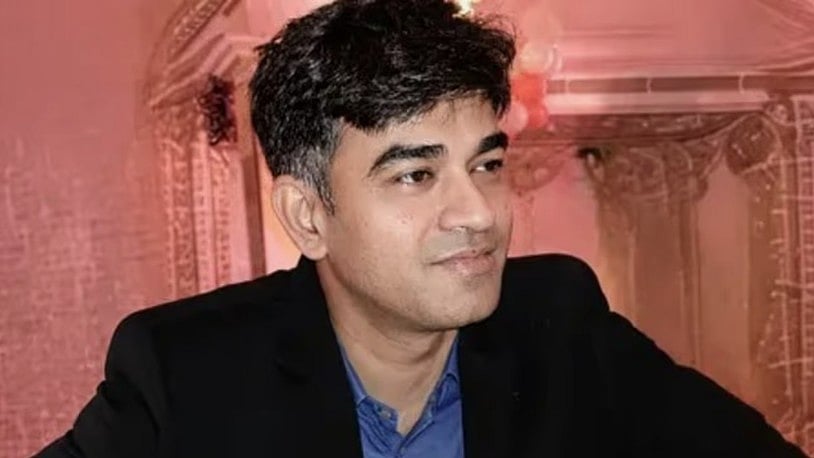
Chandranath Rath |
When gunmen opened fire on Suvendu Adhikari’s aide, Chandranath Rath, on Wednesday, the assassination was more than just another political killing. The attack, which left Rath dead and his driver critically wounded near Doharia in North 24 Parganas, occurred just kilometres from the Kolkata airport -- a brazen act of violence in the heart of the state.
Coming only days after the BJP’s historic victory in the 2026 West Bengal Assembly elections, this cold-blooded hit sends a chilling, no-holds-barred message to the incoming administration. For a government yet to be sworn in, the restoration of law and order has instantly become the primary benchmark for its success over the next five years.
After more than a decade of administration under the Trinamool Congress, the incoming government inherits a security apparatus deeply affected by political polarisation. The most immediate and visceral hurdle is the containment of post-poll violence. Traditionally, Bengal’s political transitions are accompanied by cycles of revenge politics that test the mettle of law enforcement.
With the Election Commission directing the state's top brass to enforce zero tolerance toward retaliatory attacks, vandalism and the displacement of families, the police must now act with unprecedented neutrality. This presents a unique burden as the new administration must ensure the force stops violence even when it involves their own triumphant supporters to prevent a perpetual cycle of unrest.
Rebuilding institutional trust, restoring neutrality
Beyond the immediate volatility of the streets, the new government must address the systemic erosion of police independence. For years, the Bengal police have struggled with the derogatory "Choti-Chata" label, reflecting a public perception that they functioned as an extension of the ruling party’s executive wing.
***
***
This morale crisis was recently personified in a viral video of a woman police officer who argued that the force simply follows the orders of whoever holds power. The goal now is to transition from a "ruler’s police" to a "people’s police." This involves a complex process of undoing years of political appointments and ensuring that FIRs are filed based on legal merit rather than party affiliation.
Civic volunteer crisis and structural reform
A significant structural challenge lies in the civic volunteer system, a massive parallel force of over 1.2 lakh individuals. These volunteers often lack formal training and have faced allegations of acting as political enforcers, a lack of accountability highlighted by the 2024 RG Kar case.
Dismantling or reforming this system without causing mass unemployment or creating a sudden security vacuum is a logistical and political tightrope. This reform must happen alongside efforts to address acute understaffing.
With roughly 97.66 personnel per lakh population, significantly lower than the national average of 152.80, the government must embark on a massive recruitment drive.
Re-integrating with central agencies
The shift to a 'double-engine' dynamic with the same party in power at both the state and the Centre is expected to end the long-standing 'war' between state police and Central agencies. Under the previous Trinamool government, the withdrawal of general consent for the CBI and frequent clashes with the ED stalled high-profile cases.
The state police will now be required to cooperate on long-dormant investigations into coal smuggling, cattle lifting and recruitment scams. This newfound synergy is intended to streamline justice, though it requires the state force to adapt quickly to a collaborative framework.
Infiltration challenge and border district security
A cornerstone of the new administration's security doctrine is the aggressive management of illegal infiltration. The Detect, Delete and Deport model places a heavy investigative burden on local police stations in districts such as Malda, Murshidabad and North 24 Parganas. Policing in these regions must now concentrate toward identifying silent demographic shifts and vetting residency documents with precision to avoid the harassment of genuine Indian citizens.
This strategy is intrinsically linked to the commitment to complete border fencing within a 45-day window. Heavy policing in these districts is no longer just about patrolling, it is about dismantling the fence-gap economy that has thrived on smuggling and human trafficking.
Managing communal harmony and identity anxiety
Finally, the policing of border districts is essential for maintaining communal harmony in areas that have historically been flashpoints for tension. There is no doubt that unregulated migration has not only put intense pressure on India's resources but also resulted in high criminal activities. In such a scenario, the police must act as a stabilising force and restore public order with great urgency.
RECENT STORIES
-
-
-
-
-