Supreme Court: Petitioner Questions ECI’s Claim Of Unanimous Approval For SIR Decisions, Seeks Original Records
Petitioner Rakesh Kumar Singh told the Supreme Court that the Election Commission had not produced records supporting its claim that all three commissioners unanimously approved SIR decisions. In a November 16 rejoinder, he sought meeting minutes, resolutions and other approvals, Live Law reported. The ECI maintains the revision was lawful and the disputed decisions were taken unanimously.

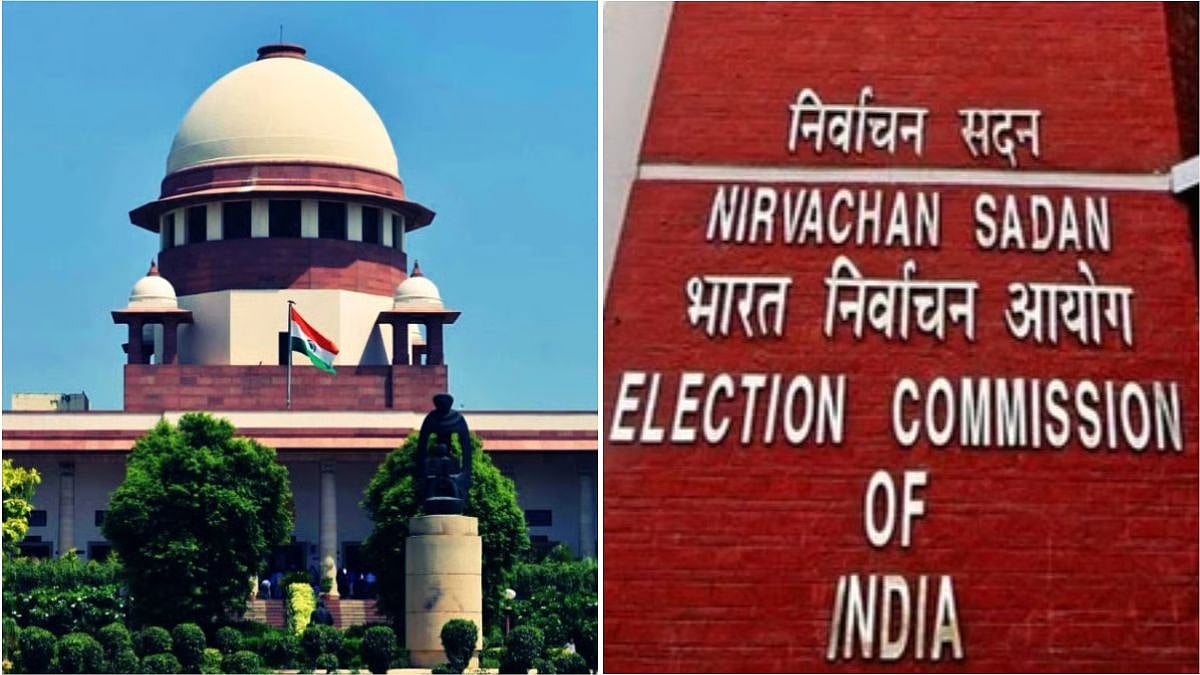
Supreme Court: Petitioner Questions ECI’s Claim Of Unanimous Approval For SIR Decisions, Seeks Original Records |
A petitioner challenging the functioning of Chief Election Commissioner Gyanesh Kumar has told the Supreme Court that the Election Commission of India (ECI) has failed to produce records showing that decisions related to the Special Intensive Revision (SIR) of electoral rolls were unanimously approved by all three Election Commissioners.
In a rejoinder affidavit filed through Advocate on Record Mudit Gupta on November 16, petitioner Rakesh Kumar Singh disputed the ECI’s claim that the decisions were taken collectively. He alleged that several decisions were taken without demonstrating compliance with Section 18 of the Chief Election Commissioner and Other Election Commissioners (Appointment, Conditions of Service and Term of Office) Act, 2023. The petition also questions whether Gyanesh Kumar acted without the concurrence of the other two commissioners, Live Law reports.
Where Is The Proof Of Unanimous Decisions?
The petitioner argued that the ECI had repeatedly claimed unanimous approval but had not submitted a single contemporaneous record to support its position. He sought the production of meeting agendas, minutes, file notings, circulation sheets, resolutions, electronic approvals and communications relating to the disputed decisions.
The affidavit also questioned whether officers and administrative divisions had acted beyond their authority. According to Singh, internal allocation of work or administrative practice cannot replace the Commission’s collective approval when required by law.
The petitioner further challenged the ECI’s reliance on Section 19A of the Representation of the People Act, 1951, and delegation orders dated January 12, 1996, and September 9, 2012. He argued that these provisions did not authorise officers to alter the statutory electoral registration framework or exercise powers reserved for the Commission.
The dispute raises an important question about accountability within the poll body. If decisions require collective approval, documentary records would help establish whether the prescribed process was followed. The petitioner maintains that a claim of unanimity alone cannot settle this question.
Online Form 6 Changes Under Question
Another major issue raised in the affidavit concerns the additional declaration introduced during the SIR exercise as part of the online Form 6 application process.
The petitioner alleged that applicants were required to provide historical electoral-roll information, including details concerning their parents or grandparents, even though no corresponding amendment had been made to Form 6 prescribed under the Registration of Electors Rules, 1960.
According to the affidavit, the additional declaration effectively became compulsory for online applicants because they could not complete the application process without submitting it. Singh argued that the ECI could not treat the declaration as a separate administrative requirement when it operated as a condition for submitting the application.
The Election Commission had earlier acknowledged before the Supreme Court that displaying the SIR declaration alongside Form 6 online could have created the impression that the statutory form had been amended. However, it maintained that the declaration was a separate document.
The ECI subsequently separated the declaration from the online Form 6 process on October 21 and introduced a separate submission mechanism. The petitioner argued that this change did not establish that the earlier arrangement was lawful or had received the necessary approval.
Can Later Corrections Justify Earlier Decisions?
Singh also questioned several corrective measures taken by the Election Commission after the writ petition was filed. He argued that these measures could not retrospectively establish the legality of earlier decisions.
The affidavit referred to the Commission’s September 26 press note, which stated that the additional declaration attached to Form 6 would continue during the SIR exercise, while the forms prescribed under the Registration of Electors Rules, 1960, would apply outside the revision period.
It also highlighted decisions taken on September 26 and September 30 to form a committee to examine whether the ECINet portal complied with applicable laws and rules. The committee was subsequently formally constituted through an October 14 circular.
The petitioner further referred to the October 21 separation of the SIR declaration from the online Form 6 application and a November 4 office order transferring oversight of the Information Technology and Information and Communication Technology (IT/ICT) Division to a Senior Deputy Election Commissioner.
The affidavit also cited a November 3 clarification concerning prosecution under Section 31 of the Representation of the People Act, 1950.
Under the clarification, previously enrolled voters whose names were missing from draft SIR electoral rolls could submit Form 6 to seek inclusion in the final rolls. Such applications would not automatically amount to false declarations merely because the applicants had been enrolled earlier.
Another direction issued on November 6 gave electors categorised as Absent, Shifted, Dead or Duplicate (ASDD) another opportunity to establish their eligibility. Their existing Electors Photo Identity Card (EPIC) numbers were also to be retained.
While these measures addressed certain procedural concerns, the petitioner argued that they did not answer the central question of whether the original decisions had received the approval required under Section 18 of the 2023 Act.
97 Eligible Goa Electors Could Not Apply
The rejoinder also highlighted the difficulties faced by 97 electors in Goa who, according to the petitioner, were eligible for inclusion in the electoral rolls as per the Electoral Registration Officer (ERO) but could not complete their Form 6 applications through the ECINet portal.
Singh alleged that repeated communications seeking assistance for these electors did not result in the necessary facilitation by the Election Commission.
He also questioned why the ECI had not adequately explained the difficulties faced by the electors or the absence of assistance that would have enabled them to submit their applications.
The episode highlights the potential consequences of online application requirements for eligible voters. The petitioner cited it as an example of how the additional declaration and digital procedures could affect access to the electoral registration process.
West Bengal Appeals Raise Fresh Questions
The petitioner also challenged appeals filed against orders passed by judicial officers concerning exclusions from electoral rolls during the West Bengal SIR exercise.
According to the affidavit, officers from the Chief Electoral Officer’s office filed the appeals without demonstrating that the Election Commission had authorised them to initiate the proceedings.
Singh further alleged that the Chief Electoral Officer of West Bengal had not been informed of the basis on which the appeals were filed.
The petitioner sought details of the officers responsible for filing the appeals, the authority under which they acted, the criteria used and the relevant approvals.
He argued that the filing of appeals affecting a large number of electors without demonstrating the Commission’s authorisation raised serious questions about the decision-making process.
Petitioner Wants Original Records Before Court
The rejoinder seeks original records relating to SIR orders dated June 24, October 27 and November 14, 2025, along with the July 28, 2026 office order.
The petitioner has also sought communications concerning the allocation of IT and ECINet oversight, decisions relating to the online Form 6 declaration and documents connected with the West Bengal appeals.
He wants the ECI to disclose who authorised each disputed action, whether the Commission approved it and whether the statutory requirements for collective decision-making were followed.
The Election Commission, in its counter-affidavit and supplementary affidavit, has maintained that the SIR exercise was lawful and that the relevant decisions were taken unanimously.
The petitioner, however, insists that subsequent administrative corrections cannot substitute for proof that the original decisions were properly authorised.
The case places the Election Commission’s internal decision-making process under scrutiny. Beyond the dispute over individual orders, the central issue is whether the poll body can substantiate its claims of collective approval through official records.
The Supreme Court will have to examine the competing submissions and determine whether the disputed actions complied with the statutory framework governing the Commission.
Level up your brain the fun way. Play daily games and quizzes on FPJ Smart!
RECENT STORIES
-
-
-
-
-