Nepal Foreign Minister's India Visit Aims To Reset Ties Amid Border Row
Nepal Foreign Minister Shisir Khanal's three-day India visit is being closely watched as Kathmandu seeks to reset ties with New Delhi. While both sides are focusing on trade, connectivity and cooperation, the long-standing boundary dispute remains a sensitive issue. Analysts say the visit will help gauge intentions and ease misunderstandings amid changing regional dynamics.

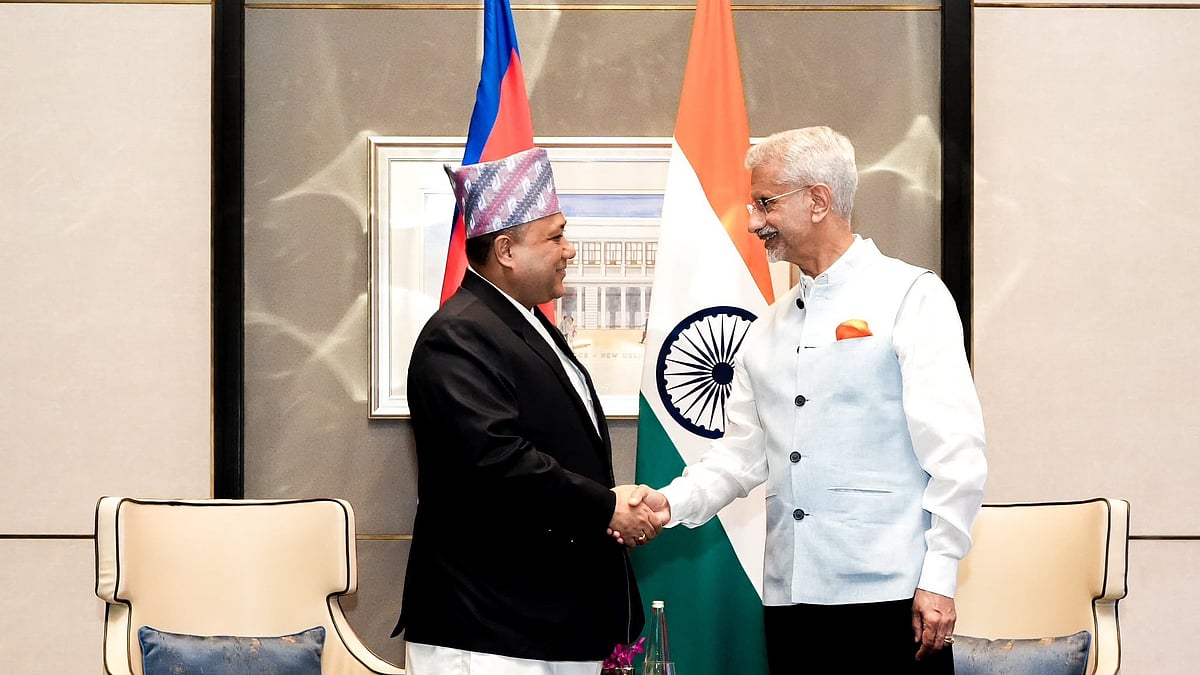
The arrival of Nepal's Foreign Minister Shisir Khanal for a three-day official visit to India is being closely watched in New Delhi's power circles. Khanal is the first Nepali minister to visit India since Prime Minister Balendra "Balen" Shah assumed office on March 27 this year and is widely seen as seeking to reset bilateral ties that have recently encountered strains.
Welcoming Khanal on X, MEA spokesperson Randhir Jaiswal said, "The visit will help further strengthen the special partnership between India and Nepal."
The effort to build goodwill has ensured that both sides have largely stayed away from contentious issues in their public messaging.
Boundary Dispute Remains Key Irritant
The primary source of friction remains the long-standing boundary dispute involving Lipulekh, Limpiyadhura and Kalapani, territories claimed by both India and Nepal.
Since Shah took office, questions regarding the India-Nepal border have been raised with increasing frequency in Kathmandu. However, during a special media briefing on Friday ahead of Khanal's visit, Jaiswal refrained from commenting directly on Shah's recent remarks concerning the border issue.
Stating that New Delhi was committed to developing its "multifaceted relationship" with Kathmandu, he said India had already clarified its position on "other issues" and would continue addressing them through established bilateral mechanisms.
"To solve those issues, we have a bilateral mechanism with which we would like to proceed," he said.
Kathmandu Focuses On Cooperation Agenda
Nepal has also appeared keen to avoid highlighting the boundary dispute during the visit.
In a statement issued before Khanal's departure, Nepal's Foreign Ministry said the two sides would discuss matters of mutual interest aimed at enhancing cooperation in trade, investment, connectivity, energy and people-to-people ties.
Balen Shah's Remarks Continue To Resonate
Despite efforts by both countries to lower tensions, Prime Minister Balen Shah's recent remarks have not been forgotten in New Delhi.
Shah surprised analysts in both India and Nepal when he stated in Nepal's Parliament that it was not only India that had encroached on disputed territory, but Nepal as well. He also said Nepal had discussed the issue with both China and the United Kingdom.
India viewed the comments unfavourably, seeing them as an attempt to internationalise what New Delhi considers a bilateral matter.
According to informed sources in Kathmandu, Shah is expected to clarify his remarks in Parliament on Monday.
Experts Offer Context To The Controversy
Yubaraj Ghimire, an expert on India-Nepal relations and editor of deshsanchar.com, said he believes Shah was referring to illegal Nepali settlements in no-man's-land areas along the border.
Regarding international mediation, Ghimire noted that many Nepalis oppose internationalising the dispute just as strongly as India does.
"He was probably referring to the Kali River the river was made the boundary between India and Nepal in the 1816 treaty," Ghimire said.
"Nepal contends that India has occupied some areas and therefore does not recognise the Kali River as the boundary. India maintains that this is the true origin of the Kali River and that it has not occupied Nepali territory. I believe the Prime Minister wanted to consult experts in Britain because the UK was involved in establishing the treaty."
China Factor Adds New Dimension
Analysts say Shah's reference to China followed a diplomatic note Nepal sent to both India and China in May.
The communication objected to the proposed reopening of the Kailash Mansarovar pilgrimage route through Lipulekh, an area claimed by Nepal.
"Shah was trying to get New Delhi's attention by building rapport with China and seeking support for Nepal's position," said a senior Indian diplomat who previously served in Nepal.
"It is likely that the Foreign Minister will follow up on this issue during his meeting with External Affairs Minister S. Jaishankar."
Changing Regional Dynamics Challenge India
Shah's statements indicate a growing assertiveness in Nepal's foreign policy, presenting India with new diplomatic challenges.
While Nepal remains economically dependent on India with India accounting for 64 per cent of Nepal's imports and 80 per cent of its exports in 2025 the geopolitical landscape has evolved significantly.
China's growing influence since the end of Nepal's monarchy in 2006, along with increasing US investments, has complicated New Delhi's traditional position in the Himalayan nation.
As a result, India must now navigate a more competitive environment in Nepal, where major powers are increasingly vying for influence.
Visit Expected To Focus On Building Understanding
Observers believe the visit will primarily serve as an opportunity for both sides to assess each other's positions and reduce misunderstandings.
"Both sides will try to gauge each other's mood and understand how any misunderstandings can be removed," Ghimire said.
"I don't expect any major announcements to emerge from the visit."
RECENT STORIES
-
-
-
-
-