Mamata Banerjee's New Party Identity And 'Football Player' Symbol Hand Her A Subtle Brand Messaging
With her name embedded directly into the party title and adopting Bengal’s culturally iconic 'football player' symbol, Mamata Banerjee perhaps connects deeper with the people than the rival Democratic Trinamool Congress and its static 'envelope' symbol

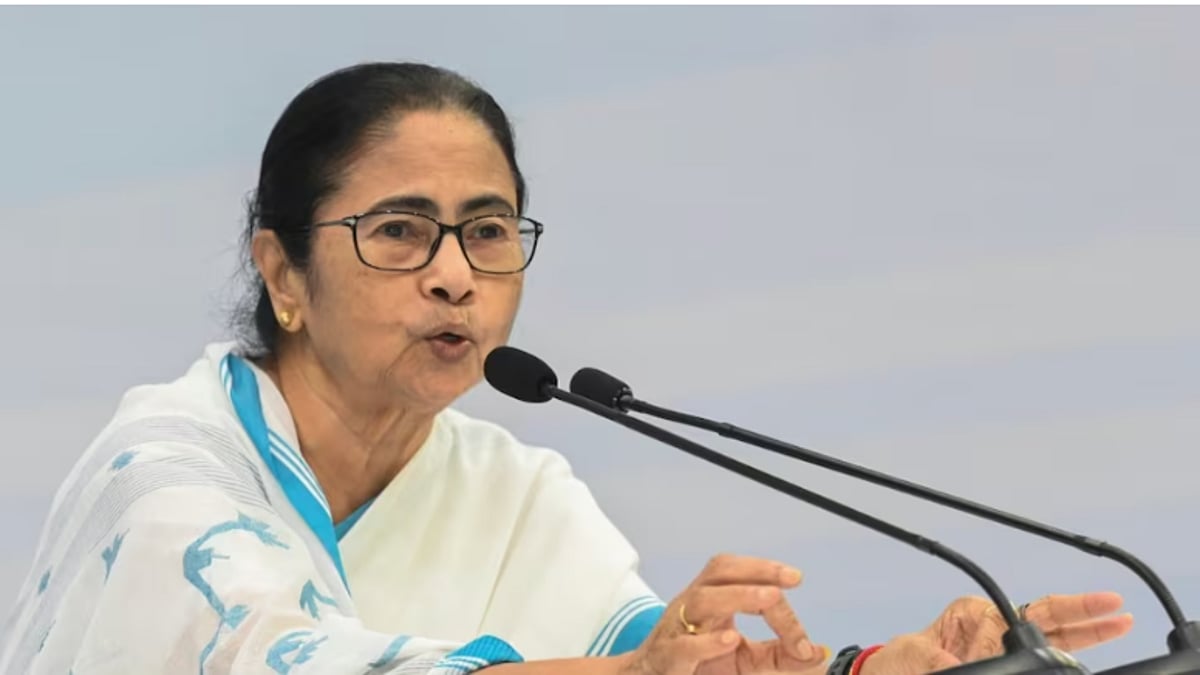
Former West Bengal chief minister Mamata Banerjee | File
The Election Commission on Friday formally intervened in the internal ownership feud of the All India Trinamool Congress (TMC) by issuing a directive that allocates separate, temporary political identities to the two warring factions ahead of the October 6 legislative bypolls in West Bengal and Assam.
Following competing claims over party leadership and executive control, the poll panel initially issued an interim order freezing the legacy All India Trinamool Congress name alongside its iconic 'flowers & grass' electoral symbol.
To maintain an even playing field pending a final administrative ruling, the Election Commission directed both camps to select alternative titles and free symbols.
The original faction led by party founder Mamata Banerjee was registered under the brand name Mamata All India Trinamool Congress and was granted the 'football player' ballot symbol. Conversely, the rebel faction backed by Arup Roy and Legislative Opposition leader Ritabrata Banerjee was assigned the identity Democratic Trinamool Congress accompanied by the ''envelope' symbol.
Both organisations will temporarily operate as recognised regional entities across West Bengal, Meghalaya and Tripura.
Why the new name enhances Mamata Banerjee's brand
The poll panel's decision to prefix the party title with 'Mamata' reinforces her central political standing rather than diminishing it. Over her multi-decade career, Mamata's personal brand as 'Didi' has eclipsed formal organisational structures making her name synonymous with the party itself.
In electoral politics, party splits frequently trigger voter confusion at the polling booth when familiar symbols disappear. However, embedding her first name directly into the official ballot title mitigates this risk entirely.
At both state and national levels, the title Mamata All India Trinamool Congress codifies her individual leadership as the primary voting signal.
In contrast, the rival group’s designation as the Democratic Trinamool Congress adopts a generic institutional label that lacks emotional resonance or immediate name recognition among the electorate.
This distinction ensures that even without the familiar flower symbol, voters immediately recognise Banerjee’s official ticket.
How the football player symbol leverages Bengal's cultural ethos
Assigning the 'football player' symbol to the Mamata-led faction represents a major visual advantage grounded in West Bengal’s social culture.
Football in Bengal is deeply intertwined with regional pride, neighbourhood para club culture and legendary rivalries such as Mohun Bagan versus East Bengal. By adopting an action-oriented sporting icon, the faction directly connects with the state's collective identity.
Furthermore, the football symbol seamlessly aligns with Banerjee’s political vocabulary. Her campaign battle cry Khela Hobe ('The game is on') originated during the 2021 assembly elections and became a defining political slogan across India.
The previous state government even formalised this connection by establishing an official annual Khela Hobe Divas and distributing thousands of footballs to local youth clubs. The 'football player' symbol transforms an established political metaphor into a physical voting prompt, allowing campaign workers to mobilise voters through an existing cultural narrative.
Comparing the 'football player' and 'envelope' symbols
The contrast between the two allotted symbols highlights a clear gap in political imagery. The 'football player' is dynamic, active and easily translated into grassroots street art, youth rallies and visual campaign materials. It portrays motion, competitiveness and regional passion, giving the Mamata faction an intuitive symbol to rally supporters on election day.
In comparison, the 'envelope' symbol granted to the Roy and Ritabrata faction conveys administrative passivity. Associated with bureaucracy, postal delivery or official correspondence, an envelope lacks any inherent emotional or cultural connection to the Bengal electorate.
In a fast-paced campaign environment where visual clarity drives voter recognition on electronic voting machines, the static nature of the 'envelope' puts the rebel group at a distinct disadvantage compared to the culturally resonant 'football player'.
The dispute erupted when both factions independently submitted Form-B nomination documents to the Election Commission, each claiming official authority to field candidates under the original TMC banner for the upcoming October 6 by-elections—most notably in West Bengal's high-stakes constituencies of Nandigram and Rejinagar, as well as Assam's Nagaon parliamentary seat.
RECENT STORIES
-
-
-
-
-