Mamata Banerjee: From Bengal’s Iron Lady To A Stunning Electoral Setback
The BJP is set to form the government in West Bengal after crossing the majority mark, dealing a major blow to Mamata Banerjee and the TMC. The result ends over a decade of her dominance, with analysts citing anti-incumbency and the BJP’s expanding grassroots presence as key factors behind the shift.

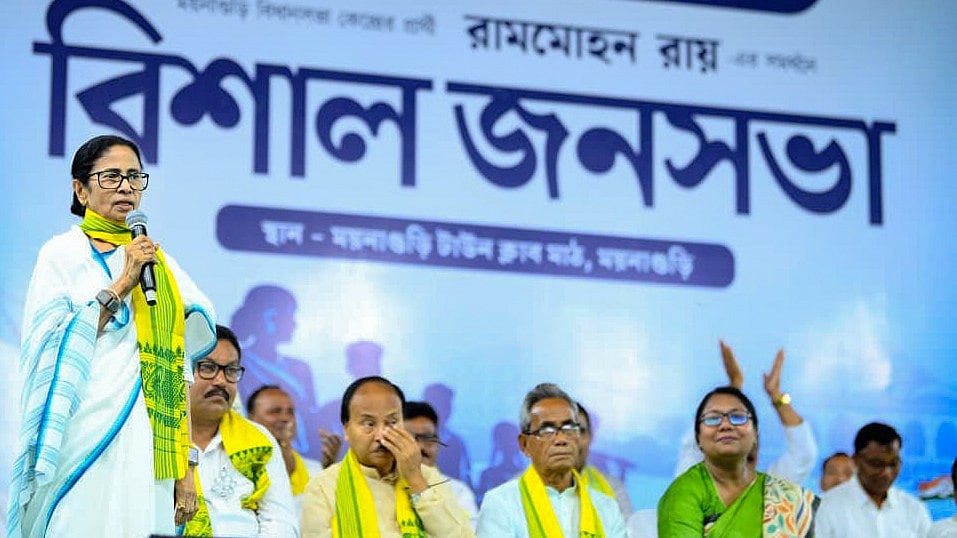
Mamata Banerjee: From Bengal’s Iron Lady To A Stunning Electoral Setback | ANI
The 2026 West Bengal Assembly election marks a dramatic turning point in the political journey of Mamata Banerjee. After more than a decade of dominance, Banerjee and the All India Trinamool Congress suffered a major electoral setback, with the Bharatiya Janata Party surging past the majority mark and poised to form the government in the state.
The defeat signals the end of an era for a leader who long embodied Bengal’s political identity. Known popularly as Didi, Banerjee rose from grassroots activism to become one of India’s most powerful regional leaders, building a legacy rooted in resistance politics, welfare measures, and personal austerity.
Born on January 5, 1955, in Kolkata, Banerjee began her political career with the Indian National Congress, where she quickly gained attention for her combative style and street-level connect. Her breakthrough came in 1984 when she defeated veteran communist leader Somnath Chatterjee in the Jadavpur Lok Sabha constituency, marking her arrival on the national stage.
In 1998, she founded the Trinamool Congress, positioning it as the principal challenger to the entrenched Left Front. Her leadership during the Singur and Nandigram land protests galvanised widespread support among farmers and the rural poor, transforming her into a mass leader capable of challenging decades-old political structures.
In 2011, Banerjee led her party to a historic victory, ending 34 years of Left rule in West Bengal. As Chief Minister, she focused on welfare-driven governance, launching schemes such as Kanyashree, Sabooj Sathi, and Swasthya Sathi. These initiatives expanded her support base among women, students, and marginalised communities.
Over time, however, signs of political fatigue began to surface. Analysts point to anti-incumbency, organisational challenges within the party, and the rise of a strong opposition as key factors behind the 2026 defeat. The BJP’s aggressive campaign and expanding grassroots network further eroded her dominance, particularly in urban and semi-urban areas.
Despite the setback, Banerjee’s persona remains distinctive. Known for her simple lifestyle, she is often seen in a white cotton saree and slippers, projecting an image of accessibility and personal integrity. Beyond politics, she is also a poet and painter, reflecting a creative dimension to her public life.
Her latest defeat may redefine her role in Indian politics. While it marks the loss of power in West Bengal, it does not necessarily end her influence. Banerjee continues to be a significant figure in opposition politics, with the ability to mobilise support and shape national narratives.
From a street fighter who challenged the Left to a three-term Chief Minister facing a major electoral setback, Mamata Banerjee’s journey reflects resilience, reinvention, and enduring relevance in India’s evolving political landscape.
RECENT STORIES
-
-
-
-
-