INS Nipun Joins Navy Fleet, Boosts Deep-Sea Diving And Submarine Rescue Capabilities
The Indian Navy commissioned INS Nipun in Mumbai to strengthen deep-sea diving, underwater intervention and submarine rescue capabilities. Chief of Naval Staff Admiral Krishna Swaminathan said the indigenously built vessel can support operations up to 300 metres depth and carry a deep submergence rescue vessel.

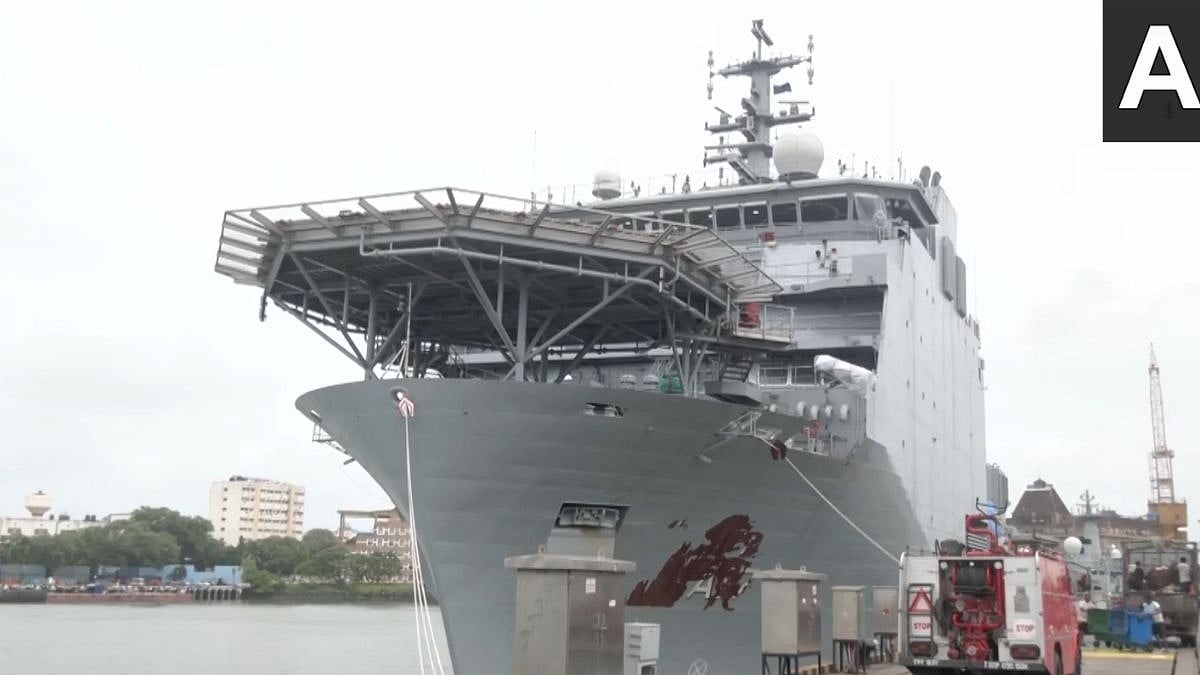
INS Nipun Joins Navy Fleet, Boosts Deep-Sea Diving And Submarine Rescue Capabilities | X @ANI
The Indian Navy on Monday commissioned INS Nipun, a deep-sea diving vessel designed to support complex underwater operations, strengthening capabilities that officials said are available with only a handful of navies worldwide.
Commissioned in Mumbai in the presence of Chief of the Naval Staff Admiral Krishna Swaminathan, INS Nipun is the Navy's second deep-sea diving vessel after INS Nistar, which joined the fleet last year. Together, the two vessels significantly strengthen the Navy's specialist diving, underwater intervention, salvage and submarine rescue support capabilities.
A powerful addition beneath the waves
INS Nipun can support diving operations at depths of up to 300 metres and provide rapid submarine rescue assistance. It can also be deployed for disaster relief and humanitarian operations, giving the Navy a versatile platform for emergencies at sea.
The vessel can embark the Indian Navy's deep submergence rescue vessel, a capability Admiral Swaminathan highlighted as particularly important. In a submarine emergency, where delays can prove critical, the ability to quickly deploy specialised rescue systems could significantly improve the Navy's response, PTI reports.
Built in India for complex missions
Designed and constructed indigenously by Hindustan Shipyard Limited in Visakhapatnam, INS Nipun is 119.4 metres long and has a capacity of 10,500 tonnes. Its induction also underlines the growing role of domestic shipbuilding in creating highly specialised platforms for the Navy.
The purpose-built vessel supports saturation, air and heliox diving and is equipped with remotely operated underwater systems for inspection and intervention. Its specialised diving complex, dynamic positioning capability and life-support and medical facilities allow it to conduct sustained and complex operations at sea.
These capabilities make INS Nipun more than a specialised diving ship. Its ability to support submarine rescue operations strengthens the Navy's preparedness for underwater contingencies, an area where speed, technical expertise and readiness are crucial.
‘Far Beneath, Few Beyond’
The vessel's specialised role is reflected in its motto, ‘Far Beneath, Few Beyond’, which the Navy said represents the resolve, skill and endurance required to operate in one of the most challenging maritime environments.
“Nipun adds specialised capability to support complex underwater operations and respond to emergencies in one of the most demanding and mysterious environments known to the world,” Admiral Swaminathan said.
The Navy chief stressed that submarine rescue leaves little room for delay. INS Nipun's ability to embark and operate the Navy's deep submergence rescue vessel could help India respond not only to emergencies involving its own submarines but also those of partner navies.
“Nipun's ability to embark and operate the Indian Navy's deep submergence rescue vessel significantly enhances our capacity to respond to a distressed submarine quite significantly, whether our own, or that of a partner Navy. This capability would also enable India to support submarine rescue and emerge as the ‘Preferred Submarine Rescue Partner’ in the region,” Admiral Swaminathan said.
A wider role in regional waters
INS Nipun's specialist diving capabilities can also support partner nations in underwater salvage and Humanitarian Assistance and Disaster Relief (HADR) missions. That gives the vessel a wider role in India's maritime cooperation efforts and potentially strengthens the Navy's ability to assist other countries during emergencies.
The ship's induction, however, is only the beginning. As Admiral Swaminathan pointed out, commissioning a vessel does not by itself create operational capability. What matters is how quickly and effectively the Navy can make the platform fully operational.
ALSO READ
“Commissioning a platform is only one part of capability creation. The real measure of induction is how rapidly and effectively we can convert a new platform into operational capability,” he said.
From design board to the deep sea
INS Nipun's journey from design to commissioning reflects cooperation between the Indian Navy, Hindustan Shipyard and domestic industrial partners. The vessel successfully completed sea trials, while all its diving systems and remotely operated vehicles (ROVs) demonstrated their role-worthiness in a single sortie, according to Admiral Swaminathan.
For the Navy, INS Nipun adds another layer of preparedness in a difficult and highly specialised area of maritime operations. Its combination of deep-sea diving, underwater intervention, salvage, humanitarian assistance and submarine rescue capabilities gives India a platform that can serve both operational requirements at home and maritime partnerships in the region.
RECENT STORIES
-
-
-
-
-