India Slams Pakistan At UN Over Cross-Border Terrorism, Reaffirms Kashmir As Integral Part Of India
India rejected Pakistan’s allegations at the UN over the Indus Waters Treaty, saying cooperation cannot continue when cross-border terrorism is used as state policy. Ambassador Parvathaneni Harish reiterated that Jammu and Kashmir is an integral part of India and said natural resources should promote development while opposing their misuse for conflict.

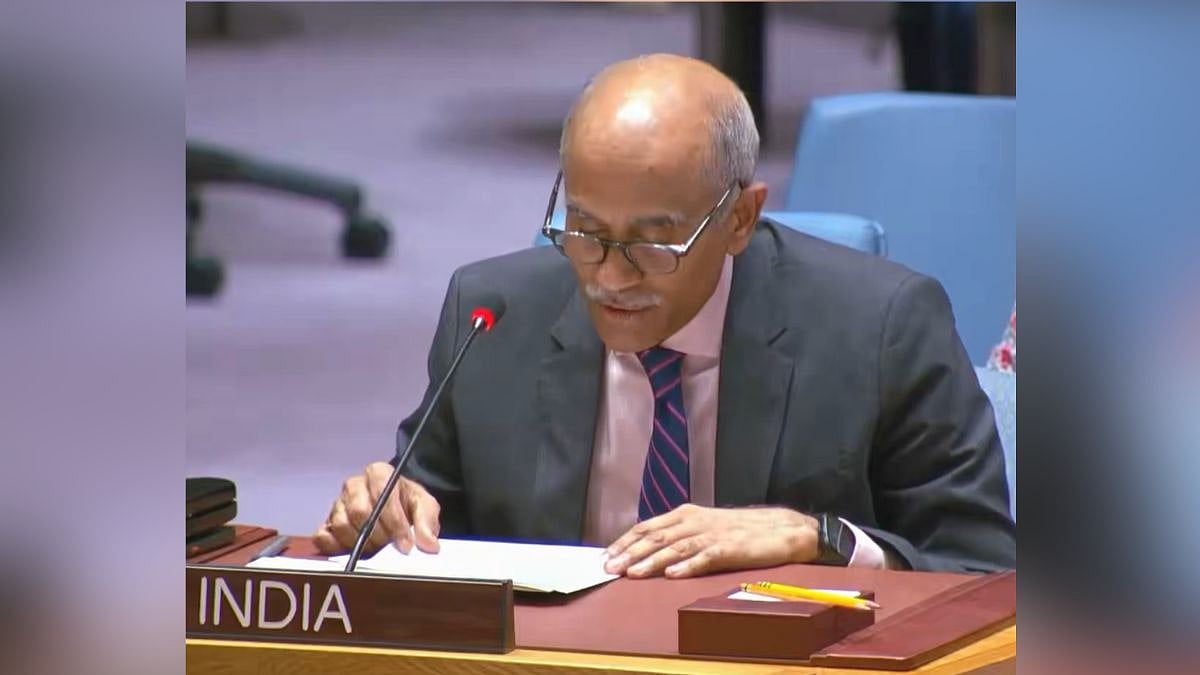
India Slams Pakistan At UN Over Cross-Border Terrorism, Reaffirms Kashmir As Integral Part Of India | X- ANI
India has strongly rejected Pakistan's remarks at the United Nations, asserting that cooperation under the Indus Waters Treaty (IWT) cannot be expected when "cross-border terrorism" is used as an "instrument of state policy". It also reiterated that Jammu and Kashmir "has always been, is, and will remain" an integral and inalienable part of India.
The remarks were made on Wednesday by India's Permanent Representative to the United Nations, Ambassador Parvathaneni Harish, during the High-Level Open Debate of the UN Security Council on Natural Resources Governance: the Foundation of Peace, Security and Prosperity.
India responds to Pakistan's allegations
Responding to Pakistan's intervention, Parvathaneni said India was compelled to exercise its right of reply after Islamabad "misused" the discussion to promote a "false narrative".
"Our position on the Indus Water Treaty remains clear and consistent. Cooperation on the basis of mutual trust and goodwill cannot be expected when cross-border terrorism is regularly deployed as an instrument of state policy," Parvathaneni said.
His remarks came after Pakistan's Permanent Representative to the UN, Asim Iftikhar Ahmad, accused India of "weaponising water" by placing the IWT in abeyance. He described the move as "illegal" and claimed it endangered the livelihoods of more than 240 million people in Pakistan.
The World Bank-brokered treaty, signed in 1960, governs the sharing of waters from the six rivers of the Indus basin, allocating the eastern rivers to India and the western rivers largely to Pakistan. India placed the agreement in abeyance following the April 22, 2025, Pahalgam terror attack, stating that cooperation under the treaty cannot continue in the face of cross-border terrorism.
Also Watch:
India reiterates position on Jammu and Kashmir
"As for the Union Territory of Jammu and Kashmir, it has always been, is, and will remain an integral and inalienable part of India. This is the constitutional and legal reality that Pakistan deliberately chooses to ignore," the Indian envoy said.
"The only outstanding issue with regard to Jammu and Kashmir is the naked aggression and illegal occupation of India's sovereign territory by Pakistan. Instead of pointing fingers at India, Pakistan would serve itself and its people far better by putting its own house in order," he added.
Natural resources should drive development
During the debate, Parvathaneni said the “illicit exploitation and trafficking of natural resources can, in certain situations, contribute to the financing of armed groups and prolong conflict,” while emphasising that natural resources should primarily serve as an engine of development and prosperity for sovereign states.
He also underlined that the governance and management of natural resources are the primary responsibility of sovereign states. He called for transparent, accountable and nationally owned governance, responsible supply chains, greater transparency, and stronger international cooperation to curb the illicit exploitation of natural resources.
RECENT STORIES
-
-
-
-
-