Don’t Burden Students With A New Language In Class 9, Says Justice BV Nagarathna; Urges Centre To Rethink CBSE Policy
The case arises from the Tamil Nadu government's challenge to a Madras High Court judgment directing the establishment of one Jawahar Navodaya Vidyalaya in every district of the State. The High Court had held that denying JNVs restricted students’ right to choose educational institutions and was inconsistent with the Right of Children to Free and Compulsory Education Act.

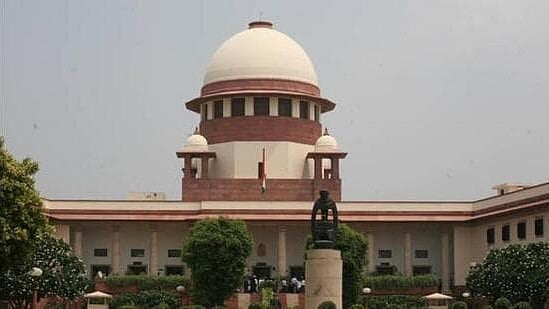
Don’t Burden Students With A New Language In Class 9, Says Justice BV Nagarathna; Urges Centre To Rethink CBSE Policy | X
Supreme Court judge Justice BV Nagarathna on Thursday expressed concern over the introduction of a third language from Class 9 under the Central Board of Secondary Education (CBSE) curriculum, saying it places unnecessary stress on students at a crucial stage of their academic journey. She suggested that if a third language has to be taught, it should be introduced much earlier, preferably in Class 6, and completed before students enter secondary school.
The observations came during the hearing of the Tamil Nadu government's appeal against a Madras High Court order directing the State to facilitate the establishment of Jawahar Navodaya Vidyalayas (JNVs) in every district. While the validity of the CBSE’s three-language policy was not directly under challenge in the case, the issue surfaced during arguments on Tamil Nadu's opposition to the JNV scheme, which follows the three-language formula.
‘Don’t add pressure when board exam preparation begins’
Reating to submissions that a third language becomes compulsory only from Class 9 in CBSE schools, Justice Nagarathna said introducing a new language at that stage was unfair to students already preparing for board examinations.
“That is very bad. Ninth standard is stressful. Why do you introduce a new language in Class 9? Introduce it in Class 6,” she observed.
Addressing the Union government, the judge remarked, “Please don’t have a third language in 9th standard. CBSE, ICSE and State Board, Class 10 is a board examination. From the end of Class 8 onwards, the pressure starts.”
She further said the third language should begin in middle school and end by Class 9.
“Don’t have a new language in 9th standard, please. You can start in 5th or 6th standard. By 9th standard, it should stop. See the stress students are having. The student in me is still alive,” she remarked.
Recalling her own schooling in the 1970s, Justice Nagarathna said students in her school began learning a third language in middle school because it was required for the Secondary School Leaving Certificate (SSLC). Those studying Hindi as the second language learnt Kannada as the third language and vice versa, while Sanskrit was also offered as an option.
“The earlier, the better,” she observed, adding that students of her generation had already started learning Class 10 concepts from Class 8 to prepare for board examinations. “If we had that kind of preparation, what about today’s students?” she asked.
During the hearing, the Tamil Nadu government submitted that its objection to the JNV scheme was linked to the three-language policy. Justice Nagarathna, however, pointed out that the policy did not mandate Hindi.
“The State language has to be taught, English has to be taught and any third language. It doesn't say Hindi,” she observed.
Advocate G Priyadarshini, appearing for the respondent NGO, pointed out that the National Education Policy states that no language should be imposed on any State. Justice Nagarathna then asked Tamil Nadu, “You don’t want Hindi, but if it's Sanskrit, what is the issue?”
Court nudges Tamil Nadu to reconsider stand on Navodaya schools
The Bench, also comprising Justice R Mahadevan, questioned Tamil Nadu's continued opposition to the establishment of Jawahar Navodaya Vidyalayas, observing that the schools are fully funded by the Union government.
“You may have your education system, but don’t prevent the Central government schools,” Justice Nagarathna told the State.
She further remarked, “Don’t have this attitude that it is the Union government, so why should we accept it.”
The Bench noted that discussions between the Union government and the State were still underway regarding the establishment of JNVs. It said the Court would examine the merits of the dispute only if those discussions failed.
“Talks have not concluded. If that fails, then only a question of us addressing any merits arises,” the Bench observed.
The respondent pointed out that despite an earlier direction requiring Tamil Nadu to identify land for the schools within six weeks, the State was now seeking additional time. The State sought six weeks to obtain fresh instructions.
Justice Nagarathna noted that there had been “a change of guard” in Tamil Nadu after TVK came to power by replacing the DMK following the Assembly elections in May. She said it remained to be seen what policy the new government would adopt.
The matter has been posted for further hearing on August 11.
Background: Why Tamil Nadu opposes JNVs
The case arises from the Tamil Nadu government's challenge to a Madras High Court judgment directing the establishment of one Jawahar Navodaya Vidyalaya in every district of the State. The High Court had held that denying JNVs restricted students’ right to choose educational institutions and was inconsistent with the Right of Children to Free and Compulsory Education Act. It also directed the State to provide temporary accommodation for 240 students in each district.
The Supreme Court stayed the High Court's directions in December 2017.
On December 15, 2025, the apex court asked the Union and Tamil Nadu governments to hold consultations, identify land required for the schools and place the outcome before the Court, describing the exercise as an exploratory federal dialogue. A consultation meeting was subsequently held on January 5, 2026.
According to the Union government, the National Policy on Education, 1986 envisaged Jawahar Navodaya Vidyalayas to provide quality residential education to talented rural students. It informed the Court that 689 JNVs have been sanctioned across 666 districts, but none has been established in Tamil Nadu because the State has not accepted the scheme.
The Centre clarified that in non-Hindi-speaking States, the medium of instruction from Classes VI to VIII is the regional language or English, while from Classes IX to XII, science, mathematics, social sciences and humanities are taught in English. It also said the State must provide around 30 acres of land, temporary accommodation and basic infrastructure before a JNV can be established.
Tamil Nadu, however, argued that the scheme is incompatible with its statutory two-language policy. It relied on the Tamil Nadu Legislative Assembly’s 1968 resolution and the Tamil Nadu Tamil Learning Act, 2006, which make Tamil and English compulsory while permitting a third language only as an optional subject.
The State also contended that it already achieves the objectives of the JNV scheme through its own network of 38 Model Residential Schools, one in each district. It told the Court that each school involved a capital expenditure of about ₹50 crore, while annual operating expenditure stands at around ₹210 crore, entirely borne by the State.
Also Watch:
According to Tamil Nadu, during the academic year 2024-25, 1,340 students from these schools secured admission to premier institutions, while several others received fully funded international scholarships.
The State suggested that instead of establishing new JNVs, the Union government could financially support its existing Model Residential Schools or modify the JNV framework to align with Tamil Nadu's constitutional and statutory policy.
Tamil Nadu also informed the Court that it had raised the issue of pending Samagra Shiksha funds during the consultation meeting. It said that out of the approved Central share of ₹3,998.82 crore for 2024-25 and 2025-26, only ₹450.60 crore had been released, leaving ₹3,548.22 crore pending, which had affected educational programmes and the functioning of the school education system.
RECENT STORIES
-
-
-
-
-