Built On Poison: The Growth That Chokes Right To Breathe
Air pollution here is not an accident or a seasonal glitch. It is policy sustained, deliberate, institutional policy and we are its subjects. The State of Global Air 2024 estimates that about 2.1 million people in India died in 2021 from air-pollutionlinked illnesses, roughly one in four such deaths worldwide. That includes an estimated 460 children dying every single day.

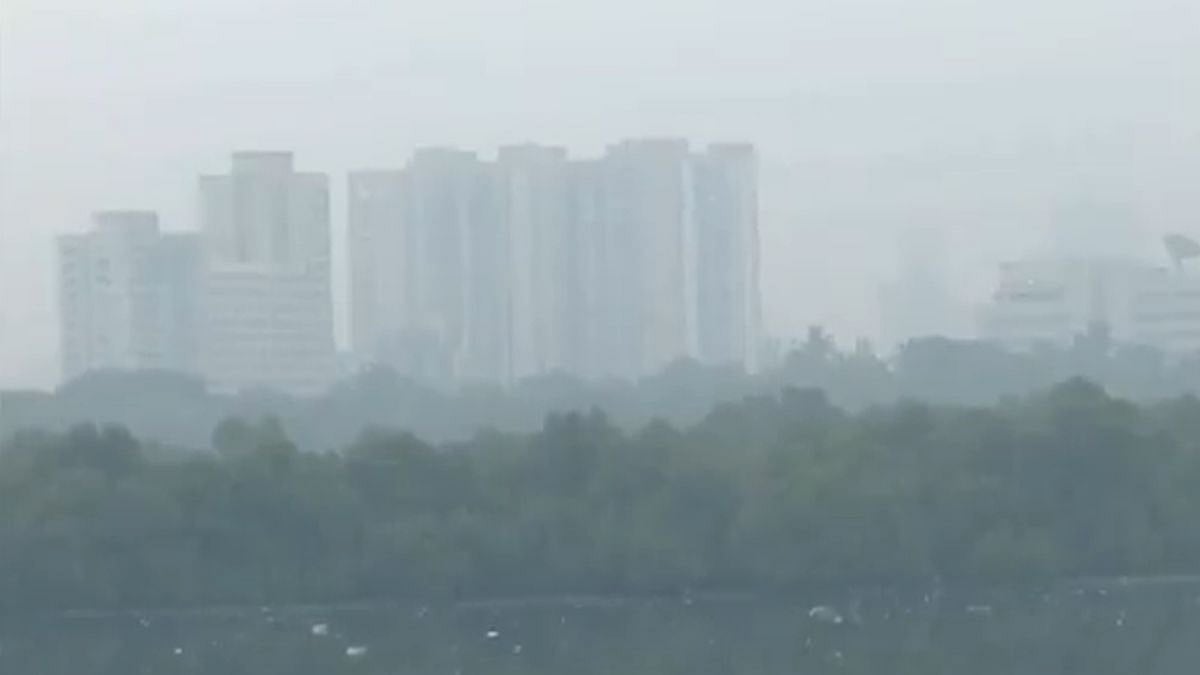
Every November, India acts surprised. As if the smog that smothers our cities were an uninvited guest, not the direct result of choices we keep making. | File Pic
Every November, India acts surprised. As if the smog that smothers our cities were an uninvited guest, not the direct result of choices we keep making. We blame 'weather' and 'geography', but India is not a victim of bad weather; it is a victim of its development model.
Air pollution here is not an accident or a seasonal glitch. It is policy sustained, deliberate, institutional policy and we are its subjects. The State of Global Air 2024 estimates that about 2.1 million people in India died in 2021 from air-pollution linked illnesses, roughly one in four such deaths worldwide. That includes an estimated 460 children dying every single day. If an enemy state caused such casualties, we would call it biological warfare. Because our own policies do it slowly, we call it GDP.
The sources are painfully familiar: Coal plants that belong in another century; industrial clusters thriving on paper 'permissions'; construction sites that turn neighbourhoods into dust bowls; a diesel civilisation of vehicles; garbage burnt in the open. These are the pillars of how we have chosen to 'grow': Cheap energy, cheap labour, cheap land, cheap regulation. No surprise, then, that around 75 of the world’s 100 most polluted cities are now in India.
It is not as if the state is unaware. We have clean-air schemes, a commission for Delhi–NCR and graded response plans. But these are mitigation tools inside a polluting paradigm. When your starting point is many times above safe limits, even a 40% 'reduction' still leaves people breathing danger. Moving from 'severe' to 'very poor' is not victory; it is the shift from poison to slightly diluted poison. Clean air in India is not a policy preference; it is a Fundamental Right. The Supreme Court has repeatedly held that the right to a healthy, pollution-free environment is part of Article 21’s guarantee of life. When governments allow the air itself to become a hazard, they are not just missing targets. They are violating the Constitution.
Meanwhile, we are cutting our lungs to build our roads. 'Rising forest and tree cover often means plantations and roadside strips, while older, biodiverse forests are diverted for mines, highways, power lines and tourism. In cities, trees are casually chopped for parking, shopfronts, pandals and wider gates.
Air, however, is not empty space. It is prana breath, lifeforce. Emissions do not check religion, caste or party symbols before entering lungs.
India now stands at a fork. One path keeps us where we are: Masks on children and a generation raised inside a permanent low-grade gas chamber. The other demands honesty: Development which steals breath is not development. The question is no longer technical. It is moral: Will we still pretend we do not know what we are breathing?
(The author is a practising advocate at Bombay High Court and a human rights activist)
RECENT STORIES
-
-
-
-
-