Beyond Music: How Dr Bhupen Hazarika Turned Art Into A Language Of Resistance And Humanism
Dr Bhupen Hazarika's legacy extended beyond music, with his songs and films championing social justice, equality, cultural harmony and universal humanism. Drawing on Assamese traditions and global influences, he challenged caste, class and ethnic divisions while using art and romance as instruments of social reform and solidarity.

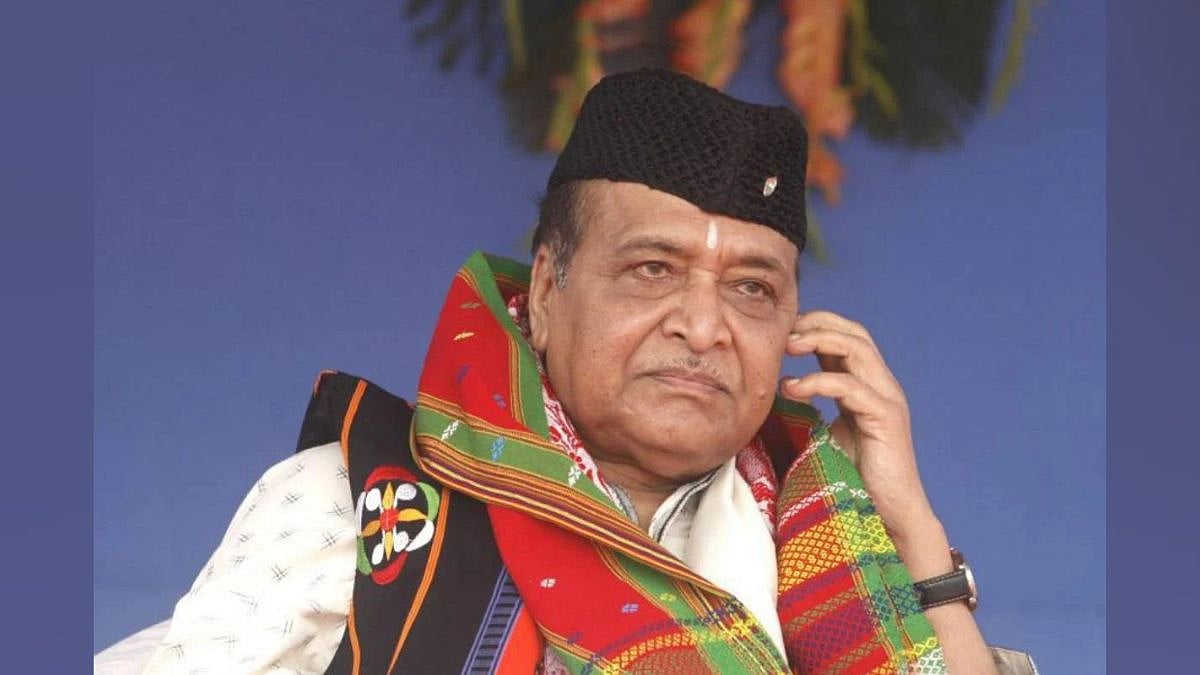
Dr Bhupen Hazarika | File Pic
Dr. Bhupen Hazarika (1926–2011) transcends the traditional definition of an artist. Revered as Sudhakantha (the nectar-voiced) and the Bard of the Brahmaputra, his vast oeuvre of over a thousand songs, films, and writings functioned as an active force of cultural and political intervention. Far from being a passive reflection of history, Hazarika's life and work represent a profound synthesis of rigorous scholastic depth and a revolutionary political language that engaged with regional identities, subaltern struggles, and universal humanism.
Hazarika’s artistic power was firmly anchored in high intellectual and academic training. In 1949, he embarked on a global educational journey, securing a scholarship for doctoral research at Columbia University in New York. By 1952, he completed his PhD, submitting a groundbreaking dissertation titled "Proposals for Preparing India's Basic Education to Use Audio-Visual Techniques in Adult Education". This work reflected his deep commitment to progressive thought, social upliftment, and the use of mass communication as a democratizing tool to combat illiteracy in newly independent India.
This intellectual rigor was matched by a formidable artistic lineage. Formed under visionaries like Jyoti Prasad Agarwala and Bishnu Prasad Rabha, his artistic and political consciousness were forged hand-in-hand.
Furthermore, his broad humanistic paradigm drew directly from the spiritual and socio-cultural legacy of medieval Assam's harbinger of Renaissance — Mahapurush Srimanta Shankardeva.
Hazarika’s mastery also extended to the physiological and technical dimensions of sound. A scientific study conducted by Tezpur University researchers analyzed his singing voice using computer software alongside ten other renowned Indian singers. The study revealed that Hazarika’s voice possessed the highest Harmonics-to-Noise Ratio—indicating unparalleled clarity and precision in vowel sounds—coupled with superior vibrato rates. This control gave his baritone a rare combination of flexibility, tenderness, and richness comparable to Western opera styles, setting him apart as an extraordinary vocal technician.
The Political Language of Great Creations
Hazarika’s political language utilized music and cinema as counter-hegemonic apparatuses to give voice to the oppressed and critique systemic power structures. His compositions were deeply shaped by his concept of the "equilateral triangle"—the belief that true art must be rooted in the authentic lives and struggles of the masses to avoid becoming elitist and hollow.
Composed when he was just 13 or 14, his early revolutionary song "Agni Jugor Phiringoti Moi" drew on traditional Assamese folk songs (ainaam) to call on the masses to transcend caste, creed, and religion to build a new society.
"Bistirno Parore" and "Ganga Behti Ho Kyun":
Following his encounter with civil rights activist Paul Robeson in New York, Hazarika reconfigured Robeson's "Ol' Man River". By invoking the Mississippi, Brahmaputra, and Ganga rivers, he created a resonant symphony of resistance that fused local historical burdens with the global civil rights movement.
"Koto Jawanar Mrityu Hol": Written in the wake of the 1962 Sino-Indian War, this politically charged composition destabilized the triumphant rhetoric of militarized nationalism by foregrounding the tragic deaths of young soldiers, turning private grief into a collective mode of resistance.
International Solidarity Anthems: During the Bangladesh Liberation War, his compositions like "Ganga Amar Ma, Padma Amar Ma" were adopted as anthems of solidarity by the Mukti Bahini, proving how cultural production could transcend territorial boundaries to support freedom struggles.
In songs like "Dola, Dola" (Palanquin, oh Palanquin), Hazarika trenchantly critiqued feudal and colonial exploitation by contrasting the indolent lord in silk with the sweating bearers. This labor-conscious framework also animated his award-winning cinematic scores, such as Chameli Memsaab, which situated class and gender within a progressive cultural politics.
Bridging Communities and Cultural Statesmanship—
Hazarika’s political and cultural vision rejected nativist extremism and xenophobia, opting instead for a syncretic model of coexistence. He frequently invoked the Brahmaputra River as a "maha milanar tirtha" (a great confluence) to frame migration and diversity as constitutive elements of historical evolution rather than aberrations.
To bridge deep-seated ethnic divides—such as the historical disjunction between the hills and plains in Northeast India—Hazarika integrated indigenous epistemologies into his art. Songs like "Lieng Makaw" and "Moi Kohimare Aadhunika Daalimi" foregrounded Khasi and Naga cultural idioms to extend recognition to marginalized communities.
This mission culminated in practical initiatives like the 2003 'Setubandha' (Bridge-Building) program, where he encouraged the author to train diverse ethnic groups like the Boros and Mishings in Sattriya Bhaona performances, enabling the first-ever adaptations in Boro and Mishing languages.in later period.
Institutionally, his statesmanship was cemented during his tenure as Chairman of the Sangeet Natak Akademi (1998–2003), where he successfully championed the recognition of Assam's 500-year-old Sattriya dance as a major classical dance form of India in the year 2000. This institutional milestone ensured that Assamese heritage secured its rightful place in the national imagination.
Dr. Bhupen Hazarika's legacy resists reduction to a simple, monolithic narrative. Traversing the roles of scholastic intellectual, political troubadour, and eternal romantic, his life's work demonstrated that art could simultaneously operate as a localized expression and a universal humanist philosophy. Honored with India's highest civilian award, the Bharat Ratna, in 2019, Hazarika remains a monumental figure whose creations continue to provoke critical inquiry into the entangled relationships between culture, identity, power, and human dignity.
Hazarika’s Romantic Songs: Erotics of Empathy and Social Reform
Dr. Bhupen Hazarika’s romantic compositions defy the conventional boundaries of popular romance. In his artistic framework, romantic love is hardly an insulated, escapist sanctuary; rather, it functions as an arena for radical social reform, human dignity, and democratic liberation. Hazarika dismantled the bourgeois dichotomy between the private realm of emotion (prema) and the public realm of socio-political struggle (sangram). For him, true love cannot exist in a vacuum of systemic oppression; it requires an ethos of equality and moral courage.
In songs such as "Moi Kohimare Aadhunika Daalimi" (I am the Modern Dalimi of Kohima), Hazarika fuses romantic yearning with cross-cultural statecraft. By evoking the literary archetype of Dalimi (originally from Jyoti Prasad Agarwala’s Rupalim), he reframes romance as a bridge between the plains of Assam and the hills of Nagaland.
Instead of reducing the tribal woman to an orientalized fantasy, Hazarika’s lyricism bestows full agency upon her. The romance becomes a site of mutual dignity and political fraternity.
Romance here actively counters sub-nationalist prejudices and hill-plain alienation, offering an emotional blueprint for peaceful coexistence in a volatile frontier region.
Hazarika’s cinematic scores, most notably in Chameli Memsaab, intertwine romantic attraction with an acute critique of class hierarchy and economic exploitation within colonial plantation structures.
In songs like "Asom Deshor Bagichaare" and "O Bideshi Bandhu", affection transgresses rigid socio-economic boundaries. Romance is framed not as a luxury of the elite, but as an inherent humanizing force among tea garden workers (Chah Bagicha community).
Love becomes a disruptive, counter-hegemonic act that humanizes marginalized laborers whom feudal systems view merely as economic capital.
In masterpiece ballads like "Bimurtto mur nixati" (A Formless Night ) and "Buku Hum Hum Kare" (My Heart Aches), the romantic impulse expands into an all-encompassing empathy for human suffering.
In "Buku Hum Hum Kare", written for the film Rudaali, romantic yearning transforms into visceral grief for widows and disenfranchised women bound by patriarchal custom. The line between personal heartbreak and collective agony dissolves.
Through these compositions, Dr. Bhupen Hazarika proved that the romantic balladeer and the social reformer are fundamentally one. By grounding romantic affection in mutual respect, egalitarianism, and empathy, his love songs actively challenged caste orthodoxy, gender subjugation, and ethnic chauvinism. His romantic canon remains an enduring legacy—demonstrating that to love deeply is inherently an act of social transformation
RECENT STORIES
-
-
-
-
-