Conscious Vaastu: Rethinking The Fear Of South-Facing Entrances
Breaking myths around “unlucky” doors, this perspective-driven approach explains how energy alignment—not direction alone—shapes harmony and growth at home

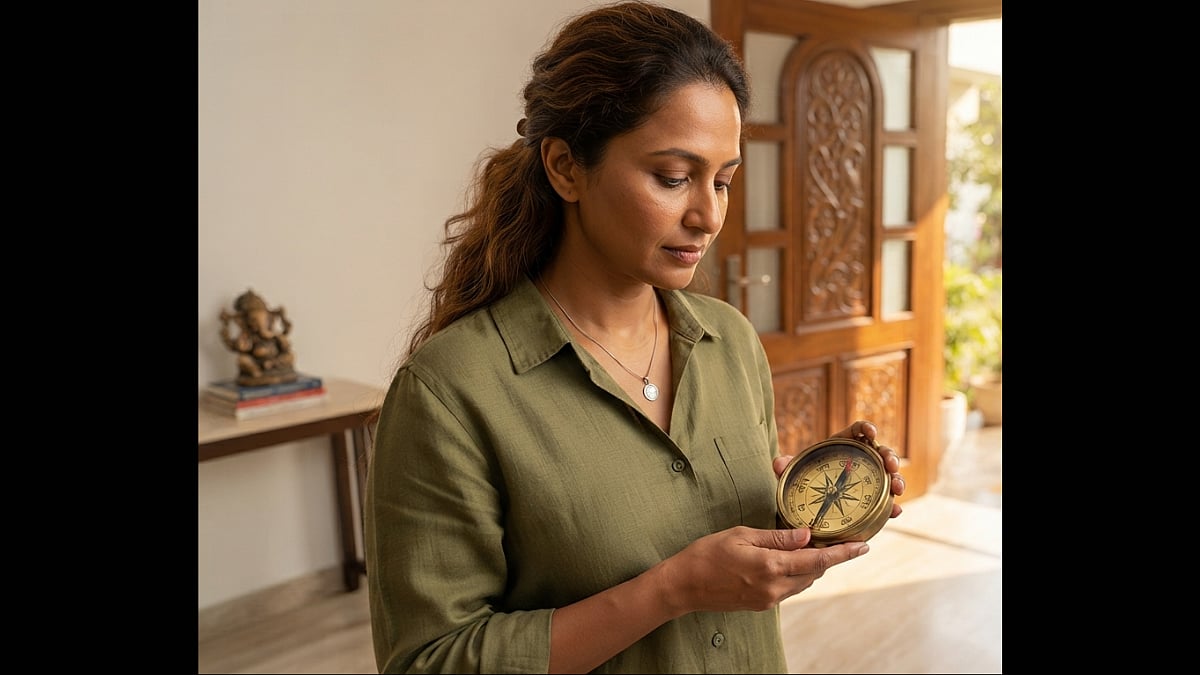
Vaastu, the ancient Indian science of architecture, has guided the design of spaces for thousands of years. Among its many principles, the orientation of the main entrance is one of the most talked about. A widespread belief persists that south-facing entrances are unlucky, while east or west-facing doors bring prosperity. This fear has led many to reject properties outright, often without understanding the deeper logic of Vaastu. Conscious Vaastu® offers a refreshing perspective: instead of rigid rules, it emphasizes energy alignment with awareness.
Confusion Around “Door Facing”
One of the biggest misconceptions lies in how people interpret “door facing.” Should the direction be seen from outside looking in, or inside looking out? Here is simple answer for this:
Architecturally, a door faces outward.
Energy flows from outside into the property.
Therefore, the facing must be understood from inside to outside, because it is harnessing the energy from outside into the property.
This distinction is crucial. Many people mistakenly analyze entrances from the wrong perspective, leading to flawed conclusions. For example, someone may assume their door faces north because they look at it from the street, but in reality, from inside the house, the door channels southern energy. Such misinterpretations fuel unnecessary fear.
Simple Grid Method
Vaastu uses a precise method to determine the energy of a door:
Imagine the property as a rectangle.
Divide it into a 3x3 grid, creating nine equal zones.
Identify the zone where the door is located.
Note the direction the door faces.
This grid reveals not just the direction but also the energy quadrant. For example:
A south-facing door in the southeast zone channels fiery, action-oriented energy.
A south-facing door in the southwest zone channels rigid, heavy energy.
Thus, not all south-facing doors are the same. The quadrant determines whether the energy is supportive, challenging, or neutral.
Energy Qualities of Directions
In Vaastu, every entrance orientation carries its own distinct character, a blend of strengths and challenges, which can shift further when studied in detail with grids and meridian lines. Understanding these qualities helps us see that no door is entirely “good” or “bad,” but each requires conscious alignment.
North: Often associated with cool, slow-moving energy. It can feel like progress takes time, yet it supports communication and visibility when aligned properly.
Northeast: Spiritual and knowledge-oriented, but can make one stuck in old-school thinking or rigid traditions if not balanced.
East: Growth-oriented, bringing rising energy and new beginnings, though sometimes restless and hard to stabilize.
Southeast: Fiery and action-driven, but can manifest as aggression or impulsiveness if not cooled with calm mind.
South: Warm and visionary, encouraging foresight, yet may feel overly intense or demanding.
Southwest: Heavy and rigid, often draining if resisted, but can be stabilized through adaptability and resilience.
West: Settling and creative, but may feel lethargic or laid back without conscious effort to stay active.
Northwest: Dynamic and volatile, sometimes too changeable or confusing, yet it offers opportunities for leadership and trust-building when harnessed positively.
If these are the negative qualities, then what should we do? Does that mean every door is weak? The truth is, yes, each door has its challenges. But rather than focusing only on the negatives, Conscious Vaastu® teaches us to embrace change and consciously cultivate the qualities that balance our entrance energy. In the next article, we will explore in detail what kind of strengths we should develop to harmonize with each orientation.
Why Fear Persists
The fear of south-facing entrances has roots in traditional interpretations. Ancient texts often warned against certain orientations because they were linked to specific seasonal challenges. For example, in hot climates, a south-facing door could expose the house to excessive heat. Over time, these practical concerns transformed into rigid superstitions. This liberates people from superstition and empowers them to live consciously. Instead of rejecting a property because of its entrance, one can adopt strategies to harmonize with the energy it channels.
Practical Implications
Consider two families: one rejects a south-facing home due to fear, while another embraces it with Conscious Vaastu® strategies. The second family cultivates visionary thinking, sets long-term goals, and adapts their lifestyle to the warm, dynamic energy of the south. Over time, they thrive, while the first family remains trapped in fear and limitation.
This illustrates the power of perspective. Conscious Vaastu® transforms challenges into opportunities by teaching us to work with energy rather than against it.
Conclusion
South-facing entrances are often misunderstood. Conscious Vaastu® teaches that every direction has unique energy qualities. By understanding these nuances, we can move beyond fear and superstition, embracing entrances as gateways to growth and harmony. Instead of asking, “Is my door unlucky?” we should ask, “How can I align with the energy my door channels?” This shift in perspective is the essence of Conscious Vaastu®, a science of living consciously and harmoniously.
(Dr Harshit Kapadia is a metaphysics consultant of Conscious Vaastu, Yuen Hom and Sam Hap Style of Feng Shui. To know more visit his website www.consciousvaastu.com)
RECENT STORIES
-
-
-
-
-