From Udaipur To Enterprise AI: How Kipps.AI Is Building AI Agents For Everyday Business Conversations
Udaipur-based Kipps.AI is building no-code AI agents that help businesses automate customer interactions across voice, WhatsApp and web chat. Founded in 2024, the startup is targeting sales, support and routine workflows as enterprises move from generative AI experiments toward agentic AI.

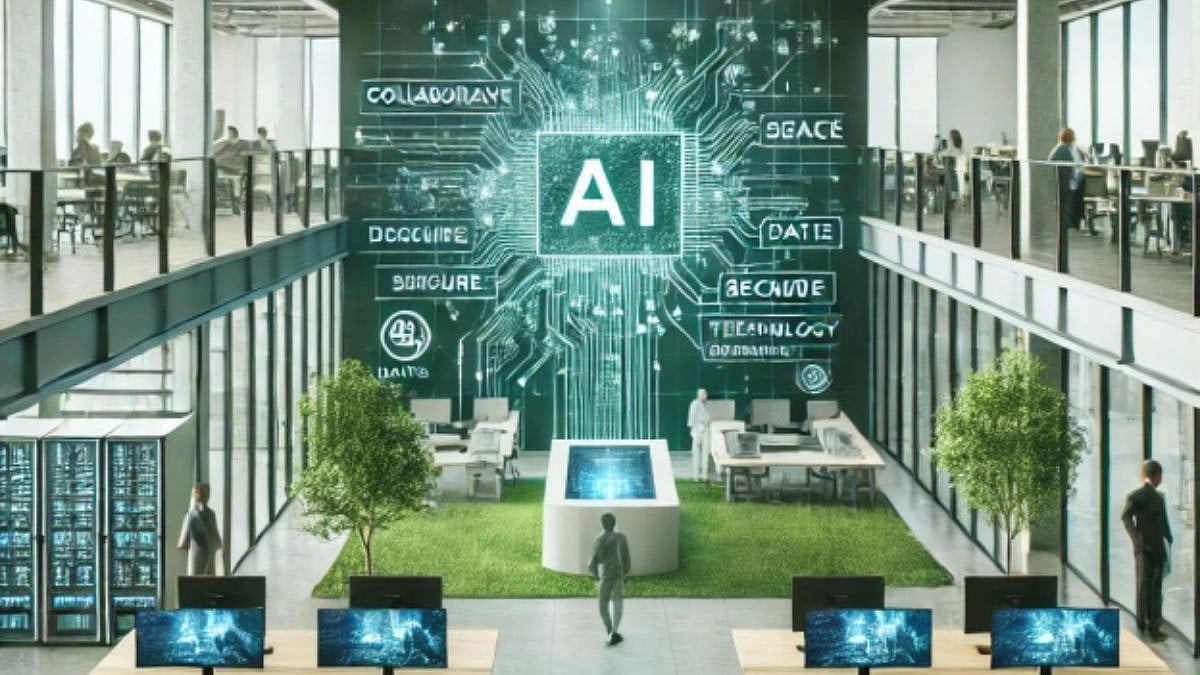
From Udaipur To Enterprise AI: How Kipps.AI Is Building AI Agents For Everyday Business Conversations | File photo
As enterprises look beyond generative AI demonstrations toward tools that can perform actual business tasks, Udaipur-based Kipps.AI is betting on a simple idea: businesses should be able to deploy AI agents that talk to customers, follow up with leads and complete routine workflows without requiring their own AI engineering teams.
The first wave of generative AI was largely about answering questions and creating content. The emerging wave is increasingly about action.
Businesses are now experimenting with AI systems that can answer phone calls, respond to WhatsApp messages, qualify potential customers, schedule appointments and interact with internal business systems. This shift from conversational AI to what the industry increasingly calls agentic AI is creating opportunities for a new generation of Indian startups.
One of them is Kipps.AI, an AI-agent platform founded in 2024 by Nishit Chittora and Aditi Mishra in Udaipur, Rajasthan.
Rather than asking businesses to build their own AI infrastructure, Kipps.AI offers a no-code platform for deploying AI agents across three of the channels through which companies communicate most frequently with customers: voice, WhatsApp and web chat.
From Chatbots to Agents
Traditional chatbots have existed for years, but most were built around predefined decision trees. Ask something outside their programmed flow and the experience could quickly break down.
Large language models have changed what is technically possible.
Modern AI agents can interpret natural-language questions, retrieve information from company knowledge bases, maintain the context of a conversation and, increasingly, perform actions through integrations with business software.
For a real-estate company, for example, an AI agent could respond to a new inquiry, ask a prospective buyer about budget and location preferences and schedule a property visit.
For an education company, the same underlying technology could answer questions from prospective students, qualify applicants and arrange a conversation with an admissions representative.
A hotel could use an agent to answer routine questions or assist with reservations, while an e-commerce business could use WhatsApp to follow up with customers and respond to product-related queries.
Kipps.AI is attempting to bring these capabilities into a single platform.
The company says its agents can be configured without writing code and can use a business's existing knowledge and workflows. This is particularly relevant for small and mid-sized companies that may see value in generative AI but cannot justify building their own machine-learning or AI infrastructure.
Building From Udaipur
Kipps.AI's origins are also notable because the company was built outside India's largest technology centres.
The founders started the company in Udaipur with the idea that businesses were losing potential customers simply because sales and support teams could not respond instantly at all hours.
The company's own description of its vision draws an unusual analogy from the science-fiction film Interstellar: it wants to build something resembling TARS — the always-available AI assistant in the movie — for businesses.
In practice, that means giving companies an AI layer capable of handling repetitive conversations while escalating situations requiring judgement or human involvement to employees.
That distinction could become increasingly important as companies determine where AI automation works well and where people still need to remain in the loop.
Voice Could Be the More Interesting Battleground
Much of the public attention around generative AI has focused on text-based assistants. Voice AI, however, may become one of its more consequential enterprise applications.
A customer calling a company does not want to navigate ten IVR menus before finding the right department. A sufficiently capable voice agent could instead understand a request expressed naturally, answer questions using company information and initiate the appropriate next action.
Kipps.AI is developing voice agents for functions including lead qualification, customer support and appointment booking alongside its WhatsApp and web-chat products.
The technical challenge is considerably greater than simply placing a language model behind a telephone number. Voice systems must combine speech recognition, language-model inference, retrieval, business logic and speech generation while keeping latency low enough for a conversation to feel natural.
Reliability presents another challenge. A creative answer may be acceptable when someone is brainstorming with an AI chatbot. It is far less acceptable when an AI agent is providing a customer with a price, confirming an appointment or interacting with a company's workflow.
For enterprise AI companies, therefore, the competition is likely to be determined not merely by which system sounds the most human, but by which can operate predictably at scale.
Moving Beyond the AI Demo
Kipps.AI says its platform has now been used to automate interactions for hundreds of businesses and has processed millions of conversations. The company's customers and use cases span sectors including education, real estate, hospitality, financial services and e-commerce.
Those numbers are company-reported, but they point to a broader development in the AI market.
The novelty of simply having a conversation with a machine has faded quickly. Businesses increasingly want to know what happens after the conversation.
Can the AI qualify the customer? Can it update a CRM? Can it schedule a meeting? Can it trigger a workflow? Can it hand the conversation to an employee when necessary? And, ultimately, can it improve a measurable business outcome?
These questions are pushing AI startups away from standalone chatbots and toward systems that integrate models, communication channels, company data and operational software.
An Indian Opportunity
India could prove an unusually interesting market for this technology.
Businesses communicate with customers across a mixture of phone calls, websites and messaging platforms, while linguistic diversity creates a natural demand for systems capable of operating across languages.
At the same time, India's huge population of small and medium-sized businesses creates a market for AI products that do not require large technology departments to deploy.
For startups such as Kipps.AI, the opportunity is therefore larger than simply replacing an existing chatbot.
The bigger ambition is to turn AI into a new interface between businesses and their customers — one capable not merely of answering questions, but of carrying a conversation through to an outcome.
Whether AI agents can consistently deliver that reliability at enterprise scale remains one of the industry's biggest open questions.
But the direction of travel is becoming clearer. Generative AI is moving from systems that tell people what to do toward systems that can do parts of the work themselves.
And from Udaipur, Kipps.AI is trying to become one of the Indian companies building that transition.
RECENT STORIES
-
-
-
-
-