O.P. Nayyar: 100 Years Of A Musical Maverick
A look at O.P. Nayyar's rule-breaking life, musical legacy and enduring impact on Hindi film music on the occasion of his birth centenary (Jan 16th)

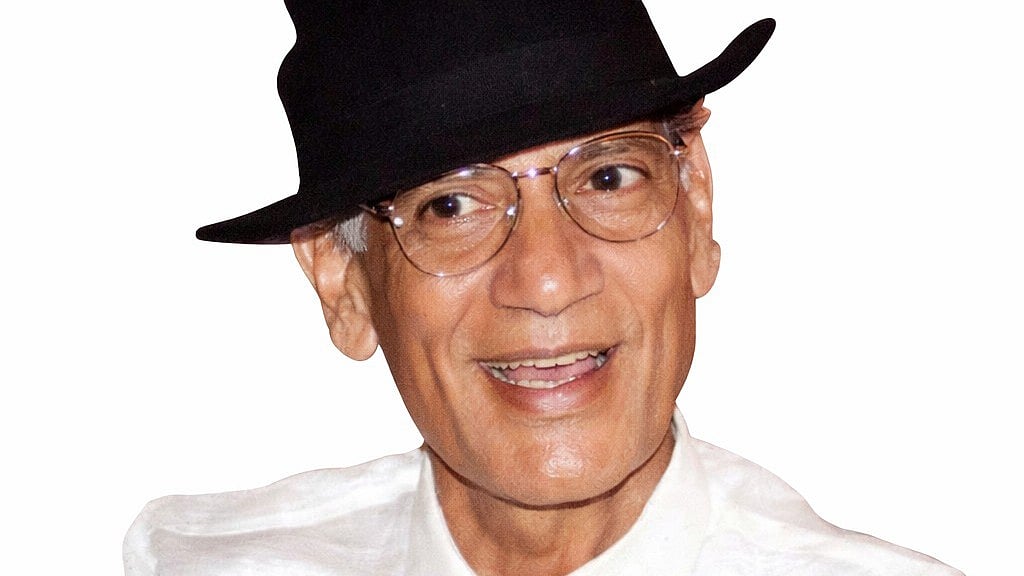
O.P. Nayyar |
From January 16, 1926, to January 28, 2007, was what we could call — with apologies to the late B.R. Chopra — the Nayyar Daur. Because O.P. (Omkar Prasad) Nayyar’s story is truly unique. Here’s looking at the maverick music maker on his birth centenary, which was on Friday.
The rules he broke!
O.P. (as I shall refer to him by the much-used acronym in music circles) broke all rules and traditions — and never was the worse for it! At a personal level, he even quit his home and family (some say his wife and kids threw him out) because they could not “understand” him. His personal statement on this was something that shall go unsaid here!
O.P. left music completely after Zid in 1994 and was a practising homeopath with great success for over a decade. He stayed as a paying guest with his fans, the Nakhwa family, in Thane, the satellite town of Mumbai, where he passed away at 81. His fatwa to them was clear: either shut his room door or the television if his song came on air! He had also left instructions that his family — wife, son and three daughters — should not be informed about his death.
O.P. also reached incredible heights of success and excellence, ranking next only to Shankar–Jaikishan from the late 1950s to the early 1960s, without the perceived compulsory ingredient of success — Lata Mangeshkar. He further developed S.D. Burman’s change of image for Geeta Dutt from the staid devotional to the sensuous club-ditties singer with Aar Paar and many other films. And though he had favourites like Asha Bhosle (with whom he had a long personal relationship too), Geeta Dutt, Shamshad Begum and Mohammed Rafi, he did extract exceptional work from other singers.
Check out Usha Mangeshkar’s Dekho bijli dole (Phir Wohi Dil Laya Hoon, with Asha), Mukesh’s and Kishore Kumar’s beauties in Ek Baar Mooskura Do, Mukesh’s Chal akela (Sambandh), Kishore Kumar’s Yeh raatein yeh mausam (Naya Andaz, with Shamshad Begum), Talat Mahmood’s Pyar par bas to nahin hai (Sone Ki Chidiya, with Asha), Hemant Kumar’s Apni maata ke dulaare bacche (Sambandh), and even Manna Dey’s Tu hai mera prem devta (Kalpana, with Rafi).
Remember also the fact that Dekho bijli dole and Tu hai mera prem devta were intricate classical numbers at par with the best classical film songs from the trained maestros that abounded — and became popular too. And O.P. had never learnt classical music even for a day!
The born genius
Said O.P. to me, “I learnt the harmonium by myself as a kid, and at 11, I was a performing artiste at All India Radio, Lahore, with most songs I sang being my own compositions.” O.P. began his discography with Preetam aan milo at 17 and was paid a handsome Rs 40 then by HMV (now Saregama), who approached him as he was famous by then! Even this song was composed by him audaciously with his icon K.L. Saigal in mind. Ultimately, Saigal-clone C.H. Atma, introduced by a common friend, recorded this all-time classic that was re-used by R.D. Burman in the 1982 film Angoor.
As a struggler in Mumbai, O.P. earned a living teaching the harmonium to children! Some of his compositions that sound deceptively simple but are great vocal challenges even for brilliant singers include Rafi’s Aanchal mein sajaa lena kaliyan (Phir Wohi…) and Aana hai to aa (Naya Daur), Kishore’s Savere ka suraj and Tu auron ki kyoon ho gayi (Ek Baar Mooskura Do).
What the world failed to realise was that this untrained genius had actually begun his career with that most technical of all musical departments — one that even many trained musicians cannot always master — the background score of Kaneez (1949). This film had been left incomplete by his idol, Ghulam Haider, who migrated to Pakistan after Partition!
Striking a distinct path!
O.P.’s specialty was his unique use of murqis and taans, and of course, instruments. One of the pioneers to have brought the sarangi out of its shackled image as a kotha-associated instrument, he also used many Western instruments like the guitar in unusual manners. After S.D. Burman’s Kaaton se khinch ke yeh aanchal in Guide, he became the first composer to begin a song with the antara in Kitne atal the, the duet version of Tu auron ki kyoon ho gayi.
So self-confident and egoistic was he that he would brook no exception if either his ego or discipline were insulted. Mohammed Rafi was thrown out of his recording rooms for over two years only because he had reported late after a delayed Shankar–Jaikishan recording. During this phase, both missed each other, but professionally O.P. came out with a barrage of over a dozen Mahendra Kapoor hits in a parade of films from 1966 to 1969. Rafi’s first olive branch, however, was warmly accepted, and till his death in 1980, Rafi sang for him even when O.P. himself had turned passé.
Today, O.P.’s songs remain remix fodder as well. And unlike many veterans tended to do, he admired young composers, especially Bappi Lahiri’s ‘punchy’ songs. The two also had a unique ‘connection’: Bappi hit A-grade time primarily with Namak Halaal, a 1982 film that filmmaker Prakash Mehra had grandiosely announced with O.P.’s music without consulting him. Mehra was at his peak, and O.P. was reeling under flops as attempted comebacks. Maybe Mehra thought O.P. would be thrilled — but the outraged music maker turned down the film for that very reason!
O.P. never cultivated big banners with politically correct behaviour, proof of which lies in the fact that his A-grade producers (apart from Guru Dutt and the loyal Mukerji clan) never repeated him even after musical whoppers like Naya Daur (B.R. Chopra), Mere Sanam (G.P. Sippy) or Kismet (Manmohan Desai).
Another proof of his confidence was his insistence that his photo be featured on the inlays of his LP records! The sustained quantum of hits that he always gave with small-time lyricists like Jan Nissar Akhtar, S.H. Bihari, Shevan Rizvi, Aziz Kashmiri, Raja Mehdi Ali Khan, Noor Dewasi and Farukh Kaiser made him largely steer clear of top names. He threw Sahir out of his professional life in the mid-’50s, worked when possible with Majrooh, very sporadically with Hasrat Jaipuri, Indeevar, Pradeep and Kaifi Azmi, and before their fame, with Anjaan and Verma Malik. Giants like Shailendra, Rajendra Krishan, Shakeel Badayuni and Anand Bakshi are missing from his repertoire.
The rule-book did not exist for O.P. He was a whiz-kid of the kind that God may never again decide to make for Hindi film music.
RECENT STORIES
-
-
-
-
-