Supreme Court To Direct CBSE To Add Opt-Out Option In APAAR Consent Form; Raises Focus On Student Data Privacy
The Supreme Court has indicated it will direct CBSE to amend the APAAR consent form to allow parents to opt out of the scheme. It also asked the Board to examine student data privacy concerns while implementing the Aadhaar-linked academic ID.

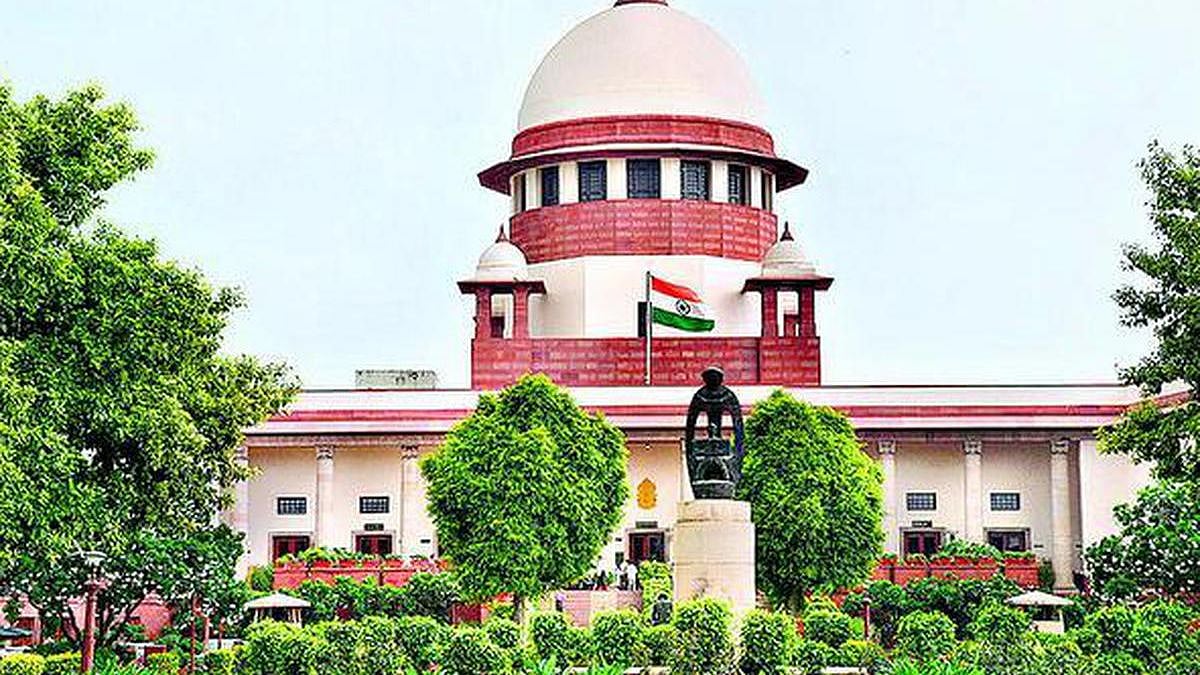
File Image
The Supreme Court on Monday indicated that it will direct the Central Board of Secondary Education (CBSE) to modify its model consent form for the Automated Permanent Academic Account Registry (APAAR) so that parents are explicitly given the option to refuse consent or opt out of the scheme. The Court also said it would ask the Board to address concerns relating to the protection and processing of students' personal data.
According to LiveLaw report, the observation came during the hearing of a writ petition filed by the parents of four students challenging the constitutional validity of the APAAR ID scheme. The petition argues that the scheme effectively compels students to obtain Aadhaar-linked academic IDs and raises concerns over data privacy and compliance with the Digital Personal Data Protection (DPDP) Act, 2023.
A Bench comprising Chief Justice of India Surya Kant, Justice Joymalya Bagchi and Justice V. Mohana was hearing the matter. The detailed order is awaited.
Court to implement Orissa High Court ruling across India
During the hearing, Senior Advocate Indira Jaising, appearing for the petitioners, relied on a December 2025 judgment of the Orissa High Court, which directed the Union government to amend the APAAR consent form to explicitly provide parents with an option to refuse consent and opt out of the scheme.
When informed that the High Court's order had not been challenged, the Supreme Court observed that it would direct the CBSE to implement the judgment on a pan-India basis.
According to LiveLaw report, the Chief Justice said, "We will direct CBSE to implement this judgment on pan-India basis... as the HC order has been accepted. We are directing CBSE to examine the issues as well."
Petition questions Aadhaar linkage and voluntary nature of APAAR
The petition challenges the APAAR scheme, introduced by the Ministry of Education in July 2023 under the "One Student, One Unique ID" initiative, which creates a lifelong academic identity linked with Aadhaar.
The petitioners contended that although the government describes APAAR as voluntary, students are allegedly being compelled to enrol because the ID is increasingly required during academic processes, including examinations.
She further argued that the key issue was not the objective of the scheme but whether it was genuinely voluntary in practice.
Court sees merit in scheme but stresses compliance with law
While hearing the submissions, the Bench appeared unconvinced by the challenge to the scheme itself.
Chief Justice Surya Kant observed that the purpose of APAAR is to create a unique identity for every student, making it easier to maintain academic records, monitor teacher-student ratios and facilitate smoother implementation of educational programmes.
At the same time, the Bench noted that CBSE's circulars would remain subject to existing laws and could not override the provisions of the Digital Personal Data Protection Act, 2023.
The Court indicated that the scheme would have to be implemented in accordance with the prevailing legal framework governing data protection.
What the petition seeks
The writ petition seeks a declaration that the APAAR scheme, including its Aadhaar-linked architecture and centralised academic database, is unconstitutional and violative of Articles 14, 19, 21 and 21A of the Constitution.
It also seeks directions preventing authorities from making enrolment effectively mandatory and asks the Court to ensure that students who choose not to register under APAAR are not denied admissions, examination registration, mark sheets, certificates or any other educational benefits.
While the Supreme Court did not stay the implementation of the scheme, it made it clear that the CBSE would be directed to incorporate the Orissa High Court's opt-out requirement across the country and examine concerns relating to informed consent and student data privacy. The Court's detailed order is expected to be uploaded later.
RECENT STORIES
-
-
-
-
-