Self-Management Of Teacher: A Must In The Current Challenging Time
Self-management is essential for teachers to balance teaching, research, administration and personal well-being. Effective stress management, continuous learning, reflection, healthy habits and work-life balance can help educators sustain professional excellence.

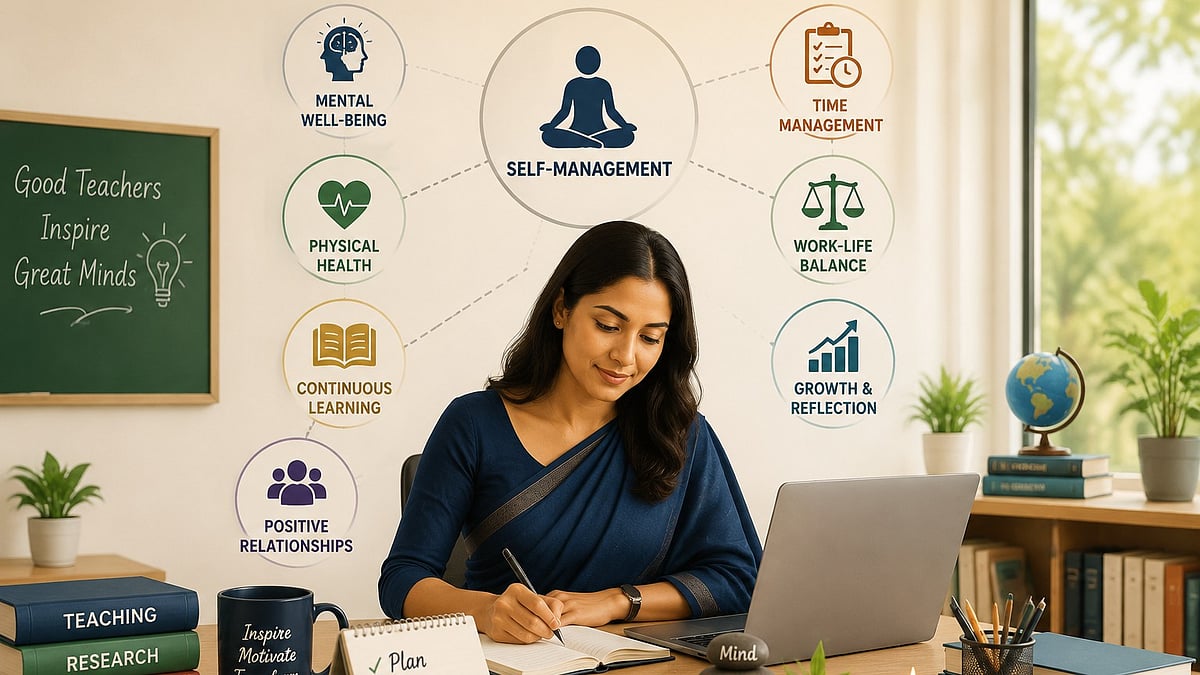
Teaching is one of the most intellectually demanding and emotionally engaging professions. Faculty members are expected to teach effectively, mentor students, conduct research, undertake administrative responsibilities, participate in institutional development, contribute to accreditation processes, engage with the community, and continuously update their knowledge. In the era of the National Education Policy (NEP), digital learning, interdisciplinary education, and outcome-based education, the expectations from teachers have expanded significantly.
While institutions rightly focus on faculty development in pedagogy, technology, and research, equal attention must be paid to “self-management”. An educator who is physically healthy, emotionally balanced, intellectually curious, and mentally resilient is better equipped to inspire students and contribute meaningfully to institutional growth.
Self-management is not merely about time management; it is the ability to regulate one's emotions, energy, priorities, habits, and professional commitments to achieve sustainable excellence. It enables teachers to remain productive without sacrificing “personal well-being”.
What is Self-Management?
Self-management refers to the conscious ability to manage one's thoughts, emotions, behaviour, time, health, and professional responsibilities in a disciplined manner. It includes:
Managing stress and emotions.
Maintaining physical and mental health.
Continuous professional development.
Balancing teaching, research, and administration.
Maintaining healthy relationships.
Reflecting on personal and professional growth.
Managing work-life integration.
Building resilience during periods of change.
Self-management transforms a teacher from merely “performing tasks” to leading a “purposeful professional life”.
Why Self-Management Matters for Teachers:
Teachers influence not only academic achievement but also the attitudes, aspirations, and emotional well-being of students. Students often learn more from a teacher's conduct than from lectures.
Faculty members who demonstrate calmness, discipline, optimism, punctuality, empathy, and ethical behaviour become role models. Conversely, chronic stress, burnout, irritability, and emotional exhaustion affect classroom climate, student engagement, and institutional culture.
Self-management, therefore, benefits not only the individual teachers but also the students as well as the institution as healthy teachers create healthy learning environments.
Managing Stress Effectively:
Stress has become an unavoidable component of academic life. Deadlines, examinations, accreditation requirements, research publications, student counselling, technological changes, and administrative work often compete for limited time.
Some stress can improve performance; however, prolonged stress affects:
Concentration
Creativity
Decision-making
Physical health
Emotional stability
Relationships
Teaching effectiveness
Common symptoms include fatigue, irritability, sleep disturbances, anxiety, frequent illnesses, reduced motivation, and declining productivity.
Practical Stress Management Strategies:
Plan the academic calendar well in advance.
Prioritise important tasks instead of responding only to urgent ones.
Avoid unnecessary perfectionism.
Delegate work wherever possible.
Learn to decline additional responsibilities politely when overloaded.
Practise regular physical exercise.
Ensure adequate sleep.
Spend time with family and friends.
Develop hobbies unrelated to work.
Use meditation, breathing exercises, or yoga to maintain emotional balance.
Seek professional help when stress becomes overwhelming.
Managing stress is not a sign of weakness; it is a professional responsibility.
Continuous Self-Development:
Knowledge in every discipline is evolving rapidly. Teachers who stop learning gradually lose relevance.
Self-development involves intentional efforts to improve professional competence, communication, leadership, digital literacy, and personal effectiveness.
Areas for continuous learning include:
Subject knowledge
Emerging technologies
Artificial Intelligence applications
Innovative pedagogies
Assessment methods
Research methodology
Communication skills
Leadership and mentoring
Emotional intelligence
Best practices involve preparation of an annual personal development plan with measurable goals.
Balancing Teaching and Research:
Excellent higher education institutions value both quality teaching and meaningful research.
Teaching enriches research by identifying practical problems, while research enriches teaching by bringing current knowledge into the classroom.
However, imbalance creates problems.
Excessive teaching loads may reduce research productivity, while excessive focus on publications may weaken classroom engagement.
Teachers can achieve balance by:
Integrating research findings into classroom discussions.
Converting classroom challenges into research questions.
Involving students in research projects.
Scheduling dedicated weekly research time.
Writing regularly rather than waiting for long uninterrupted periods.
Collaborating with colleagues across disciplines.
Using vacations productively for research writing.
The objective is not to choose between teaching and research but to create synergy between them.
Achieving Work-Life Balance:
Teaching often extends beyond classroom hours through preparation, evaluation, mentoring, meetings, emails, and online communication. Without clear boundaries, professional responsibilities can gradually occupy personal life.
Work-life balance does not imply equal time for every activity; rather, it means giving appropriate attention to different dimensions of life over time.
Teachers should consciously preserve time for:
Family
Personal health
Recreation
Spiritual growth
Community engagement
Friendships
Personal interests
Ignoring these areas eventually affects professional performance. A balanced life supports sustainable professional excellence.
The Value of Inner Reflection:
Professional growth begins with self-awareness.
Reflection enables teachers to evaluate:
What worked well?
What did not?
How did students respond?
Which teaching-leering methods need improvement?
What personal habits require change?
Reflective teachers continuously improve because they learn from experience.
Useful reflective practices include:
Maintaining a teaching journal.
Collecting student feedback.
Recording selected lectures for self-review.
Discussing classroom experiences with colleagues.
Importance of Taking Holidays and Recovery Time:
Many teachers believe that constant work demonstrates commitment. In reality, continuous work without recovery reduces productivity.
The human brain requires periods of rest to consolidate learning, stimulate creativity, and restore emotional energy.
Holidays should not create guilt. Instead, they should be viewed as investments in long-term effectiveness.
Meaningful vacations may include:
Spending time with family.
Travelling.
Reading for pleasure.
Pursuing hobbies.
Volunteering.
Nature walks.
Learning unrelated skills.
Simply resting.
After proper breaks, teachers often return with renewed enthusiasm and fresh ideas.
Physical and Mental Well-being:
Physical health directly influences classroom effectiveness. Teachers should maintain healthy habits including:
Regular exercise.
Balanced nutrition.
Adequate hydration.
Preventive health check-ups.
Good posture.
Proper ergonomics while using computers.
Equally important is mental health. Teachers should acknowledge emotional challenges without stigma. Seeking counselling or psychological support when required reflects maturity and professionalism.
Healthy faculty members create healthier institutions.
Building Positive Professional Relationships:
Academic excellence flourishes in collaborative environments.
Faculty members should cultivate:
Mutual respect.
Open communication.
Knowledge sharing.
Mentoring relationships.
Constructive conflict resolution.
Interdisciplinary collaboration.
Positive relationships reduce stress and strengthen institutional culture. Supporting colleagues ultimately benefits students as well.
Developing Emotional Intelligence:
Teaching involves continuous interaction with students, parents, colleagues, and administrators.
Emotional intelligence enables teachers to:
Understand their own emotions.
Recognise students' emotional needs.
Respond calmly during conflicts.
Build trust.
Motivate learners.
Create psychologically safe classrooms.
Empathy, patience, active listening, and respectful communication are increasingly recognised as essential teaching competencies.
Creating a Personal Self-Management Plan:
Every faculty member should prepare an annual self-management plan. Such a plan may include goals related to:
Physical fitness
Mental well-being
Teaching innovation
Research output
Reading habits
Professional networking
Financial planning
Family commitments
Community service
Personal hobbies
Reviewing this plan every three months encourages continuous improvement and prevents professional stagnation.
Moving Ahead:
The effectiveness of an educational institution ultimately depends upon the well-being and commitment of its teachers. Self-management is, therefore, not a personal choice but a professional necessity. Teachers who consciously manage stress, maintain work-life balance, pursue continuous learning, balance teaching with research, engage in regular reflection, protect their health, and take adequate periods of rest are more likely to enjoy fulfilling careers and make lasting contributions to society.
In an age of rapid educational transformation, institutions should encourage a culture that values both performance and well-being. Faculty development should extend beyond pedagogical and research skills to include programmes on emotional resilience, mindfulness, wellness, leadership, and self-management.
The best teachers are not those who simply work the longest hours; they are those who sustain their passion, curiosity, health, and compassion throughout their professional journey. By practising effective self-management, educators become lifelong learners, resilient professionals, inspiring mentors, and positive role models. And they are known as “inspiring teachers”.
RECENT STORIES
-
-
-
-
-