Critical Thinking & Steps To Inculcate Among Teachers & Students Of Educational Institutions: Big Challenge
Critical thinking is essential in today’s knowledge-driven education system, helping teachers & students analyse information, evaluate evidence, solve problems & make informed decisions. Aligned with NEP 2020, it can be fostered through inquiry-based learning, Socratic questioning, debates, projects, reflective practice & technology, while overcoming rote learning & other institutional barriers.

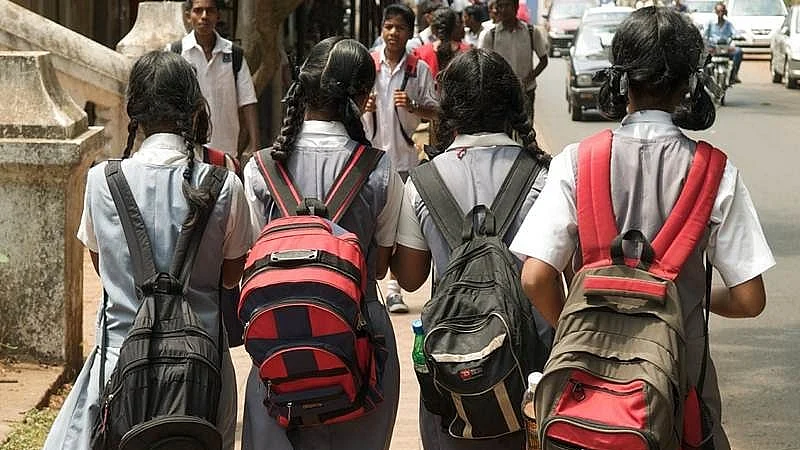
Student | File Pic (Representative image)
The twenty-first century has witnessed an unprecedented explosion of information, rapid technological advancements, artificial intelligence, and complex societal challenges. In such a knowledge-driven environment, the ability to think critically has become one of the essential competencies for both teachers and students. Educational institutions are no longer expected to produce graduates who merely possess subject knowledge; they must nurture individuals who can analyse information, evaluate evidence, solve problems creatively, make informed decisions, and contribute responsibly to society.
Critical thinking is, therefore, regarded as one of the important higher-order cognitive skills and is strongly aligned with the objectives of the National Education Policy (NEP) 2020, which advocates inquiry-based, experiential, multidisciplinary, and learner-centred education.
Understanding Critical Thinking:
Critical thinking refers to the disciplined process of actively conceptualising, analysing, interpreting, evaluating, and synthesising information to reach logical and evidence-based conclusions. It involves questioning assumptions, identifying biases, recognising logical relationships, evaluating multiple perspectives, and making reasoned judgments rather than accepting information at face value.
According to educational psychologist Robert Ennis, critical thinking is "reasonable and reflective thinking focused on deciding what to believe or do." Similarly, Richard Paul and Linda Elder describe it as the art of analysing and evaluating thinking with the purpose of improving it.
Critical thinkers demonstrate intellectual humility, curiosity, open-mindedness, fairness, perseverance, and a willingness to revise their opinions when presented with convincing evidence.
Importance of Critical Thinking in Higher Education:
Critical thinking contributes significantly to effective teaching and meaningful learning. It enables students to:
Analyse complex problems systematically.
Distinguish facts from opinions and misinformation.
Evaluate the credibility of information sources.
Make informed academic and professional decisions.
Apply theoretical concepts to real-life situations.
Enhance creativity and innovation through logical reasoning.
Become responsible citizens capable of addressing societal challenges.
For teachers, critical thinking improves instructional planning, classroom decision-making, assessment practices, educational research, and reflective professional practice.
Techniques to Promote Critical Thinking Among Teachers:
Reflective Teaching: Teachers should regularly reflect on their classroom practices by asking:
What worked well?
Why did students struggle?
How can teaching be improved?
Maintaining reflective journals and participating in peer discussions promote continuous professional growth.
Action Research: Conducting small classroom-based research projects enables teachers to identify learning problems, implement interventions, analyse outcomes, and adopt evidence-based teaching strategies.
Professional Learning Communities: Collaborative discussions among faculty members encourage the exchange of ideas, critical examination of teaching methods, and sharing of best practices.
Questioning Assumptions: Teachers should periodically examine traditional practices and ask whether existing teaching methods remain relevant in today's learning environment.
Data-Driven Decision Making: Rather than relying solely on intuition, teachers should analyse assessment data, student feedback, attendance patterns, and learning outcomes before modifying instructional strategies.
Faculty Development Programs: Training programs focusing on critical pedagogy, educational technology, assessment reforms, and research methodology help teachers strengthen analytical and reflective skills.
Techniques to Promote Critical Thinking Among Students:
Socratic Questioning: Teachers should encourage students to justify their answers through probing questions such as:
Why do you think so?
What evidence supports your conclusion?
Is there an alternative explanation?
What assumptions are you making?
Such questioning deepens conceptual understanding.
Problem-Based Learning (PBL): Presenting authentic, real-world problems requires students to investigate issues, collect evidence, collaborate, and propose practical solutions rather than memorising textbook information.
Case Study Method: Case studies expose students to realistic situations where they must analyse facts, identify issues, compare alternatives, and recommend appropriate decisions.
Debate and Structured Discussion: Academic debates encourage learners to defend viewpoints using logical arguments while respectfully considering opposing perspectives.
Project-Based Learning: Projects involving field investigations, surveys, design challenges, or community engagement help students integrate knowledge from multiple disciplines while developing analytical and problem-solving abilities.
Inquiry-Based Learning: Instead of providing direct answers, teachers should motivate students to formulate questions, gather evidence, investigate independently, and draw their own conclusions.
Think–Pair–Share: Students first think individually, discuss ideas with a partner, and then share their conclusions with the class. This process improves reasoning and communication skills.
Concept Mapping: Visual representation of relationships among concepts enables learners to organize knowledge logically and identify connections between ideas.
Reflective Writing: Learning journals, reflective essays, and portfolios encourage students to evaluate their own learning processes, strengths, limitations, and future improvement strategies.
Authentic Assessment: Open-book examinations, case analyses, research assignments, presentations, portfolios, simulations, and real-world problem-solving tasks assess deeper understanding instead of rote memorisation.
Role of Educational Technology:
Digital technologies can significantly strengthen critical thinking when used appropriately. Artificial intelligence tools, virtual laboratories, online simulations, collaborative platforms, digital libraries, and data visualisation software expose students to diverse viewpoints and authentic datasets. However, learners must also be trained to verify the credibility of online information, recognize misinformation, and use AI-generated content responsibly. Technology should complement, not replace, human reasoning and ethical judgment.
Challenges in Developing Critical Thinking:
Despite its importance, several barriers hinder the development of critical thinking in educational institutions. These include examination systems that emphasise memorization, overloaded curricula, limited classroom interaction, insufficient teacher training, large class sizes, fear of questioning authority, and inadequate opportunities for interdisciplinary learning. Addressing these challenges requires institutional support, curriculum redesign, and a shift from “teacher-centred instruction” to “learner-centred pedagogy.” The other major limitation could be absence of adequate data in each situation and that may require strong “intuitive judgement capability.”
Moving Ahead:
Critical thinking is the cornerstone of quality education and lifelong learning. It empowers teachers to become reflective practitioners and enables students to become independent learners, responsible citizens, and innovative professionals. Educational institutions must consciously embed critical thinking across curricula, pedagogy, assessment, and faculty development initiatives. Through inquiry-based learning, reflective practice, collaborative discussions, authentic assessment, and effective use of educational technology, higher education can create learning environments where questioning, reasoning, evidence-based decision-making, and intellectual curiosity flourish. In an era characterized by rapid change and abundant information, cultivating “critical thinkers” is not merely an educational objective but a societal necessity. Educational institutions should, therefore, deliberately endeavour to promote a culture of critical thinking among their students as well as teachers as there lies the true competitive advantage.
By Dr A K Sen Gupta, Founder, Higher Education Forum HEF.
RECENT STORIES
-
-
-
-
-