The Rise And Fall Of SpiceJet: From Liberalisation-Era Aspirations To Financial Turmoil
Several of SpiceJet's scheduled flights have reportedly been cancelled amid mounting financial challenges. This is not the first time that the airline company is facing a threat of getting shut down. SpiceJet's long-standing troubles are marked by repeated ownership changes, a near-collapse in 2014, and a prolonged legal dispute with former promoters

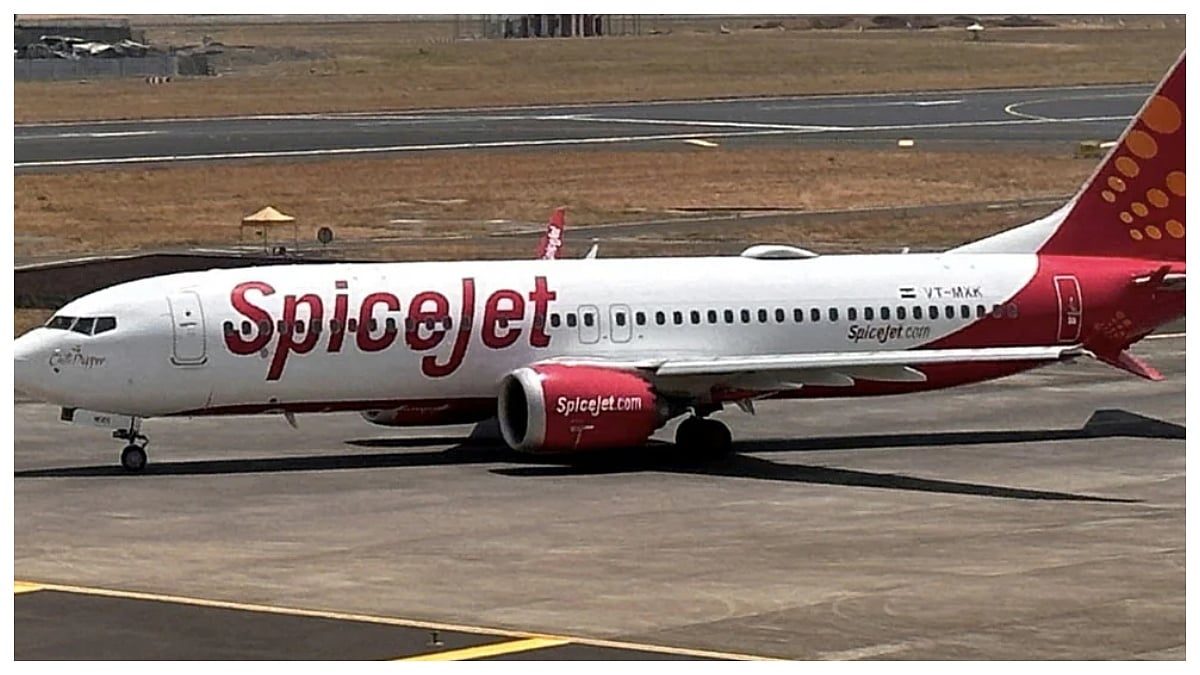
Several of SpiceJet's scheduled flights have reportedly been cancelled this month amid mounting financial challenges. But this is not the first time that the airline company is facing a threat of getting shut down.
SpiceJet's long-standing troubles have been marked by repeated ownership changes, a near-collapse in 2014-15, a prolonged legal dispute with former promoter Kalanithi Maran, and continuing payment disputes with aircraft lessors and other creditors.
The timeline below traces the major turning points, including developments in its lender and creditor relationships.
2026: Insolvency petitions, delayed salaries and grounding of aircrafts
June 2026: Reuters reported that SpiceJet had delayed salary payments to several pilots and was seeking emergency government-backed funding of up to ₹1,500 crore under the Emergency Credit Line Guarantee Scheme.
August 2026: The NCLT allowed aircraft lessor Aviator ML to withdraw its insolvency petition after the two parties reached a settlement. However, seven other insolvency petitions filed by aircraft lessors remained to be heard.
August–October 2026: SpiceJet also faced fresh proceedings over its obligations to Kalanithi Maran and KAL Airways. In August, it sought more time to meet a ₹144.5-crore payment obligation, citing delays in receiving government-backed financial assistance. A later Delhi High Court order in October rejected its request for an extension.
November 2026: Reuters reported that its domestic market share had fallen to 0.6%, while the airline was considering fresh fundraising.
Dubai Airport on November 12 cancelled check-in services for SpiceJet flights due over non-payment of around ₹35 crore.
Several domestic flights of the company are reported to be cancelled due to non-payment of staff salaries.
Data from the DGCA showed that SpiceJet cancelled 20.29% of its scheduled flights in September. Its on-time performance at major airports fell to 16.6%.
2025: Financial stress
June 2025: According to CRISIL Ratings, only 21 of SpiceJet's 56 aircraft were operational, while 35 remained grounded. Its domestic market share had declined to around 3% in FY25, from double-digit levels in FY18.
CRISIL also flagged the airline's weak financial profile, including continued EBITDA losses over several years and elevated leverage.
2023–2024: Shrinking fleet and creditor action
2023: SpiceJet approved a fundraising plan involving equity shares and warrants. In December, its board approved a proposal to raise around ₹2,250 crore through a preferential issue.
January–February 2024: The airline raised ₹1,060 crore through the preferential issue, including an additional ₹316 crore in February. It also announced workforce reductions of around 10–15% as part of cost-cutting measures.
May 2024: The Delhi High Court gave SpiceJet another opportunity to pay ₹50 crore to engine lessors Team France and Sunbird France. The airline faced the possibility of having two engines grounded over unpaid dues.
July 2024: The board approved raising up to ₹3,000 crore through a QIP. By then, the airline had reported losses for six consecutive years, and its fleet and market share had fallen significantly.
September 2024: SpiceJet completed its ₹3,000-crore QIP, providing fresh funds to address liabilities, restore grounded aircraft and strengthen operations.
2024: Aircraft lessors and vendors increasingly turned to the National Company Law Tribunal (NCLT), seeking insolvency proceedings over unpaid dues.
ALSO READ
2022: Safety concerns
July–August 2022: Following a series of technical incidents, the DGCA placed the airline under enhanced surveillance and restricted its approved flights to 50% for eight weeks.
August 2022: IDFC First Bank, Yes Bank and Indian Bank reportedly internally classified their exposure to SpiceJet as high risk, citing concerns about cash flows and delayed payments to aircraft lessors. The airline disputed the characterisation that it had defaulted on its bank loans.
Ajay Singh and his wife had also pledged a portion of their shareholding to secure credit facilities, primarily from lenders including these banks.
2019–2021: Boeing 737 MAX grounding and the Covid crisis
March 2019: Following two fatal crashes involving Boeing 737 MAX aircraft in 2018 and 2019, aviation regulators worldwide grounded the aircraft. India's DGCA also ordered their grounding.
SpiceJet had 13 Boeing 737 MAX aircraft in its fleet, which could no longer be used for commercial operations. It had also expected another 13 aircraft to be delivered. The grounding affected capacity, revenue and the airline's financial position.
2020: Travel restrictions due to the Covid-19 pandemic severely affected SpiceJet's revenues.
2021: The airline reached a settlement with Boeing and the 737 MAX lessors, including the waiver of past lease rentals.
2015–2018: Ownership dispute turns into a legal battle
2015–16: Under Singh, SpiceJet began rebuilding its operations. It renegotiated payments with lessors and vendors, improved its fleet utilisation and expanded its network. The airline returned to profitability in FY16.
2016: The ownership transfer triggered a dispute between Singh and the former promoters. Maran and KAL Airways alleged that SpiceJet had failed to issue share warrants and convertible preference shares promised under the 2015 agreement.
July 2016: The Delhi High Court directed SpiceJet to secure ₹579 crore as interim relief for Maran and KAL Airways.
2017–18: SpiceJet continued expanding its fleet and network. It placed large aircraft orders with Boeing and Bombardier.
2010–2015: Kalanithi Maran taking control, followed by a near-collapse
2010: Kalanithi Maran and his company, KAL Airways, acquired control of SpiceJet from its previous promoters, including Ajay Singh and Bhupendra Kansagra.
2014: The airline ran into a severe cash crunch. It struggled to pay aircraft lessors, suppliers and other vendors. Several aircraft were grounded, while the airline faced difficulties meeting operating expenses.
December 2014: The crisis reached a point where SpiceJet's operations were under serious threat. The airline was forced to cancel flights amid its inability to meet payment obligations.
January 2015: Maran and KAL Airways agreed to transfer ownership, management and control to Ajay Singh.
February 2015: Singh took control after acquiring the former promoters' 58.46% shareholding. Singh also took on substantial legacy liabilities.
Initial years
1984: The airline company was incorporated as a private company and promoted by S.K. Modi of the Modi Group.
1993: It was renamed MG Express Ltd and entered into agreements with international airlines, including Swissair, KLM, Qantas and Air Canada.
1993–1996: ModiLuft, a venture involving the Modi Group and Lufthansa, operated in India.
2005: The company was renamed Royal Airways and subsequently SpiceJet Ltd. It began commercial operations on May 23, 2005.
RECENT STORIES
-
-
-
-
-