Meet Mark Macgann, the whistleblower in Uber Files case
MacGann believes that Uber knowingly defied laws in at least a dozen countries and also lied about the benefits to drivers of the company's gig-economy model.

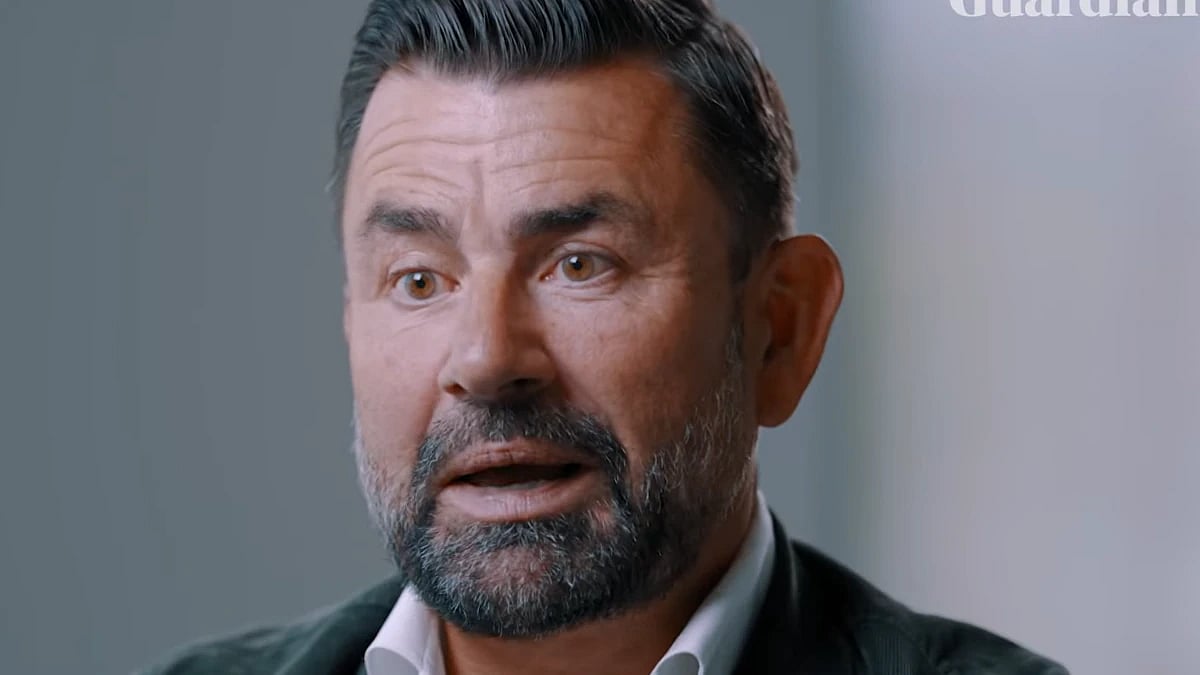
Meet Mark Macgann, the whistleblower in Uber Files case |
The whistleblower in the Uber Files cases has revealed himself. Mark Macgann, a lobbyist who helped Uber expand across Europe, the Middle East and Africa by winning over governments, has now claimed responsibility for leaking more than 124,000 company files to the Guardian.
MacGann believes that Uber knowingly defied laws in at least a dozen countries and also lied about the benefits to drivers of the company's gig-economy model.
He told the Guardian “I am partly responsible, I was the one talking to governments, I was the one pushing this with the media, I was the one telling people that they should change the rules because drivers were going to benefit and people were going to get so much economic opportunity."
“When that turned out not to be the case – we had actually sold people a lie – how can you have a clear conscience if you don’t stand up and own your contribution to how people are being treated today?”
"I regret being part of a group of people which massaged the facts to earn the trust of drivers, of consumers and of political elites,” he said. “I should have shown more common sense and pushed harder to stop the craziness. It is my duty to [now] speak up and help governments and parliamentarians right some fundamental wrongs. Morally, I had no choice in the matter.”
After MacGann identified himself as the whistleblower, Uber said, “We understand that Mark has personal regrets about his years of steadfast loyalty to our previous leadership, but he is in no position to speak credibly about Uber today.”
Past mistakes
In a written statement. Uber spokesperson Jill Hazelbaker acknowledged "mistakes'' in the past and said CEO Dara Khosrowshahi, hired in 2017, had been "tasked with transforming every aspect of how Uber operates ... When we say Uber is a different company today, we mean it literally: 90% of current Uber employees joined after Dara became CEO.''
Founded in 2009, Uber sought to skirt taxi regulations and offer inexpensive transportation via a ride-sharing app. The consortium's Uber Files revealed the extraordinary lengths that the company undertook to establish itself in nearly 30 countries.
The company's lobbyists - including former aides to President Barack Obama - pressed government officials to drop their investigations, rewrite labor and taxi laws and relax background checks on drivers, the papers show.
Use of technology to get past the law
The investigation found that Uber used "stealth technology'' to fend off government investigations. The company, for example, used a "kill switch'' that cut access to Uber servers and blocked authorities from grabbing evidence during raids in at least six countries. During a police raid in Amsterdam, the Uber Files reported, former Uber CEO Travis Kalanick personally issued an order: "Please hit the kill switch ASAP ... Access must be shut down in AMS (Amsterdam).''
The consortium also reported that Kalanick saw the threat of violence against Uber drivers in France by aggrieved taxi drivers as a way to gain public support. "Violence guarantee(s) success,'' Kalanick texted colleagues.
In a response to the consortium, Kalanick spokesman Devon Spurgeon said the former CEO "never suggested that Uber should take advantage of violence at the expense of driver safety.''
Tax Fraud
The Uber Files say the company cut its tax bill by millions of dollars by sending profits through Bermuda and other tax havens, then "sought to deflect attention from its tax liabilities by helping authorities collect taxes from its drivers.''
Delhi rape case
After a woman passenger was raped in an Uber cab in Delhi on December 5, 2014 there was panic inside the company's headquarters in San Franciso, the leaked documents revealed.
According to a report by Indian Express, which partnered with ICIJ for this investigation, after the Delhi rape, the company decided to take two distinct stands on the issue. The company took the line that the flawed Indian system of Background Checks (BGCs) of drivers was the reason why the accused committed the sexual harassment offence.
And the second one was to blame the Indian authorities. The leaked documents revealed that Mark MacGann, then Uber’s Head of Public Policy for Europe and the Middle East, wrote on December 8: “We’re in crisis talks right now and the media is blazing…The Indian driver was indeed licensed, and the weakness/flaw appears to be in the local licensing scheme.’’
He again sent an email to his team: “We are in the process of platinum-plating our background checks in other regions, given the issue in India (where the official State system is at fault, not Uber).”
Uber Capitalised on Violence Against Drivers
In 2016, Kalanick reportedly ordered French employees to encourage local Uber drivers to counter-protest the taxi strikes that were on in Paris at the time. The former CEO messaged saying, “I think it’s worth it,” “Violence guarantee[s] success. And these guys must be resisted, no?”
Drivers across Europe had faced violent retaliation as taxi drivers felt their livelihoods threatened. The investigation found that "in some instances, when drivers were attacked, Uber executives pivoted quickly to capitalize" to seek public and regulatory support, the Post said.
According to the Guardian, Uber has adopted similar tactics in European countries including Belgium, the Netherlands, Spain and Italy, mobilizing drivers and encouraging them to complain to the police when they were victims of violence, in order to use media coverage to obtain concessions from the authorities.
Blame Game At Uber
In a response to the consortium, Kalanick spokesman Devon Spurgeon said the former CEO "never suggested that Uber should take advantage of violence at the expense of driver safety.''
The Uber Files say the company cut its tax bill by millions of dollars by sending profits through Bermuda and other tax havens, then "sought to deflect attention from its tax liabilities by helping authorities collect taxes from its drivers.''
RECENT STORIES
-
-
-
-
-