Market Shocks, War Fears & Volatility: Why Staying Invested May Be The Only Winning Strategy?
Vetri Subramaniam emphasised that volatility is now a permanent feature of global markets, driven by geopolitics. He urged investors to stay invested, use SIPs, and focus on asset allocation. Avoiding equities risks inflation erosion, while India’s steady 10–12 percent growth outlook calls for realistic return expectations and long-term discipline.

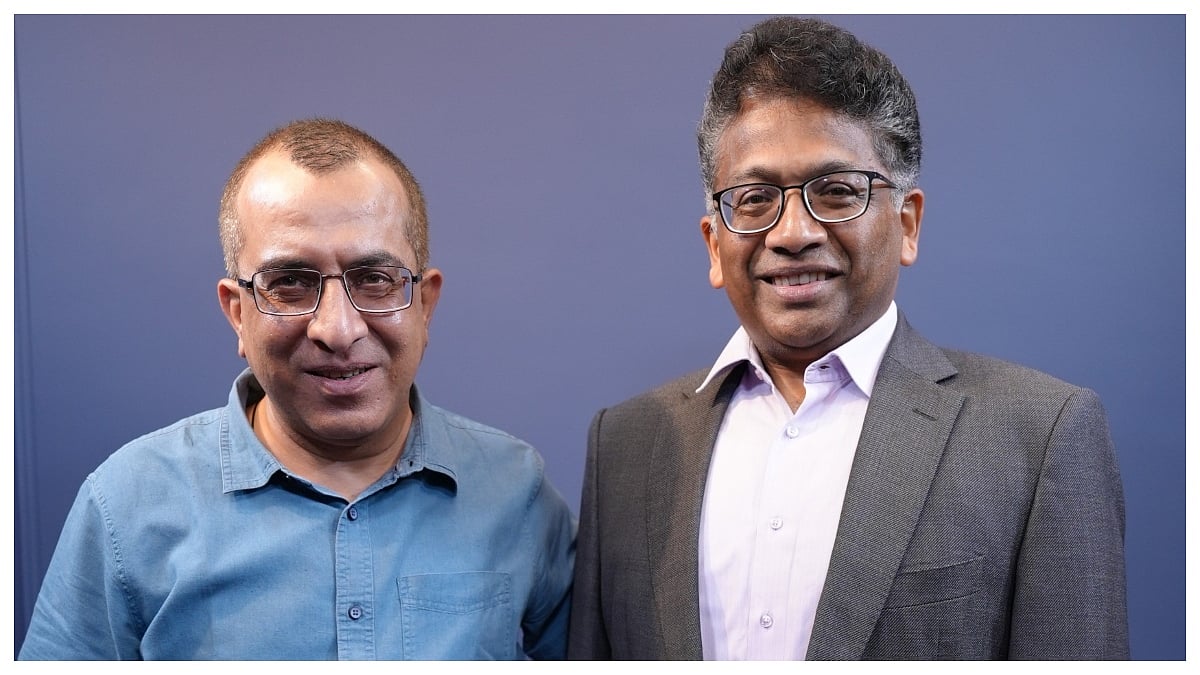
Vetri Subramaniam emphasised that volatility is now a permanent feature of global markets. |
The global economy is no longer operating in a predictable rhythm. From financial crises to pandemics and now geopolitical conflicts, shocks are not rare events anymore. They are becoming the norm.
In a recent episode of Simple Hai!, Vivek Law spoke with Vetri Subramaniam, MD and CEO of UTI Mutual Fund, who brings three decades of market experience into perspective. His message is clear: investors must accept that volatility is here to stay.
According to Subramaniam, the world has transitioned from a phase dominated by globalization to one where geopolitics plays a central role. Trade, capital flows, and economic decisions are now intertwined with national security and political priorities. This shift has made markets more sensitive to global developments, increasing both the frequency and intensity of shocks.
For investors, this means one thing. Waiting for stability before investing is no longer a viable strategy. The environment itself is inherently unstable, and learning to operate within it is essential.
Volatility Is Not the Real Risk
While market swings often trigger fear, Subramaniam reframed the conversation by identifying the real risk: not investing at all.
For decades, Indian investors have relied heavily on fixed deposits and traditional savings instruments. However, these often fail to beat inflation over the long term. The result is a gradual erosion of purchasing power. In contrast, equities, despite their volatility, offer the potential for wealth creation through compounding.
Subramaniam explained that volatility should not be seen as a threat but as an opportunity. Tools like Systematic Investment Plans allow investors to navigate market fluctuations effectively. When markets are high, investors buy fewer units. When markets fall, they accumulate more. Over time, this averages out the cost and reduces the impact of timing decisions.
In addition, asset allocation plays a crucial role. By diversifying across asset classes such as equity, debt, gold, and others, investors can reduce overall portfolio volatility. The goal is not to maximize returns every year but to create a balance that allows investors to stay invested without anxiety. As Subramaniam put it, the best portfolio is one that lets you sleep peacefully at night.
Energy Crisis, War Sentiment, and Staying Invested
In times of geopolitical conflict, such as tensions involving Iran, the ripple effects are immediate. Rising energy prices, supply disruptions, and economic uncertainty quickly translate into market panic. For many investors, the instinctive reaction is to exit.
But this is precisely where long-term discipline matters the most. Subramaniam emphasized that global events will continue to create fear cycles. News headlines may suggest that the world is heading towards crisis, but markets have historically navigated through wars, recessions, and structural changes.
The key is to focus on the purpose of investing. Individuals invest to build a financial cushion for the future, to meet life goals, and to beat inflation. Exiting the market during periods of uncertainty disrupts this journey and often leads to missed opportunities when recovery happens.
Subramaniam used a simple analogy to explain this. Investing is like watching a film. The first half may be smooth, but the second half brings conflict and uncertainty. Walking out midway ensures you never see the resolution. Staying invested, despite discomfort, is what ultimately leads to positive outcomes.
ALSO READ
India’s Growth Story and the 12% Reality Check
Amid global uncertainty, India’s economic outlook remains relatively strong. Subramaniam pointed out that the country is positioned to deliver steady earnings growth in the range of 10 to 12 percent over the long term. This growth is driven by a combination of macroeconomic stability, entrepreneurial activity, and a growing domestic savings pool.
However, this also calls for a reset in investor expectations. In recent years, many investors have become accustomed to higher returns, driven by exceptional market conditions post-pandemic. But such periods are not sustainable indefinitely.
Subramaniam highlighted that long-term returns in equity markets are closely linked to earnings growth. If earnings grow at around 12 percent, market returns are likely to align with that range. Expecting significantly higher returns consistently can lead to poor decision-making and excessive risk-taking.
The real power of investing lies not in chasing high returns but in staying invested over long periods. Compounding works best when given time. The focus, therefore, should shift from short-term returns to long-term participation.
India’s growth story, supported by domestic investors and improving economic fundamentals, remains intact. For investors willing to stay the course, the opportunity to build meaningful wealth over time is still very much alive.
RECENT STORIES
-
-
-
-
-