Investor Behaviour, Financial Inclusion & The Next 20 Crore Investors: Anuj Kumar On India's Mutual Fund Revolution
CAMS MD Anuj Kumar explains how technology, rising financial awareness, women investors and smaller cities are driving India's next mutual fund growth phase.

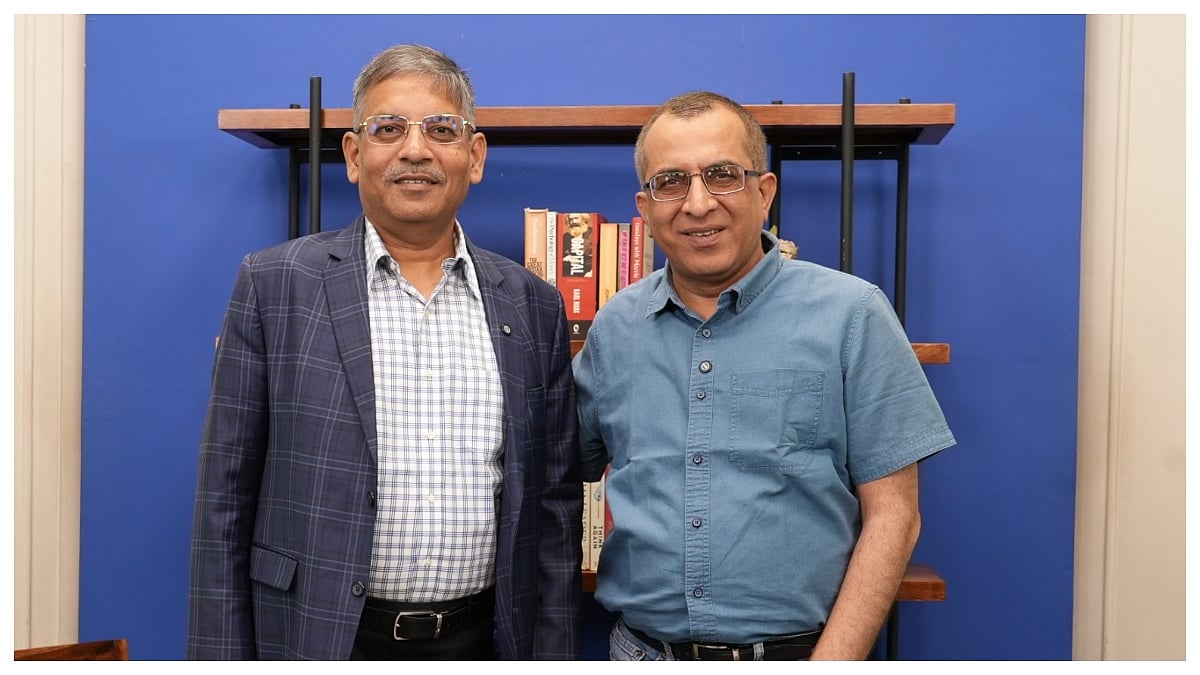
CAMS MD Anuj Kumar explains how technology, rising financial awareness, women investors. |
In this interesting conversation with Vivek Law on Simple Hai!, Anuj Kumar, Managing Director of CAMS (Computer Age Management Services), a mutual fund transfer agency serving Indian asset management companies, reflected on the remarkable transformation of India's mutual fund industry over the past decade. Drawing from his experience at the centre of the country's investment ecosystem, Kumar spoke about changing investor behaviour, the rise of women investors, the growing participation from smaller towns and the role technology will play in bringing millions of new investors into financial markets.
A Decade of Change in Investor Behaviour
Kumar observed that India's mutual fund industry looks dramatically different from what it was just ten years ago. Earlier, mutual fund investors largely consisted of affluent and financially aware individuals concentrated in major cities. Today, participation has broadened significantly, bringing in first-time investors from diverse backgrounds and geographies.
Despite having less capital and, in many cases, limited financial knowledge, newer investors have displayed surprising resilience. Kumar noted that recent market corrections have not triggered the kind of panic withdrawals that were common in earlier cycles. Instead, investors have shown a greater willingness to stay invested and trust long-term wealth creation.
This behavioural shift, he suggested, is one of the most encouraging developments for the industry.
The SIP Challenge: Growth and Retention
Systematic Investment Plans (SIPs) remain one of the strongest drivers of mutual fund growth. However, Kumar pointed out that while millions of new SIPs are registered every quarter, a significant number are also discontinued.
According to him, the challenge is not necessarily market volatility but unrealistic expectations. Many investors enter the market expecting visible gains within a few months and lose patience when returns do not materialise immediately.
The industry's task, therefore, extends beyond attracting new investors. It must also educate them about the importance of staying invested through market cycles and understanding the power of compounding over time.
Women Investors Are Reshaping the Market
One of the most significant changes highlighted during the discussion was the growing participation of women in financial markets.
Law noted that women are increasingly taking charge of their financial decisions, and Kumar agreed that the transformation has been substantial. A decade ago, investments in the name of women were often managed by other family members. Today, a large proportion of women investors are salaried professionals making independent financial decisions.
Their share of mutual fund assets has risen steadily and now accounts for more than 30 percent of individual investor assets under management. Kumar believes this trend is still in its early stages and will continue to accelerate over the coming decade as financial awareness and workforce participation increase.
Financial Inclusion Beyond Metro Cities
The conversation also focused on the rapid expansion of investing activity beyond India's largest cities. Kumar noted that affordable smartphones, widespread internet access and digital financial infrastructure have dramatically reduced information barriers. Investors in smaller towns now have access to the same information, products and platforms as investors in metropolitan centres.
As a result, regions traditionally underrepresented in capital markets are witnessing strong growth. Investor participation from B30 cities and smaller centres continues to rise, contributing meaningfully to the industry's expansion.
For Kumar, this represents one of the most powerful examples of financial inclusion in modern India.
ALSO READ
Simplifying Access Through Technology
According to Kumar, technology will be central to the industry's next phase of growth. He highlighted the need for simpler onboarding processes, particularly through wider adoption of biometric verification and unified KYC frameworks. While digital KYC has improved access considerably, further simplification is required to make investing easier for first-time investors in smaller towns and rural markets.
Kumar also discussed CAMS Lens, an AI-powered platform developed to help market participants navigate an increasingly complex regulatory environment. The tool analyses regulatory updates and converts them into simplified insights, helping
distributors, intermediaries and industry participants stay compliant while reducing operational complexity.
Active vs Passive Investing
On portfolio construction, Kumar observed that concerns around excessive diversification are often overstated. Industry data suggests that most investors hold a reasonable number of schemes rather than excessively fragmented portfolios.
The discussion also touched on passive investing. While exchange-traded funds and index funds are gaining popularity, Kumar believes active fund management continues to play an important role. Skilled fund managers, he argued, can help investors navigate volatility, manage downside risks and generate value over market cycles.
Rather than viewing active and passive investing as competing approaches, he suggested they can coexist within a diversified portfolio.
Debt Funds Need Greater Attention
Law also raised the issue of debt funds, which have received less attention in recent years compared with equities.
Kumar acknowledged that investor interest has shifted heavily towards equities, particularly among younger investors. However, he stressed that debt continues to play an important role in portfolio diversification and risk management.
Given the complexities of credit assessment and fixed-income investing, he believes professional fund managers remain best positioned to evaluate risks and allocate capital effectively in this segment.
ALSO READ
Building the Next 20 Crore Investors
Looking ahead, Kumar expressed optimism about the future of the mutual fund industry. India currently has approximately five to six crore mutual fund investors. He believes that number could rise to 20 crore over the next decade as more young Indians enter the workforce, gain access to financial products and begin investing earlier in life.
The foundation for that growth, he argued, will be built on trust, transparency, service quality and investor education.
Lessons Beyond Finance
Towards the end of the conversation, Law asked Kumar about the principles that shaped his own journey.
Reflecting on a career spanning more than three decades, Kumar emphasised patience, perseverance and long-term commitment. Success, he argued, rarely comes quickly. Whether in investing or professional life, meaningful outcomes require years of focused effort.
He also credited his middle-class upbringing and family values for keeping him grounded, adding that humility, discipline and consistency remain essential traits for sustained success.
For Kumar, the future of India's financial markets is not simply about higher assets under management. It is about creating an investment culture that reaches every corner of the country and enables millions of Indians to participate in long-term wealth creation.
RECENT STORIES
-
-
-
-
-