India's Investor Base May Cross 38 Crore in 5 Years; SEBI Flags Need for Greater Investor Awareness
SEBI Chairman Tuhin Kanta Pandey says rising market participation must be backed by investor education, stronger safeguards and resilient market infrastructure.

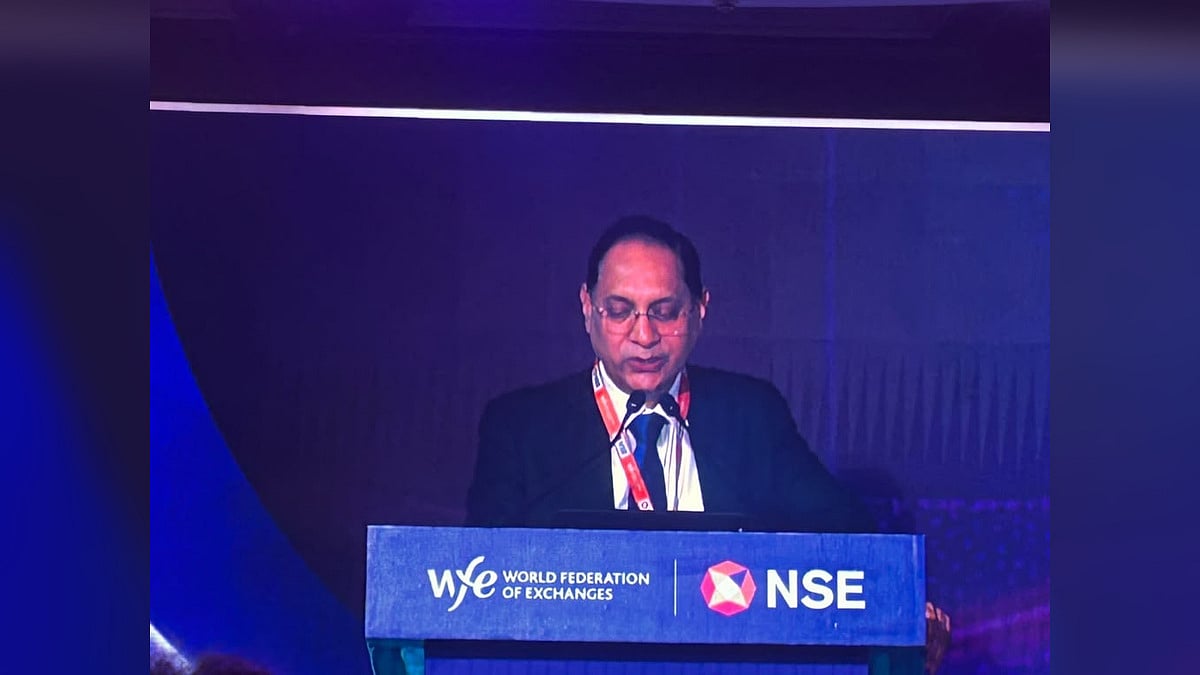
SEBI Chairman Tuhin Kanta Pandey |
Mumbai: India's securities market investor base could cross 38 crore within the next five years, Securities and Exchange Board of India (SEBI) Chairman Tuhin Kanta Pandey said while addressing the World Federation of Exchanges (WFE) General Assembly.
Highlighting the rapid expansion of India's capital markets, Pandey said the country currently has around 15.4 crore unique investors in its securities market. However, he cautioned that easier access to financial markets does not necessarily mean investors understand the risks involved.
"Ease of access does not necessarily mean understanding of risks," he said, stressing that investor awareness and education must advance alongside market participation.
According to Pandey, SEBI conducted a nationwide investor survey in 2025, covering more than 90,000 households across urban and rural India, to understand investor behaviour, awareness and participation.
Based on the findings, the regulator has launched a nationwide investor awareness campaign called 'Sahi Hai, Samajhdari Hai'. The campaign aims to explain securities market concepts in simple language and encourage informed investment decisions. It covers 13 languages and uses both traditional and digital platforms.
Pandey said the campaign generated around 94.6 crore social media impressions, 36.7 lakh views and nearly 70 lakh engagements across platforms.
ALSO READ
India's Capital Markets Expand
Highlighting India's capital market growth over the past decade, Pandey said the country's equity market capitalisation has increased at an annual rate of around 16% and currently stands at approximately $5 trillion. The market capitalisation-to-GDP ratio is around 130%.
India has more than 6,700 listed companies, including around 1,100 small and medium enterprises. The country also has 33 REITs and InvITs.
Outstanding corporate bonds have reached approximately $650 billion, while mutual fund assets have grown at around 20% annually over the past decade to reach $875 billion.
The investor base has also expanded significantly, with the country's two depositories together maintaining around 24.4 crore demat accounts.
Pandey said the combined shareholding of mutual funds and individual investors in listed companies has increased from around 13.5% in FY16 to more than 21% currently, reflecting greater household participation in equity markets.
SEBI focuses on easier fundraising
The SEBI Chairman also highlighted regulatory reforms aimed at improving access to capital for businesses. These include streamlining IPO processes, shortening timelines for rights issues and rationalising disclosure requirements for large issuances.
In the corporate bond market, SEBI has reduced issuance timelines and enabled debt securities to be issued with a minimum investment denomination as low as Rs 10,000.
He also highlighted the development of REITs and InvITs to support financing in the real estate and infrastructure sectors.
On the Social Stock Exchange, Pandey said five not-for-profit organisations were listed during FY26, collectively raising Rs 219 crore.
Focus on stronger market infrastructure
Discussing India's market infrastructure, Pandey said the country's exchanges handle millions of transactions every day, making operational resilience and risk management critical.
He highlighted India's transition to the T+1 settlement cycle, making it the first major market to adopt the shorter settlement timeline.
He also referred to a pilot project involving tokenisation of corporate bonds under DLT-based DMand 2.0, using Central Bank Digital Currency (CBDC) for settlement.
Looking ahead, Pandey said artificial intelligence and advanced analytics could improve market surveillance, monitoring, compliance and investor services. However, these technologies also bring challenges related to cybersecurity, data governance and technological dependencies.
Concluding his address, the SEBI Chairman said three priorities should guide the future of global capital markets: growth, trust and resilience.
He emphasised that sustainable market growth depends not just on increasing participation but also on investor confidence, transparent practices and strong market institutions.
Level up your brain the fun way. Play daily games and quizzes on FPJ Smart!
RECENT STORIES
-
-
-
-
-