India's Gig Internet Workforce May Triple To 17-21 Million By 2030, Says Redseer Report
India's monthly active gig internet workforce could grow from over six million to between 17 million and 21 million by 2030, according to a Redseer report. The study says gig work is becoming a major source of livelihoods, with higher earnings, greater participation by women and students, and increasing importance in India's non-farm workforce.

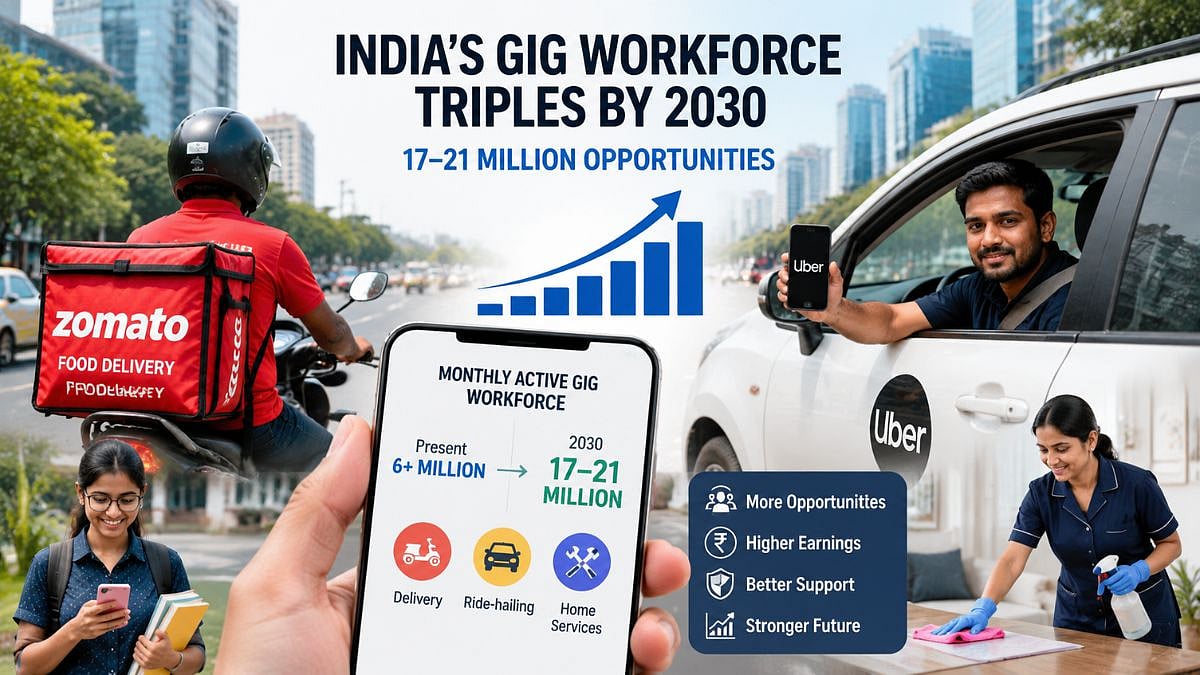
A Redseer report projects India's gig internet workforce could expand to as many as 21 million by 2030 | AI Generated Representational Image
New Delhi, July 18, 2026: India's monthly active gig internet workforce is expected to grow from more than six million at present to between 17 million and 21 million by 2030, according to a report by Bengaluru-based Redseer Strategy Consultants.
The report, Gig Internet Workforce in India: Bridge to around 20 Million Livelihoods, said platform-enabled gig work is emerging as a major source of livelihood and is set to become an important part of India's non-farm workforce over the next decade.
The report also highlighted that gig work is proving to be financially rewarding for many. Across delivery, ride-hailing and home services, full-time gig workers earn, on average, up to 2.5 times the monthly net income of workers in comparable formal and informal occupations. The findings suggest that the gig economy is no longer just about flexible work, but is steadily becoming an important employment option for millions.
More Than Just Flexible Work
According to Redseer, digital platforms have evolved beyond offering flexible work arrangements and are now serving as an accessible entry point into the labour market.
They are also becoming a source of supplementary income for employed individuals and a stepping stone for those pursuing higher education, entrepreneurship or career transitions, TH reported.
The report found that 54% of surveyed gig workers were not in paid employment before joining digital platforms. This indicates that the sector is helping expand workforce participation by lowering entry barriers through flexible work schedules, digital onboarding and faster access to income.
Redseer estimates that more than 30% of gig workers by 2030 will be first-time entrants into the workforce. Nearly 70% of surveyed workers also said their experience on gig platforms had improved their future earning prospects by helping them acquire transferable skills, build verifiable work experience and access wider employment opportunities.
Redseer identified three broad categories of workers in the digital gig economy: gig-first workers, parallel earners and goal-driven transitioners. The report suggests that the diversity of these workers reflects how gig platforms are catering to different financial and career needs rather than serving as a one-size-fits-all employment model.
Manish, a 32-year-old cook from Bengaluru, shared that he works as a cook during the day and also drives a two-wheeler taxi for three to four hours in the evening and sometimes on weekends. Earlier, he also worked as a security guard at night.
He said his earnings from gig work sometimes exceed his income as a cook and that the additional income helps support his family. He added that he hopes to find a better gig in the future so he can save more for his children's education.
Women And Students Join Gig Economy
The report also highlighted the growing participation of students and women in the gig economy. Honnur, a 23-year-old nursing student from Davangere, said she delivers food for three to four hours a day after attending classes.
She said the flexibility allows her to earn money to repay her college fees while balancing her studies. She also said she plans to move into a full-time job after completing her education, showing how gig work is increasingly serving as a bridge to long-term careers.
Commenting on the findings, Kushal Bhatnagar, Partner at Redseer Strategy Consultants, said the growth of the gig economy reflects the increasing demand for flexible work arrangements that allow people to enter the workforce, supplement household incomes and pursue long-term career goals.
He added that collaboration between digital platforms and policymakers would be important to strengthen welfare measures, financial protection and broader workforce participation.
The report noted that welfare support within the gig ecosystem has become more structured through platform-led initiatives such as accident insurance, emergency assistance and skill development programmes.
It added that while the implementation of the Code on Social Security marks progress towards formal recognition and portable social protection for gig workers, greater awareness and utilisation of welfare schemes remain necessary.
Also Watch:
ALSO READ
Redseer also observed that women, particularly those in the 18-35 age group, are increasingly joining the gig economy. According to the report, better digital literacy, improved safety measures, flexibility and easier access are contributing to greater gender diversity, signalling that the gig economy is becoming more inclusive while continuing to reshape India's employment landscape.
To get details on exclusive and budget-friendly property deals in Mumbai & surrounding regions, do visit: https://budgetproperties.in/
RECENT STORIES
-
-
-
-
-